

Commentary|Videos|September 18, 2026
First-in-Human: Jyoti Malhotra, MD, MPH on Phase I Trials, Lung Cancer in 2026, and Yale
Author(s)Gina Mauro, Jyoti Malhotra, MD, MPH
Jyoti Malhotra, MD, MPH on first-in-human clinical trials, lung cancer precision medicine in 2026, the disparities tension in drug development, and her move to Yale Cancer Center.
Advertisement
Episodes in this series

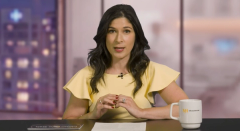



In this episode of The Moonlight Shift, Gina Mauro sits down with Jyoti Malhotra, MD, MPH, a thoracic medical oncologist and lung cancer specialist who has spent her career at the leading edge of early-phase drug development, to talk about what first-in-human trials actually feel like from inside the exam room, how her training in India shaped her perspective on healthcare access, and what her move to Yale Cancer Center means for the next chapter of her research.
The Conversation Nobody Fully Prepares You For
Malhotra describes the first-in-human consent conversation as one that is anything but simple. "There is the excitement about being able to offer an option to a patient for a new therapy," she says, "but at the same time there is the unknown factor — because we don't know to the full extent what the potential side effects can be, what the potential efficacy can be."
Patients in Phase I trials are monitored intensively, often spending long days in the clinic during the earliest cycles, and the conversation happens not once but many times — with the patient, the family, and across the full care team. "For many of my patients, I already know their kids, their spouses, their grandkids," she reflects. "We share pictures. We share milestones. And then we go on to the next step."
From New Delhi to Johns Hopkins to Jersey and Beyond
Malhotra trained as a physician in New Delhi before coming to the United States, where she earned a Master of Public Health in epidemiology and biostatistics from Johns Hopkins between medical school and residency — an unusual sequence she credits with giving her the analytical tools for early-career research she might otherwise have needed to outsource. Her fellowship at Mount Sinai brought her to New York, and her first faculty position at Rutgers Cancer Institute introduced her to Phase I research through an investigator-initiated trial program working directly with Rutgers scientists to move science from bench to bedside. "You are really trying to make the drug of tomorrow available to patients," she says. "And many of the patients we treat in Phase I trials are patients who have already tried standard of care therapies. They do not have a lot of great options."
The Disparities Tension That Doesn't Go Away
Her public health background runs directly into the realities of global access in drug development. For EGFR-mutant lung cancer, she notes, the United States is debating whether to add amivantamab (Rybrevant) to next-generation TKI regimens while many countries still lack access to third-generation TKIs at all. "When I work on drug development, I know that it may not reach every patient at the same time," she says. "But I know at some point it will reach the patient. And that's what I think of."
It's 2026: The Precision Medicine Conversation
When meeting a patient with newly diagnosed NSCLC for the first time, Malhotra opens with the year. "I tell them it's 2026," she says. "We don't have a one-size-fits-all approach anymore. We have a very precision-driven approach in which we try to understand what molecular subtype or mutation is driving the cancer, and we match the therapy to that." Her 2035 vision: a world where AI and precision tools allow oncologists to track and respond to cancer as it evolves in real time, and where lung cancer has become a chronic disease rather than a death sentence.
Signal or Noise?
The episode closes with the “Signal or Noise” game. Malhotra called antibody-drug conjugates in thoracic oncology and tumor mutational burden as an immunotherapy biomarker both “Noise” — while calling SCLC approaching chronic disease status and the closing of the clinical trial access gap both “Signal.” On whether lung cancer will be something we treat rather than something patients die from in fifteen years: “Hope to be ‘signal.’”
The Moonlight Shift is available on
Advertisement
Related to this article

The FDA has cleared an sNDA updating the taletrectinib (Ibtrozi) label with new DOR data in TKI-naive patients with locally advanced or metastatic ROS1-positive NSCLC.

Cesalatamig earned FDA fast track designation for NSCLC that progressed after immunotherapy and platinum-based chemotherapy.

The phase 2 AMIGO-1 trial met its end point, with an 18-month PFS rate of 66.7% for first-line amivantamab, lazertinib, and pemetrexed in EGFR-mutant NSCLC.

First-line osimertinib plus gefitinib produced an 82.1% response rate and blocked second-site EGFR resistance mutations, but missed feasibility criteria.
KST-6051 received FDA fast track designation for KRAS-mutant solid tumors.
Osimertinib plus platinum-pemetrexed showed a numerical PFS and OS advantage over osimertinib alone regardless of baseline TP53 status in FLAURA2.
The updated tarlatamab label reduces post-infusion monitoring after each of the first two doses to 6 to 8 hours, down from 22 to 24 hours.
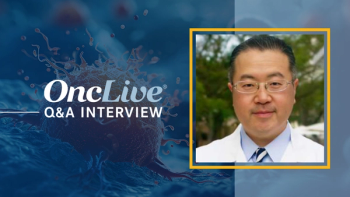
Jay M. Lee, MD, discusses how NAUTIKA1 compares with ALNEO and LORIN, why full genomic profiling is now essential before starting chemoimmunotherapy, and how tumor boards will manage early-stage NSCLC in 5 years.
Advertisement
Advertisement
Trending on OncLive
1
FDA Approves Imlunestrant Plus Abemaciclib for ER+, HER2–, ESR1-Mutated Metastatic Breast Cancer
2
CHMP Recommends Label Expansion of Melflufen to Third-Line Lenalidomide-Refractory Multiple Myeloma
3
Phase 1 Data Support DAWN-303’s Evaluation of INCB161734 in Frontline KRAS G12D–Mutated PDAC
4
Fast-Moving Treatment Advances Shape B-Cell Lymphoma Care
5