
Opinion|Videos|September 28, 2026
Future Directions in Multiple Myeloma: Emerging Therapies, Sequencing, and the Potential for Cure
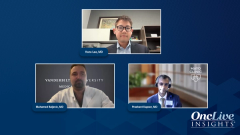
The panel looks ahead to the next 3 to 5 years of multiple myeloma treatment, highlighting emerging strategies that could further reshape the treatment landscape.
Advertisement
The panel looks ahead to the next 3 to 5 years of multiple myeloma treatment, highlighting emerging strategies that could further reshape the treatment landscape. Key areas of interest include the incorporation of bispecific antibodies into frontline therapy, trials comparing CAR T-cell therapy with autologous stem cell transplantation, trispecific antibodies, in vivo CAR T-cell approaches, and the emerging role of CELMoDs as potential partner therapies for bispecific and trispecific agents. The discussion also emphasizes the growing importance of treatment sequencing, with clinicians still learning how to balance efficacy, toxicity, patient preferences, access, and treatment logistics when selecting among increasingly effective options. The panelists note that the availability of highly active T-cell redirecting therapies is enabling more meaningful head-to-head comparisons and increasingly ambitious clinical trials. They also acknowledge that significant work remains to understand and manage the unique toxicities associated with these therapies. The segment concludes with the panel's perspective that durable treatment-free remission and the possibility of cure are becoming increasingly realistic goals for selected patients with multiple myeloma.
Advertisement
Related to this article
The top 5 OncLive TV videos of the week cover insights in breast cancer, PV, myeloma, and CLL.
The first MRD data from the phase 3 EXCALIBER-RRMM trial support iberdomide-based triplet therapy as early as first relapse, with PFS follow-up ongoing.
After nearly 7 years of follow-up, daratumumab added to VRd continued to improve PFS, PFS2, and sustained MRD negativity in transplant-eligible myeloma.
The FDA approved lirafugratinib in FGFR2+ cholangiocarcinoma and belzutifan plus lenvatinib in advanced ccRCC, and more.
Did you catch all of this week's top oncology news? Test your knowledge with OncLive's Weekly News Quiz.
Daiichi Sankyo and Merck withdrew the I-DXd BLA in ES-SCLC after FDA discussions found phase 2 IDeate-Lung01 data insufficient for accelerated approval.
Monthly etentamig significantly improved response and PFS over standard available therapies in the phase 3 CERVINO trial, with low rates of high-grade CRS.
FDA grants priority review to durvalumab plus enfortumab vedotin for cisplatin-ineligible MIBC based on positive phase 3 VOLGA data.
Advertisement
Advertisement
Trending on OncLive
1
Ifinatamab Deruxtecan BLA Voluntarily Withdrawn in Previously Treated Extensive-Stage SCLC
2
FDA Grants Priority Review to Perioperative Durvalumab Plus Neoadjuvant Enfortumab Vedotin in MIBC
3
Five Under 5: Top Oncology Videos for the Week of 9/20
4
Long-Term PERSEUS Data Confirm Durable PFS Benefit With D-VRd in Transplant-Eligible Newly Diagnosed Myeloma
5