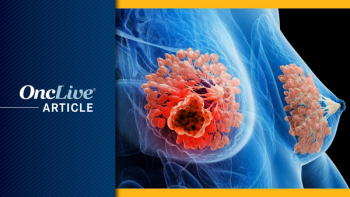
A protein called MPP8 helps drive chemotherapy resistance in the most-aggressive subtype of breast cancer, and suppressing its expression has the potential to improve treatment outcomes.
OncLive On Air®
Thanks for your interest in this podcast. Please read this important program information before listening.
Episode Description
In this podcast, experts Aditya Bardia, MD, MPH, FASCO, and Kathryn E. Post, PhD, ANP-BC, discuss key drivers of disparities in outcomes for triple-negative breast cancer and strategies for patient-centered communication, from shared decision-making to managing treatment-related toxicity.
Acknowledgment of Educational Grant Support
This activity is supported by an educational grant from Gilead Sciences, Inc.
Faculty:
Aditya Bardia, MD, MPH, FASCO
Professor of Medicine, Geffen School of Medicine
University of California, Los Angeles
Program Director, Breast Medical Oncology
Assistant Chief of Translational Research, Division of Hematology-Oncology
Director of Translational Research Integration
UCLA Health Jonsson Comprehensive Cancer Center
Los Angeles, CA
Kathryn E. Post, PhD, ANP-BC
Advanced Practice Provider Scholar
Mass General Brigham Cancer Institute
Assistant Professor
Harvard Medical School
Boston, MA
This podcast, including the narration, was produced by the PER® editorial staff based on an online activity conducted with these faculty members. The narration was voiced by a PER staff member or by an AI tool.
To learn more about this topic, including information on first-line treatment selection with antibody-drug conjugates in metastatic triple-negative breast cancer, go to
Release Date
August 17, 2026
Expiration Date
August 17, 2027
Off-Label Disclosure and Disclaimer
This activity may or may not discuss investigational, unapproved, or off-label use of drugs. Learners are advised to consult prescribing information for any products discussed. The information provided in this activity is for education purposes only and is not meant to substitute for the independent clinical judgment of a health care professional relative to diagnostic, treatment, or management options for a specific patient’s medical condition. The opinions expressed in the content are solely those of the individual faculty members and do not reflect those of PER® or any company that provided commercial support for this activity.