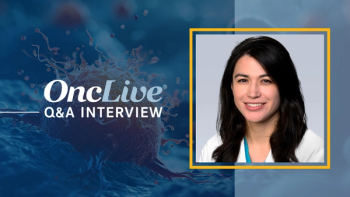
Early, coordinated treatment planning between surgical and medical oncology, anchored by a neoadjuvant-first approach and tumor-informed regimen selection, is expanding the population of patients with locally advanced or borderline resectable pancreatic cancer who reach surgery and achieve prolonged survival, according to Callisia N. Clarke, MD, MS, FACS, FSSO.
Historically, patients with locally advanced or borderline resectable pancreatic cancer who proceeded directly to surgery without systemic therapy often experienced early recurrence, prompting a shift toward neoadjuvant chemotherapy to stabilize or downstage disease prior to resection. More recently, the emergence of RAS-targeted therapies such as the investigational RAS(ON) inhibitor daraxonrasib, which nearly doubled median overall survival (OS) compared with chemotherapy in the second-line metastatic setting1, have generated interest in eventually moving novel targeted agents from the metastatic setting into the neoadjuvant space.
"None of these modalities on [their] own will provide durable survival [outcomes]—not surgery, not chemotherapy, not radiation therapy. The combination of all of those things really is going to give each patient the best chance for long-term survival," said Clarke in an interview with OncLive®.
In addition to discussing how the adoption of neoadjuvant systemic therapy has reshaped surgical candidacy and outcomes in locally advanced and borderline resectable pancreatic cancer, Clarke explained the multidisciplinary, tumor-informed approach her center uses to plan treatment sequencing and regimen selection alongside medical oncologists and expanded on the excitement surrounding the potential for earlier use of RAS-targeted therapies.
Clarke is chief of the Division of Surgical Oncology and an associate professor of surgery at the Medical College of Wisconsin in Milwaukee.
OncLive: From a surgical perspective, how has the emergence of different chemotherapy options and data in recent years helped shape the surgical role and how these patients are treated when they're first diagnosed?
Clarke: We've had a lot more excitement in the pancreas cancer space, especially over the last 1 to 2 years, and I think that's because we do have more effective systemic treatment options for patients. My mentor, Douglas B. Evans, MD, FACS, was a surgical oncologist who wanted to push the systemic treatment for pancreas cancer earlier in the treatment course for patients, even in the absence of metastatic disease. What we've seen now is that we have more patients with advanced localized disease—either locally advanced pancreas cancers or borderline resectable pancreas cancers—who are able to not only make it to surgery because they've gotten some chemotherapy to stabilize or shrink their disease, but even after surgery they're having prolonged survival outcomes in that setting. That's been a game-changer in the surgical oncology world. It's been wonderful to see more centers adopt a neoadjuvant approach for pancreas cancer, even with patients who have localized disease, and we're starting to see the benefits in survival outcomes for patients who get systemic treatment earlier in the course of their pancreas cancer.
When patients first present and treatment planning starts, how important is multidisciplinary collaboration with medical oncologists, and what does that look like?
We work really closely with our patients and all of our multidisciplinary partners. At our center, we utilize surgery, systemic chemotherapy, and radiation in almost all of our patients with pancreas cancer, so the coordination of care is really critically important. Everyone has to see that patient very early on in their diagnosis to ensure that we all have the same plan, and then we can put the patient on a treatment path that's specific and targeted to that individual and, most importantly, that everybody has the same understanding of the outcome and expectations. A multidisciplinary approach is critical for the best outcomes.
For the smaller proportion of patients who present with locally advanced disease that is initially unresectable, how do you decide if a patient can ultimately proceed to surgery?
I think one of the things that's most challenging for [these] patients is the uncertainty. They get diagnosed with locally advanced pancreas cancer, and they know that there are some critical structures involved with the tumor, and they want to know: am I going to be a candidate for surgery or not? Making that determination relatively early, and being able to provide some reasonable chance of surgical resection to the patient up-front, is really important. At our center, we have 2 definitions for locally advanced disease: locally advanced type A and locally advanced type B. Locally advanced type A patients have some vascular involvement, but with upfront chemotherapy and radiation, more than 60% of those patients can eventually get to surgical resection. The locally advanced type B patients very rarely get to surgery, so we plan a non-surgical route for them, which still includes systemic treatment. Then we tend to also consolidate with radiation therapy for those patients to try to control the local compressive symptoms of pancreas cancer, even if they haven't developed metastatic disease. We find that it can actually extend both quality of life and OS in many of those patients.
Do surgeons play a role in selecting the optimal chemotherapy regimen in the advanced setting?
How Multidisciplinary Care Is Expanding Surgical Candidacy in Pancreatic Cancer
- At Clarke's center, patients with locally advanced type A pancreatic cancer—defined by vascular involvement amenable to downstaging—achieve surgical resection in more than 60% of cases following upfront chemotherapy and radiation, whereas locally advanced type B disease is managed nonsurgically with systemic therapy and consolidative radiation to control local symptoms and extend survival.2
- Treatment planning increasingly relies on tumor-informed regimen selection, in which initial pancreatic biopsy results are used to sub-classify tumors and predict response to chemotherapy backbones such as modified FOLFIRINOX or gemcitabine/nab-paclitaxel.
- Investigational RAS-targeted agents such as daraxonrasib are generating interest in eventual neoadjuvant use, though toxicity and surgical-window risk must first be defined in the nonmetastatic adjuvant setting.
The decision on what systemic treatment option a patient receives is really multifactorial. In many centers, we'll typically start a patient on modified FOLFIRINOX in the first line, as long as they're able to tolerate that. Gemcitabine/nab-paclitaxel [Abraxane] is another very common chemotherapy regimen that may be employed, and sometimes that's just how people do it, based on performance status. But especially at major academic centers and cancer centers, [chemotherapy selection is] getting a little bit more nuanced. We can understand a lot more about the tumors from biopsy results, and we've had a clinical trial trying to optimize this, where we use the initial pancreatic biopsy to subclassify the pancreas cancer. We can make predictions on what kind of medications patients will respond to better, and we start them with those tumor-informed treatment options upfront, and then we're very nimble about switching patients to a different regimen if we see signs of progression, or—importantly, in the neoadjuvant space—if we don't see a response to therapy. These conversations are made in conjunction with the entire team, and hopefully, we'll have even more regimens to talk about in the nonmetastatic setting. We're seeing a lot of excitement in the metastatic setting of pancreas cancer with some novel targeted therapies now being introduced.
With RAS inhibition making waves in the second line, and now in the first-line metastatic setting, how do you ultimately see these agents making their way into the perioperative setting?
That is…the future, and people are really trying to figure out how to do that in clinical trials. The toxicity data on these therapies is still to be determined, and in the neoadjuvant space, before surgery, one of the things we don't want to do is have patients fall off the tracks. If somebody's a surgical candidate up front, we don't want there to be a missed surgical window. So in some ways, moving a drug from the metastatic setting to the nonmetastatic setting comes with a little bit of higher risk, and we're being very thoughtful about how we can start integrating some of these treatment options in the neoadjuvant space. I think what we'll see more immediately is moving it earlier into the adjuvant space for non-metastatic disease first, and then, after understanding a little bit more about how that's tolerated, moving it into the neoadjuvant space. But there's a lot of enthusiasm, especially about these RAS inhibitors. I don't think we've had this much excitement in the pancreas cancer world for a really long time. This has hit our patients; they're bringing this data in, and they want to talk about these new drugs. Many of them don't qualify for this drug because they haven't recurred and don't have metastatic disease, but certainly we'd like to see these drug treatments offered earlier in the diagnosis phase for pancreas cancer.
How gratifying has it been to see this early data and now have a picture of how this type of therapy could impact not just the metastatic setting but the perioperative setting in the future?
When we start seeing movement in any disease site, it is exciting. Historically, we've seen this before—I remember when imatinib [Gleevec] was approved for the treatment of gastrointestinal stromal tumors and what that meant for those patients, [as well as] trastuzumab [Herceptin] for breast cancer patients, immunotherapy for melanoma and [microsatellite unstable] tumors. We've seen the impact that introduction of a new class of drugs can have on a lot of different diseases, and our hope is that pancreas cancer is going to follow in the footsteps of many of those cancers. This breakthrough is an important one, but what's even more exciting is that there's so much more research ongoing. What we tend to see is that once one class of drug makes its way forward, we typically see even more treatment options coming to the forefront. There's a lot of excitement about vaccines and vaccine trials, and there are other targeted therapies under works in early phase 1 trials. What we're hoping to see in the next 2 to 5 years is just an explosion of other options for patients in the pancreas cancer space. That hope is palpable, and it's great to be here to witness it.
References
- Wolpin BM, Wainberg ZA, Hendifar AE, et al. Daraxonrasib, a RAS(ON) multi-selective inhibitor vs chemotherapy in previously treated metastatic pancreatic adenocarcinoma (mPDAC): primary and final analysis from the phase 3 RASolute 302 study. J Clin Oncol. 2026;44(suppl 17):LBA4005. doi:10.1200/JCO.2026.44.17_suppl.LBA4005.
- Surgical Options for Pancreatic Cancer. Froedtert & the Medical College of Wisconsin. Accessed June 19, 2026. https://www.froedtert.com/pancreatic-cancer/treatment/pancreatic-surgery