The rise of antibody-drug conjugates (ADCs) in breast cancer management has complicated treatment sequencing, intensified debate over HER2-low and -ultralow categories, and underscored gaps in diagnostic precision, according to David Rimm, MD, PhD.
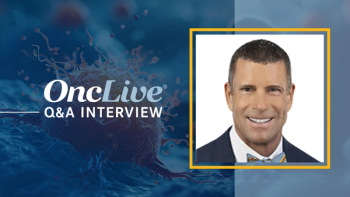
In an interview with OncLive®, Rimm discussed ways that the use of ADCs in breast cancer might adapt to reflect emerging categories of detectable HER2 expression levels, as well as how the evolution of HER2 disease classification has increased the importance of involving pathologists as part of every breast cancer care team.
Further reading:
Rimm is the Anthony N. Brady Professor of Pathology and a professor of medicine (medical oncology) at the Yale School of Medicine, as well as director of the Tissue Microarray Facility, director of Yale Pathology Tissue Services, and director of the Physician Scientist Training Program at the Yale Cancer Center in New Haven, Connecticut.
OncLive: How has the emergence of ADCs shifted treatment sequencing in breast cancer, particularly for patients with limited HER2 expression?
Rimm: Some of the evidence that ADCs are chemotherapy is that even when there is apparently not a target, as judged by a pathologist, there’s still some response in the patients who receive the drug. The question is: Which drug should you give first? There isn’t an assay to determine that, and oncologists are generally comparing trials.
In general, fam-trastuzumab deruxtecan-nxki [T-DXd; Enhertu] is given first because it had a greater response rate in HER2-positive [disease], but even in HER2-low [disease]. HER2-low is a concept that is difficult for pathologists. We were [also] tasked to decide on HER2-ultralow, which is even more challenging. That’s what part of the controversy is about.
Highlights from a Debate on the Classification of ADCs in Breast Cancer
- A pathologist noted that currently approved IHC assays have limited ability to accurately detect HER2 levels in breast cancer samples and often create challenges when determining whether disease is HER2-low or HER2-ultralow.3
- One medical oncologist argued that ADCs should be considered advanced forms of chemotherapy based on evidence showing their activity in patients without high target expression levels.4
- Another medical oncologist emphasized that ADCs should be classified as a type of targeted therapy because target mutations and expression levels play a role in the efficacy of and mechanisms of resistance to these drugs.5
How might evolving categories of HER2 expression affect disease management?
The reason for the categories is that, in my opinion, AstraZeneca didn’t try to give [T-DXd] without a companion diagnostic, like Gilead did for sacituzumab govitecan-hziy [Trodelvy]. Even though [patients without relevant target expression who received the latter 2 drugs] had lower response rates [than those who did have target expression], they still had response rates. The phase 3 DESTINY-Breast15 trial [NCT05950945] will report out eventually; AstraZeneca is now doing that trial. They’re trying to give [T-DXd] to all patients. That may be an argument in favor of [ADCs] being chemotherapy.
[ADCs] don’t have to be targeted therapy; they can also have effectiveness as chemotherapy. It’s just the effectiveness is a lot less than when [they are used as] targeted therapy, as we’ve seen with HER2-amplified cases. HER2-low was foisted on the pathologists, even though the ASCO-CAP Guidelines didn’t think we could tell HER2-low from HER2 0, and that’s why they grouped them together as HER2-negative.
HER2-low is defined as immunohistochemistry [IHC] 1 or IHC 2. But when we measure what people have called IHC 1 and IHC 2, it’s all over the map. Sometimes it’s below the limit of detection. Sometimes it’s almost as high as HER2-amplified levels, because it’s tricky for pathologists to determine the exact level, and there’s a lot of variability depending on their lab’s stains or standardization. Most labs don’t standardize their stains, or they run [the assays] until the pathologists like what they look like, and that’s what we’ve done for the past 50 years. There is not an impetus to change, but now that we’re required to [read] these subtle [levels] on assays that weren’t built for this subtlety and built in the wrong dynamic range, some labs are beginning to standardize their staining so they can be sure they’re providing the best possible diagnosis for HER2 vote.
How can pathologists collaborate more effectively with breast oncologists to ensure optimal treatment charges?
Most institutions that have tumor boards include a pathologist, and the pathologist plays a key role of making the diagnosis, as well as helping the oncologist understand the extent of the diagnosis, [the disease] subtype, even the subclass in some cases, and the level of expression on the target. As a pathologist, that part of the therapeutic process shouldn’t be overlooked at all and is important. No patient has cancer until the pathologist says so. A tissue diagnosis is required to make a diagnosis of cancer, and that’s why it’s critical that pathologists play a critical role in the treatment of the patient.
References
- Wahner A. Breast cancer experts debate the role of ADCs as targeted therapy vs chemotherapy. February 15, 2026. Accessed February 17, 2026. https://www.onclive.com/view/breast-cancer-experts-debate-the-role-of-adcs-as-targeted-therapy-vs-chemotherapy
- Rimm DL. Dr Rimm on factors that influence treatment sequencing with ADCs in breast cancer. February 3, 2026. Accessed February 17, 2026. https://www.onclive.com/view/dr-rimm-on-factors-that-influence-treatment-sequencing-with-adcs-in-breast-cancer
- Sgroi D. HER2 low/ultralow: what the pathologist sees. Presented at: 2025 San Antonio Breast Cancer Symposium. December 9-12, 2025. San Antonio, Texas. Abstract CTI-01-03.
- Chandarlapaty S. Evidence that ADCs are targeted therapy. Presented at: 2025 San Antonio Breast Cancer Symposium. December 9-12, 2025. San Antonio, Texas. Abstract CTI-02.
- Hurvitz S. Evidence that ADCs are chemotherapy. Presented at: 2025 San Antonio Breast Cancer Symposium. December 9-12, 2025. San Antonio, Texas. Abstract CTI-03.