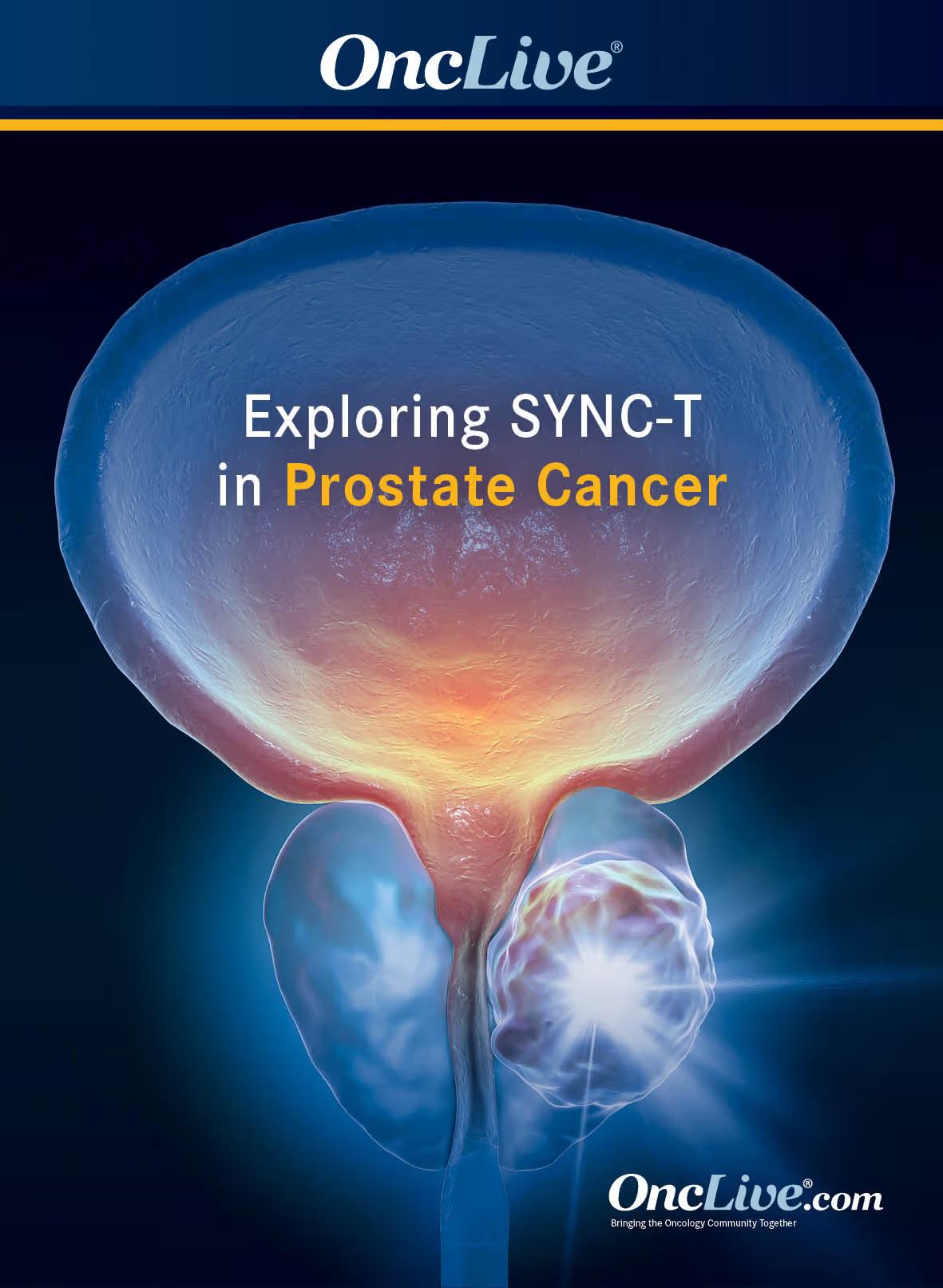
SYNC-T Therapy SV-102, an investigational in-situ immunotherapy, is designed to generate systemic anti-tumor immune responses in advanced prostate cancer and is being evaluated in the ongoing phase 2 LEGION-100 study (NCT06533644) following positive data from a phase 1 study (NCT05544227), according to Leonard J. Appleman, MD, PhD.
“There remains an unmet need in metastatic prostate cancer even with all the newer agents available,” Appleman, the director of the Genitourinary Cancer Disease Section, the section chief of genitourinary medical oncology, and an associate professor of medicine at the University of Pittsburgh Medical Center in Pennsylvania, said in an interview with OncLive®. “Nearly every patient's cancer eventually becomes androgen pathway refractory, and those patients generally can't be cured. They become resistant to subsequent therapies such as radioligand therapy, chemotherapy, and others. We don't currently have the ability to achieve durable cancer control in that setting.”
In the interview, Appleman discussed the mechanism of SYNC-T Therapy SV-102, efficacy and safety data from the phase 1 study, and the design of the phase 2 LEGION-100 trial.
SYNC-T Therapy SV-102 in Prostate Cancer: Key Takeaways
- SYNC-T Therapy SV-102 combines partial intratumoral cryolysis with 3 monoclonal antibodies (anti–PD-1, anti–CTLA-4, a CD40 agonist) and a TLR9 agonist (CpG-ODN), designed to generate an in situ, tumor-specific T-cell response in advanced prostate cancer
- In the phase 1 study (NCT05544227) presented at the 2025 ASCO Annual Meeting, 15 patients were treated with investigational SYNC-T Therapy SV-102. An 87% overall response rate and 53% complete response rate (95% CI, 29%–79%) were achieved, with a manageable safety and tolerability profile
- The ongoing phase 2 LEGION-100 study (NCT06533644) continues to enroll a similar patient population across multiple sites to further evaluate the efficacy, safety, and tolerability of investigational SYNC-T Therapy SV-102
OncLive: Please describe what SYNC-T Therapy SV-102 is, how it works, and what differentiates it from currently available therapies in this space.
Appleman: This is an investigational approach to treating androgen pathway modulation-refractory prostate cancer, [which is] disease that has progressed on androgen deprivation therapy [ADT] plus a second-generation androgen signaling inhibitor. It takes an immunologic approach that functions almost like an in vivo vaccine, eliciting a T-cell immune response against tumor-specific antigens using the tumor in situ as the antigen source.
There's nearly 100 years of literature on this general concept. Going back to at least the 1940s, investigators have removed tumors and processed them ex vivo—freeze-thawing them, mixing them with different adjuvants—to generate immunity in animal models, and clinical trials using similar approaches date back to at least the 1960s. SYNC-T Therapy SV-102 is different in that the entire process happens in situ.
The first component is partial cryolysis of a portion of the target tumor. An area of cancer is identified on imaging, a needle is introduced into the tumor, and a limited area is treated with cryolysis. The goal isn't to ablate the entire lesion the way interventional radiologists use cryotherapy as a standalone treatment, but to create a zone of cryolysis that generates a systemic effect. We believe the cryolysis induces necrotic cell death, essentially breaking cells open by brute force through freezing. That's distinct from apoptotic cell death, which is a more orderly, programmed process in which cells digest their proteins internally rather than releasing them into the extracellular space. Necrotic cell death releases intracellular proteins where they can be taken up by antigen-presenting cells and displayed to T cells.
Following cryolysis, a multi-target drug candidate is immediately infused with the same needle, which is designed to provide stimulatory signals to enhance the immune system and to block inhibitory signals. The multi-target drug candidate is comprised of an anti–PD-1 antibody, an anti–CTLA-4 antibody, a CD40 agonist antibody, and a TLR9 agonist. Published literature shows that limited cryolysis combined with a TLR9 agonist works cooperatively to generate T-cell immunity, recruit antigen-presenting cells, and drive antigen presentation.
In terms of how this differs from existing therapies, the most widely used immunotherapies in cancer right now are immune checkpoint inhibitors, which are given systemically and take the brakes off T cells in a nonspecific way, which is why autoimmunity is seen in many patients. SYNC-T Therapy SV-102, like tumor vaccines and other antigen-specific immunotherapy approaches developed over the years, is trying to generate preferentially tumor-specific T-cell immunity rather than nonspecific systemic T-cell activation.
What data have been shared so far with SYNC-T Therapy SV-102 from the phase 1 study in patients with prostate cancer?
[This study] was presented at the 2025 ASCO Annual Meeting. It was a single-institution study in a similar population to [LEGION-100]. [It included] patients with androgen pathway modulation–refractory prostate cancer and used the same basic experimental protocol of the 4-biologic drug cocktail plus partial cryolysis.
Fifteen patients were enrolled. All had received prior ADT, and 20% had received prior chemotherapy. By independent review, the overall response rate was 87%, with a complete response rate of 53% [95% CI, 29%–79%]. Additionally, 47% of patients had either a prostate-specific antigen [PSA] reduction greater than 50% or an undetectable PSA throughout treatment.
The regimen was generally well tolerated, without a great deal of high-grade toxicity. Some patients had fever and hematuria; one patient had grade 2 hypothyroidism, and one had grade 2 hepatitis. Although SV-102, the 4-component drug candidate, is given as a local infusion into the target tumor, there may be some systemic exposure to the checkpoint inhibitors, which is consistent with what was observed in this study. Correlative science showed upregulation of IFN-γ, TNF-α, and IL-6, along with expansion of new T-cell clone frequency. Those data supported initiation of the current multicenter study.
What are the key design characteristics of the phase 2 LEGION-100 study?
The population is similar [to the phase 1 study]. [LEGION-100 is enrolling] patients with androgen receptor pathway-refractory prostate cancer. Up to three prior treatments are allowed. The study treatment is also similar to what was used in the Phase 1 study presented at ASCO 2025. LEGION-100 is a larger study open at multiple sites, but the basic objectives are the same: evaluating efficacy and safety.2
Looking ahead, where do you see SYNC-T Therapy SV-102 potentially fitting into the prostate cancer treatment landscape if the Phase 2 data are positive? What unmet needs could it address?
Where SYNC-T Therapy SV-102 would fit in sequence relative to existing and in-development agents is hard to speculate on. In general, immunotherapies tend to work better earlier in the disease course, when there's a lower cancer burden and fewer prior treatments.
References
- Link Jr CJ, Kee S, Prendergast GC, et al. Clinical responses to SYNC-T therapy: in situ personalized cancer vaccination with intratumoral immunotherapy in patients with metastatic castration-resistant prostate cancer (mCRPC). J Clin Oncol. 2025;43(suppl 16):2504. doi:10.1200/JCO.2025.43.16_suppl.2504
- A study of SYNC-T therapy SV-102 in participants with metastatic castration-resistant prostate cancer. ClinicalTrials.gov. Updated June 23, 2026. Accessed July 29, 2026. https://clinicaltrials.gov/study/NCT06533644