
Opinion|Videos|November 20, 2026
Squamous Biology, Emerging Targets, and TROP2 Antibody-Drug Conjugates
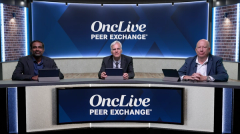
Vamsidhar Velcheti, MD, explains that squamous non-small cell lung cancer lacks treatable drivers, pointing instead to immune-resistance biology such as NRF2 pathway upregulation and investigational KEAP1 modulators and glutaminase inhibitors.
Advertisement
Vamsidhar Velcheti, MD, explains that squamous non-small cell lung cancer lacks treatable drivers, pointing instead to immune-resistance biology such as NRF2 pathway upregulation and investigational KEAP1 modulators and glutaminase inhibitors. Balazs Halmos, MD, notes that common alterations such as TP53, CDKN2A, and PIK3CA have not yielded targets. Alexander Spira, MD, PhD, FACP, links the high neoantigen load of smoking-related tumors to immunotherapy opportunities and highlights MTAP deletion as a biomarker for new agents with modest single-agent responses, adding that new drugs must outperform rather than match docetaxel. Turning to antibody-drug conjugates (ADCs), Dr. Spira recalls early excitement with datopotamab deruxtecan, followed by worse outcomes than docetaxel in squamous disease. Dr. Velcheti suspects the topoisomerase payload played a role and says sacituzumab tirumotecan appears more promising. Dr. Spira emphasizes that the antibody, linker, and payload make ADCs different from one another. Dr. Halmos notes several positive randomized trials of sacituzumab tirumotecan, and Dr. Velcheti adds that more global data are needed.
Advertisement
Related to this article

A gift to MD Anderson Cancer Center supports innovative pancreatic cancer research.

Gynecologic oncologists answer FAQs on LGSOC targeted therapy, PARP inhibitor maintenance, and emerging ADCs in ovarian cancer.

Did you catch all of this week's top oncology news? Test your knowledge with OncLive's Weekly News Quiz.
Jorge Cortes, MD, discusses response-based ponatinib dosing, mutation testing, and managing cardiovascular risk in resistant CML.

The EC approved every-6-week maintenance dosing and shorter 350-mg infusions for cemiplimab across all 6 EU indications.

Faculty convened at an OncLive Scientific Interchange and Workshop to guide oncology fellows through designing a cancer clinical trial development program, from concept to approval.

The FDA granted priority review to sonesitatug vedotin for previously treated CLDN18.2-positive advanced gastroesophageal cancers.

UCLA Health performs its first single-port robotic lobectomy, using a new technique that could reduce pain and make recovery easier for patients with lung cancer.
Advertisement
Advertisement
Trending on OncLive
1
Dose Optimization, Evidentiary Bars, and Patient Selection Shape Trial Design in EGFR- and HER2-Mutant NSCLC
2
EC Approves Extended Cemiplimab Dosing in Skin, Lung, and Cervical Cancers
3
Testing, Timing, and Toxicity: Maximizing Tepotinib’s Durable Benefit in MET Exon 14 Skipping NSCLC
4
Response-Based Dosing and Mutation Testing Guide Ponatinib Use in CML
5