
Opinion|Videos|September 15, 2026
Timely Referral and Bridging Therapy in Large B-Cell Lymphoma
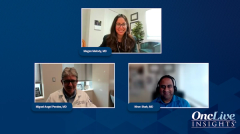
Dr. Melody revisits Mr. R's treatment course after his local oncologist refers him to a regional cell therapy center, highlighting the importance of coordinating treatment for a patient with aggressive, symptomatic large B-cell lymphoma who lives 90 minutes away.
Advertisement
Episodes in this series
Dr. Melody revisits Mr. R's treatment course after his local oncologist refers him to a regional cell therapy center, highlighting the importance of coordinating treatment for a patient with aggressive, symptomatic large B-cell lymphoma who lives 90 minutes away. Dr. Perales emphasizes that early referral and close collaboration between community oncologists and cell therapy specialists are essential to allow sufficient time for evaluation and treatment planning. He distinguishes between holding therapy, which is used before apheresis to control disease and symptoms, and bridging therapy, which is administered after apheresis and before CAR T-cell infusion. Dr. Perales explains that these approaches are often combined in real-world practice and may include systemic therapy or radiation depending on the patient's disease status and response. He notes that pivotal trials used more restrictive approaches to bridging therapy, whereas real-world practice frequently incorporates active disease control between referral, collection, and infusion. The discussion reinforces the value of early referral and coordinated care throughout the CAR T-cell treatment process for patients with large B-cell lymphoma.
Advertisement
Related to this article

The FDA has approved lutetium Lu 177 dotatate injection for SSTR-positive GEP-NETs, including foregut, midgut, and hindgut NETs.

Strong overall response rates with pirtobrutinib in relapsed/refractory CLL previously treated with covalent BTK inhibitors were shown in a pooled analysis.

Real-world tumor lysis syndrome occurred in less patients with CLL who received venetoclax-based regimens than those with MCL.

Dana-Farber Cancer Institute is launching Solavia Decision Suite to bring clinical expertise and evidence-based treatment pathways directly into clinicians’ workflows.

The FDA indication for adagrasib plus cetuximab for KRAS G12C–mutated locally advanced or metastatic colorectal cancer has been removed.

The updated tarlatamab label reduces post-infusion monitoring after each of the first two doses to 6 to 8 hours, down from 22 to 24 hours.
TLX101-Px, an FET-PET imaging agent, was FDA approved to differentiate treatment-related changes from recurrent or progressive glioma.
The FDA approved aminolevulinic acid hydrochloride plus PDT for the treatment of superficial basal cell carcinoma.
Advertisement
Advertisement
Trending on OncLive
1
FDA Approves Lutetium Lu 177 Dotatate Injection for SSTR+ GEP-NETs
2
Venetoclax-Based Regimens Show Lower TLS Rates in CLL vs MCL
3
Pirtobrutinib Elicits Responses After Covalent BTK Inhibitor Failure in R/R CLL
4
Dr Drilon on the ARROS-1 Trial Data With Zidesamtinib in ROS1+ NSCLC
5