
Shared insight on the selection of endocrine partners while managing patients in the relapsed/refractory setting of HR+ metastatic breast cancer.

Aditya Bardia, MD, MPH, FASCO, is a professor in the Department of Medicine, Division of Hematology/Oncology and director of Translational Research Integration at UCLA Health Jonsson Comprehensive Cancer Center.
Shared insight on the selection of endocrine partners while managing patients in the relapsed/refractory setting of HR+ metastatic breast cancer.
Closing out their review on treatment strategies for HER2-expressing breast cancer, panelists share practical advice for the community setting.
Key opinion leaders consider when it is appropriate to continue CDK4/6 inhibition at progression of disease in the setting of HR+ metastatic breast cancer.
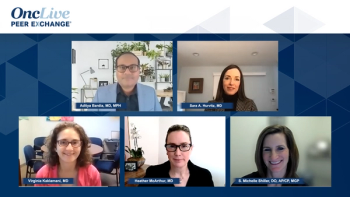
A brief review of the role molecular profiling plays at a patient’s relapse with HR+ metastatic breast cancer.
Panelists share a brief discussion on early-stage HER2-low breast cancer and identify treatment options available in that setting.
Comprehensive insight on evolving management strategies for patients diagnosed with HER2-low breast cancer.
Expert perspectives on factors that aid in the selection of optimal first-line therapy for patients with HR+ metastatic breast cancer.

Shifting their focus to HR+ metastatic disease, expert panelists consider the importance of molecular profiling and first-line treatment options.

Centered discussion on the advent of HER2-low breast cancer and how it is differentiated from HER2+ and HER2- disease.
Expert panelists provide a broad overview on HER2+ breast cancer and review the evolving treatment armamentarium.
A brief review of prevalent clinical trials in the early-stage HR+ breast cancer paradigm and how they help to inform treatment decision-making.
Key opinion leaders in breast cancer management discuss Ki67 and the monarchE trial, which analyzed abemaciclib therapy in the HR+ space.
A broad look at the role of Ki67 expression in informing the selection of therapy for patients with early-stage HR+ breast cancer.
Expert panelists share their perspectives on best practices for molecular profiling in patients diagnosed with early-stage breast cancer.

Aditya Bardia, MD, MPH, discusses the significance of the FDA approval of sacituzumab govitecan in patients with pretreated hormone receptor–positive, HER2-negative metastatic breast cancer and key data from the phase 3 TROPiCS-02 trial.

Aditya Bardia, MD, MPH, discusses the investigation of oral selective estrogen receptor degraders in patients with estrogen receptor-positive, HER2-negative metastatic breast cancer.
Aditya Bardia, MD, MPH, discusses the use of elacestrant in patients with estrogen receptor–positive, HER2-negative metastatic breast cancer.

Closing out his discussion on the management of metastatic triple-negative breast cancer, Aditya Bardia, MD, MPH, considers future treatment strategies that may improve outcomes for patients.
Comprehensive insight on use of first-line pembrolizumab plus chemotherapy in patients diagnosed with metastatic TNBC based on results from the KEYNOTE-355 trial.
Centering discussion on a patient scenario of metastatic TNBC, Aditya Bardia, MD, MPH, highlights the value of first-line chemoimmunotherapy as a treatment option.
Expert oncologist Aditya Bardia, MD, MPH, shares his perspective on mainstay treatment options for patients diagnosed with metastatic triple-negative breast cancer.

Dr. Bardia discusses promising biomarkers and strategies for helping assess risk and detect recurrence in breast cancer.
Experienced clinician shares insight on potential challenges in the use of ctDNA monitoring.
Clinical pearls addressing the current and potential future applications of ctDNA in breast cancer monitoring strategies.
Dr. Bardia reviews data from the ASCO 2022 Annual Meeting, focusing on serial postoperative ctDNA monitoring for breast cancer recurrence.
A breast cancer expert provides a brief overview of clinical evidence supporting the use of ctDNA to detect recurrence.
Aditya Bardia, MD, MPH shares his approach to assessing breast cancer recurrence risk and monitoring patients during and after treatment.

Closing out their discussion on HR+, HER2- breast cancer, expert panelists share their excitement for further evolution in the treatment paradigm.

Expert perspectives on trial results with both IO and PARP inhibitor therapy, respectively, in the setting of relapsed/refractory HR+/HER2- breast cancer.

A brief discussion on the use of antibody drug conjugates in patients with relapsed/refractory breast cancer and HER2-low expression.