

Investigators are seeking to determine whether the combination of eflornithine with lomustine can improve survival for patients with recurrent anaplastic astrocytoma.
Investigators are seeking to determine whether the combination of eflornithine with lomustine can improve survival for patients with recurrent anaplastic astrocytoma.

The FDA recently approved a supplemental new drug application for Blue Light Cystoscopy with Cysview for surveillance of bladder cancer. Cysview is currently indicated for use for detection of nonmuscle-invasive bladder cancer.

Wichita Urology, the largest independent urology practice in Wichita, Kansas, have built their success over 60 years partly by holding frequent meetings, which they say build camaraderie and make it possible to address needs quickly.

Investigators are looking into a combination of immunotherapy agents for patients with unresectable hepatocellular carcinoma, for whom there are limited treatment options in the first line.

The pan-TRK inhibitor entrectinib (RXDX101) is being tested simultaneously in multiple locally advanced or metastatic solid tumor types as a treatment for patients harboring fusions involving the NTRK1/2/3, ROS1, or ALK genes.

Investigators are studying the value of polatuzumab vedotin in patients with intermediate- or high-risk diffuse large B-cell lymphoma.

Given that few options are available for intrahepatic cholangiocarcinoma, investigators are excited about a phase III trial of the multikinase inhibitor derazantinib as a second-line treatment for patients with inoperable or advanced disease.

Larotrectinib, an oral inhibitor of tropomyosin receptor kinases, is being developed in a novel multifaceted clinical trial program that spans cancer types and age groupings.

Plinabulin, an antineoplastic agent that activates an immune response, is being investigated as a treatment option for patients with advanced or metastatic non–small cell lung cancer who have progressed after standard-of-care therapy.

Associated Medical Professionals of New York, a urology and radiation oncology practice, seeks to give its physician partners an equal share of its financial success while rewarding all staff members according to their levels of responsibility and workflow intensity.

Selinexor, a novel drug that targets a tumor-suppressor “cargo” protein mechanism, is being investigated in patients with relapsed/refractory multiple myeloma who have received 1 to 3 prior treatment regimens.

Treatment with neoadjuvant chemotherapy prior to radical cystectomy significantly improved overall survival compared with cystectomy alone for patients with the basal subtype of muscle-invasive bladder cancer.

Prostate cancer has recently been recognized as a genomically heterogeneous disease with subtypes similar to breast or ovarian cancers.

The established efficacy of single-agent checkpoint inhibition for metastatic urothelial carcinoma along with molecule expression analyses suggests that PD-1/PD-L1 inhibition could hold promise for patients with non-muscle invasive bladder cancer, particularly those unresponsive to Bacillus Calmette-Guérin.
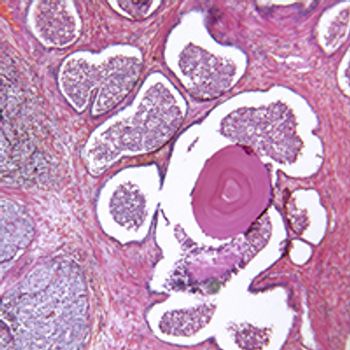
Both magnetic resonance imaging and prostate cancer antigen 3 tests can predict a positive prostate biopsy and are helpful in identifying high-risk prostate cancer.

The combination of PD-1 or PD-L1 inhibitors with existing frontline therapies could represent a superior approach for some treatment-naïve patients with renal cell carcinoma.

A newly proposed urology-specific alternative payment model could save up to 37% on costs of care, partly by giving physicians incentives to pursue active surveillance rather than active intervention, according to the Large Urology Group Practice Association.

Rucaparib, a drug approved for the treatment of ovarian cancer, might also be used to treat patients with metastatic castration-resistant prostate cancer.

Oncogenic fusions involving TRK proteins have been implicated in various cancer types, prompting clinical development of therapies targeting the aberrations across histologies rather than their body site of origin.

Tazemetostat, a small molecule that targets epigenetic activity of the EZH2 gene, is being investigated as a treatment option for patients with relapsed or refractory diffuse large B-cell lymphoma or follicular lymphoma.

VAL-083, a novel alkylating agent that has demonstrated potency against brain tumor cells and can overcome resistance associated with methylguanine methyltransferase (MGMT), is being investigated in patients with glioblastoma multiforme or gliosarcoma who had progressive disease during or after treatment with bevacizumab.

PEGPH20 (pegvorhyaluronidase alfa), a novel formulation of a naturally occuring enzyme, is being investigated as a biomarker-driven treatment for patients with advanced pancreatic cancer.

Ipatasertib is being investigated in patients with metastatic castration-resistant prostate cancer as a method of simultaneously blocking a resistance mechanism to hormone therapy and improving responses to abiraterone.

Nintedanib, an angiogenesis inhibitor, is being investigated as a first-line treatment for patients with unresectable malignant pleural mesothelioma (MPM).

The use of biomarkers in genitourinary cancers offers exciting potential in understanding which patients may do better with androgen-targeting therapies.

A first-ever collaboration between the American Urological Association and other prominent urological groups has created a multidisciplinary set of guidelines on treating patients with nonmetastatic muscle-invasive bladder cancer (MIBC).

A comparison of the genomic risk profiles of patients with low-risk prostate cancer who are candidates for active surveillance against higher-risk patients, discovered that substantial genomic heterogeneity exists among patients with prostate cancer.

Selinexor (KPT-330), a small-molecule inhibitor with a novel mechanism of action, is being investigated in patients with multiple myeloma who have become refractory to the many new options that have been introduced in recent years for patients with the malignancy.

A new test that can detect the existence of tumor activity is gaining credibility as a means of confirming the results of prostate biopsies, which have the potential to miss tumor cells.

Two combination regimens anchored by different proteasome inhibitors are being compared in a national clinical trial for patients with newly diagnosed symptomatic multiple myeloma that also seeks to evaluate the ideal duration of lenalidomide (Revlimid) maintenance therapy.