
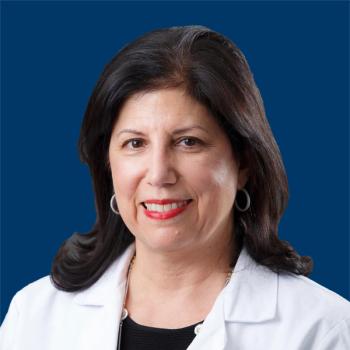
Linda T. Vahdat, MD, discusses investigations of ADCs and targeted agents in patients with TNBC and residual disease following chemoimmunotherapy.

Associate Editor, OncLive
Ashling Wahner joined MJH Life Sciences in 2022. She produces OncLive's podcast, OncLive On Air, and helps ensure timely publication of news content and announcements from the FDA approval pipeline. She also attends conferences live and virtually to conduct video interviews and produce written coverage. Email: [email protected]
Linda T. Vahdat, MD, discusses investigations of ADCs and targeted agents in patients with TNBC and residual disease following chemoimmunotherapy.

Ivonescimab has been granted priority review in China for the frontline treatment of patients with PD-L1–positive locally advanced or metastatic NSCLC.
The FDA has approved axatilimab for adult and pediatric patients with cGVHD who have progressed on at least 2 prior lines of systemic therapy.

The FDA has granted fast track designation to Deltacel in combination with low-dose radiation for pretreated metastatic non–small cell lung cancer.
A new drug application has been submitted to the FDA for UGN-102 inlow-grade, intermediate-risk non–muscle-invasive bladder cancer.
Linda T. Vahdat, MD, discusses the use of ADCs in metastatic TNBC and how neoadjuvant immunotherapy performs in patients with early-stage TNBC.

Tilak Sundaresan, MD, and Nicole S. Evans, MD, discuss the implications of a study evaluating reasons for non-treatment among patients with PDAC.

Enfortumab vedotin plus pembrolizumab improved survival vs chemotherapy with no QOL detriment in previously untreated metastatic urothelial cancer.
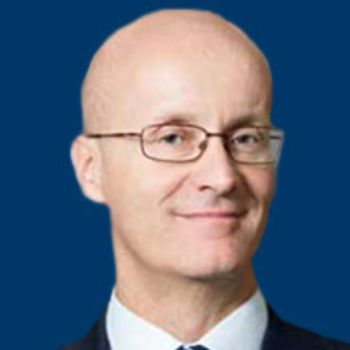
Deltacel generated early signals of clinical efficacy in patients with metastatic non–small cell lung cancer who have not responded to standard therapies.

Tilak Sundaresan, MD, and Nicole S. Evans, MD, discuss common reasons for nontreatment among patients with pancreatic cancer.

Sara M. Tolaney, MD, MPH, discusses the use of ADCs in HER2-positive breast cancer and ongoing research in this patient population.

Sara M. Tolaney, MD, MPH, discusses the HER2-positive breast cancer treatment paradigm and how standard agents may be optimized to improve outcomes.

Praful Ravi, MB, BChir, MRCP, discusses an analysis measuring residual cancer burden in localized prostate cancer after neoadjuvant therapy and surgery.

LP-300 plus pemetrexed/carboplatin exhibited disease control in never-smokers with advanced NSCLC following progression on prior TKI treatment.

Roger Li, MD, discusses the efficacy of bladder-sparing therapy after progression on pembrolizumab in patients with BCG-unresponsive, high-risk NMIBC.

Evorpacept plus TRP generated clinically meaningful, robust, and durable responses in patients with previously treated HER2-positive gastric or GEJ cancer.
In case you missed any, below is a recap of every OncLive On Air episode that aired in July 2024.

Two late-stage trials investigating the efficacy and safety of pamrevlumab in pancreatic cancer failed to meet their primary end points of OS.
The FDA has extended the PDUFA date for the NDA seeking the approval of revumenib for patients with relapsed/refractory KMT2A-rearranged acute leukemia.

Fixed-duration acalabrutinib plus venetoclax with or without obinutuzumab elicited favorable PFS outcomes in previously untreated chronic lymphocytic leukemia.
David R. Gandara, MD, discusses research reflecting the capabilities of ctDNA assays to detect MRD and prognosticate adjuvant NSCLC treatment outcomes.

Rituximab maintenance therapy following frontline bendamustine plus rituximab improved EFS, EFS2, and OS vs no maintenance therapy in patients with MCL.

Vishal Patel, MD, FAAD, FACMS, highlights the evolving role of PD-1 inhibitors in the management of nonmelanoma skin cancers.

C. Ola Landgren, MD, PhD, highlights how therapeutic improvements with quadruplet regimens will benefit all patients with newly diagnosed multiple myeloma.
C. Ola Landgren, MD, PhD, discusses the use of quadruplet regimens in patients with newly diagnosed multiple myeloma.
The addition of nivolumab to tivozanib did not improve PFS in advanced metastatic renal cell carcinoma following prior immune checkpoint inhibition
The FDA has awarded fast track designation to the next-generation precision radiopharmaceutical therapy ABD-147 for the treatment of patients with ES-SCLC.

Adjuvant nivolumab plus ipilimumab significantly improved 3-year DMFS rates compared with historical controls in patients with high-risk uveal melanoma.

Ciara Kelly, MBBCh, BAO, discusses ongoing GIST research for GIST Awareness Day.

Belzutifan generated superior efficacy and safety outcomes vs everolimus across prespecified subgroups of patients with previously treated advanced ccRCC.