

Neladalkib elicited responses and was active in the CNS in TKI-pretreated patients with advanced ALK-positive NSCLC, including lorlatinib-naive patients.

Associate Editor, OncLive
Ashling Wahner joined MJH Life Sciences in 2022. She produces OncLive's podcast, OncLive On Air, and helps ensure timely publication of news content and announcements from the FDA approval pipeline. She also attends conferences live and virtually to conduct video interviews and produce written coverage. Email: [email protected]
Neladalkib elicited responses and was active in the CNS in TKI-pretreated patients with advanced ALK-positive NSCLC, including lorlatinib-naive patients.

PanTRKare was approved in China as a companion diagnostic to identify patients with NTRK fusion–positive solid tumors who may be eligible for entrectinib.

Christine Hann, MD, PhD, discusses how recently presented SCLC data inform treatment decision-making across the LS-SCLC and ES-SCLC settings.

Ziftomenib has received FDA approval for the treatment of adult patients with relapsed or refractory acute myeloid leukemia harboring an NPM1 mutation.

Joyce O'Shaughnessy, MD, discusses ways that data with sacituzumab govitecan and Dato-DXd may shift treatment standards for patients with mTNBC.

Using AI to automate oncology insurance prior authorization submissions could help lighten the load for health care professionals and speed access to care.

Incorporating AI into daily workflows may allow oncology professionals to save time on insurance denial claims and re-allocate time back into patient care.

Use of camizestrant plus a CDK4/6 inhibitor at the emergence of an ESR1 mutation did not significantly worsen visual symptoms in HR-positive breast cancer.
Erica L. Mayer, MD, MPH, discusses data with giredestrant and how the evERA trial shows the potential for SERD-based regimens in ER-positive breast cancer.

Treatment with adjuvant durvalumab plus tremelimumab resulted in a DFS benefit vs active monitoring in RCC, particularly in the higher-risk population.

A phase 2 study is using ctDNA positivity to select patients with CRC who may benefit from treatment with the CSF1R-directed antibody AMB-05X.

Rohit Thummalapalli, MD, discusses the treatment paradigm for patients with GEP-NETs and the role of Lutetium Lu 177 dotatate across lines of therapy.

Yuan Yuan, MD, PhD, discusses the use of sacituzumab govitecan in TNBC and remaining questions about the use of CDK4/6 inhibitors in ER-positive disease.

Lifileucel was deemed safe and active in patients with previously treated, advanced nonsquamous NSCLC without certain actionable genetic mutations.
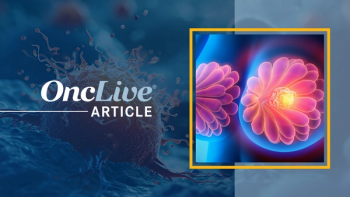
In a recent Peer Exchange, breast cancer experts discussed updates from ESMO 2025, including practice-informing data with antibody-drug conjugates.
In case you missed any, below is a recap of every OncLive On Air episode that aired in October 2025.
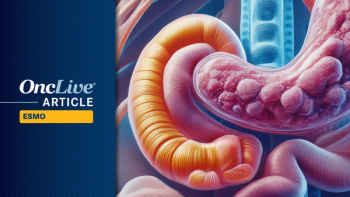
Revisit the most intriguing GI cancer data from the 2025 ESMO Congress.

Joaquim Bellmunt, MD, PhD, discusses ways that ctDNA tests could augment bladder cancer management and the need for confirmatory data from ongoing trials.
Revisit the top data and presentations in breast cancer from the 2025 ESMO Congress.

Sara A. Hurvitz, MD, FACP, discusses the design of VIKTORIA-1, key efficacy and safety findings, and how these data may influence breast cancer management.
Joaquim Bellmunt, MD, PhD, discusses the rationale for and findings from the IMvigor011 trial of ctDNA-guided adjuvant atezolizumab vs placebo in MIBC.
Vopimetostat elicited responses and was considered tolerable in patients with MTAP-deleted solid tumors, including pancreatic and lung cancers.
The FDA granted priority review to enfortumab vedotin plus pembrolizumab as perioperative therapy for cisplatin-ineligible muscle-invasive bladder cancer.

Taylor Brooks, MD, discusses ways that the availability of CAR T-cell therapies has augmented the relapsed/refractory LBCL treatment paradigm.

CAR2219 induced high response rates in relapsed/refractory LBCL, and the role of post-infusion maintenance therapy is worthy of further study.
Taylor Brooks, MD, discusses data that supported the FDA approvals of liso-cel across LBCL treatment settings and details of the agent’s toxicity profile.

Aaron Gerds, MD, MS, discusses the role of BTK inhibitors in CLL, real-world data with CAR T-cell therapies in LBCL, and JAK inhibitors for myelofibrosis.
Bemarituzumab/mFOLFOX6 produced an OS advantage over placebo/mFOLFOX6 in FGFR2b-overexpressing gastric/GEJ cancer; this was attenuated at longer follow-up.
Bezuclastinib received breakthrough therapy designation for pretreated non-advanced systemic mastocytosis, as well as for smoldering systemic mastocytosis.
The addition of relacorilant to nab-paclitaxel produced a PFS benefit vs nab-paclitaxel alone in PROC with a history of PARP inhibitor exposure.