

T-DXd significantly improved IDFS vs T-DM1 in high-risk, HER2-positive primary breast cancer with residual invasive disease after neoadjuvant therapy.

Associate Editor, OncLive
Ashling Wahner joined MJH Life Sciences in 2022. She produces OncLive's podcast, OncLive On Air, and helps ensure timely publication of news content and announcements from the FDA approval pipeline. She also attends conferences live and virtually to conduct video interviews and produce written coverage. Email: [email protected]
T-DXd significantly improved IDFS vs T-DM1 in high-risk, HER2-positive primary breast cancer with residual invasive disease after neoadjuvant therapy.
The addition of adjuvant abemaciclib to endocrine therapy provided an OS benefit vs endocrine therapy alone in hormone receptor–positive breast cancer.
Taylor Brooks, MD, discusses the effects of CAR T-cell therapy on LBCL management and the efficacy of axi-cel for patients with relapsed/refractory LBCL.

Aaron Gerds, MD, MS, discusses the clinical applications of each of the FDA-approved JAK inhibitors for the treatment of patients with myelofibrosis.
Alicia Morgans, MD, MPH, discusses the role of radioligand therapies for mCRPC and the importance of shared decision-making in prostate cancer management.
Chemoradiotherapy improved survival vs radiotherapy alone in the adjuvant setting in high-risk endometrial cancer, particularly in p53-abnormal disease.

Alicia Morgans, MD, MPH, discusses data from the PEACE-3 trial that support the use of radium-223 plus enzalutamide in patients with mCRPC.

Marc S. Raab, MD, discusses updated MRD negativity and safety data with teclistamab plus SOC induction regimens in newly diagnosed multiple myeloma.
Real-world MCL treatment with zanubrutinib generated longer treatment durations and higher treatment adherence rates vs acalabrutinib and ibrutinib.

Ahead of the 2025 ESMO Congress, GI cancer experts share the gastric cancer and CRC research they’re most looking forward to seeing at the meeting.

VT3989 has received fast track designation from the FDA for unresectable malignant nonpleural or pleural mesothelioma after progression on prior therapy.
A Data Monitoring Committee confirmed that the safety profile of HyBryte is acceptable and that the agent is not associated with safety concerns in CTCL.

Emerging technologies and process reconsiderations may alleviate time and resource stressors oncology teams face when appealing patient insurance denials.
The FDA approved lurbinectedin plus atezolizumab as first-line maintenance for ES-SCLC that has not progressed after frontline induction therapy.

Oncology experts and AI advocates discuss insights about how AI can help manage tasks, keep up with evolving treatment practices, and improve patient care.
In case you missed any, below is a recap of every OncLive On Air episode that aired in September 2025.
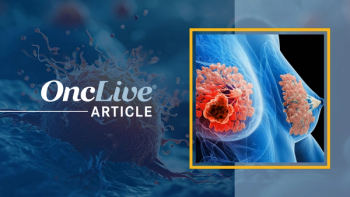
The FDA accepted an sBLA seeking the approval of neoadjuvant T-DXd followed by THP for the management of high-risk, HER2-positive breast cancer.

Michael J. Mauro, MD, discusses the evolution of TKIs for CML, factors for TKI selection, and ways that genetic mutations influence treatment efficacy.
The in vivo CAR T-cell therapy UB-VV111 has received fast track designation from the FDA for the management of relapsed/refractory LBCL and CLL.

AI-powered clinical decision support systems can help oncologists manage rising information demands without forfeiting autonomy in care delivery.

Stenoparib monotherapy generated long-term clinical benefit in patients with platinum-resistant and -refractory advanced ovarian cancer.

Saurabh Dahiya, MD, FACP, discussed how the unique mechanism of action of KITE-363 may improve upon the efficacy of other CAR T-cell therapies for LBCL.

Atebimetinib plus modified gemcitabine/nab-paclitaxel continued to elicit high OS rates in patients with treatment-naive pancreatic cancer.
The FDA approved imlunestrant for ER-positive, HER2-negative advanced or metastatic ESR1-mutated breast cancer following endocrine therapy.

Frontline T-DXd plus pertuzumab is under FDA priority review for the treatment of patients with unresectable or metastatic HER2-positive breast cancer.

OncLive heard from myeloma experts about the biggest developments in the field at the 22nd Annual International Myeloma Society Meeting and Exposition.

Belantamab mafodotin plus lenalidomide maintenance was active and had an expected safety profile in transplant-eligible, newly diagnosed myeloma.
Maintenance therapy with daratumumab plus lenalidomide led to higher MRD-negativity conversion rates vs lenalidomide alone in newly diagnosed myeloma.

Linvoseltamab monotherapy generated responses and had a favorable safety profile with low rates of high-grade TEAEs in high-risk smoldering myeloma.

Belantamab mafodotin plus lenalidomide and dexamethasone induced CRs or better in over half of patients with newly diagnosed multiple myeloma.