
Read a recap of the episodes of OncLive On Air that debuted in May 2025.

Associate Editor, OncLive
Ashling Wahner joined MJH Life Sciences in 2022. She produces OncLive's podcast, OncLive On Air, and helps ensure timely publication of news content and announcements from the FDA approval pipeline. She also attends conferences live and virtually to conduct video interviews and produce written coverage. Email: [email protected]
Read a recap of the episodes of OncLive On Air that debuted in May 2025.
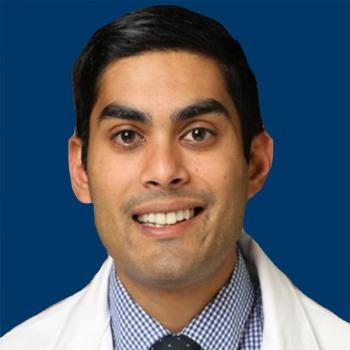
Vivek Patel, MD, discusses the safety of bispecific antibodies and the choice between these agents and CAR T-cell therapy for follicular lymphoma.
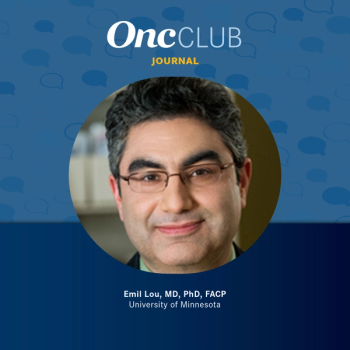
CRISPR-Cas9–mediated CISH gene knockout TIL therapy was well tolerated and demonstrated early signals of efficacy in metastatic GI epithelial cancer.
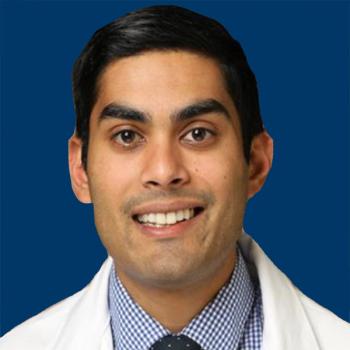
Vivek Patel, MD, discusses the evolving roles of chemoimmunotherapy and bispecific antibodies in the first-line follicular lymphoma setting.

Eftilagimod alfa plus radiotherapy and pembrolizumab improved tumor hyalinization/fibrosis rates vs radiotherapy alone in resectable soft tissue sarcoma.

SVR10 at week 12 was associated with favorable OS among patients with myelofibrosis and thrombocytopenia treated with pacritinib in the PERSIST-2 trial.
The FDA’s ODAC voted 8 to 0 against the risk/benefit profile of talazoparib in combination with enzalutamide for patients with non-HRR–mutant mCRPC.
Alexis LeVee, MD, discusses ongoing phase 3 trials evaluating the first-line use of ADCs in both PD-L1–positive and –negative TNBC.
The FDA’s ODAC voted in favor of the risk/benefit profile of subcutaneous daratumumab in high-risk smoldering multiple myeloma.
Lymphodepletion was associated with enhanced MAR T-cell response and antitumor activity with MT-601 in patients with relapsed/refractory lymphoma.

The B7-H3–directed CAR T-cell therapy BCB-276 received RMAT designation for the treatment of patients with diffuse intrinsic pontine glioma.
Alexis LeVee, MD, discusses treatment challenges associated with TNBC and ongoing trials that may improve outcomes for patients with early-stage disease.

Frontline endocrine therapy plus entrectinib failed to decrease RCB to 0/1 in patients with invasive lobular breast carcinoma.

Neoadjuvant data from the ADAPTcycle trial confirmed the limited benefit of chemotherapy over endocrine therapy in high-risk HR-positive breast cancer.
The FDA approved frontline retifanlimab/chemotherapy for metastatic SCAC and retifanlimab monotherapy for metastatic SCAC with progression on chemotherapy.

Pembrolizumab/paclitaxel with or without bevacizumab improved PFS vs placebo/chemotherapy with or without bevacizumab in platinum-resistant ovarian cancer.
To prepare for the 2025 ASCO Annual Meeting, breast cancer experts share the abstracts and discussions they’re most excited to see at the meeting.
Rami Komrokji, MD, discusses the evolution of lower-risk MDS treatments that reflect novel classification systems and trials exploring novel therapies.

Belrestotug plus dostarlimab did not improve PFS vs dostarlimab monotherapy in PD-L1–high NSCLC, supporting the termination of belrestotug development.
THE001, a doxorubicin-encapsulating thermosensitive liposome therapy, has been granted FDA orphan drug designation for soft tissue sarcoma.
Amer Zeidan, MBBS, discusses evolutions in the myelodysplastic syndrome treatment paradigm and ongoing research seeking to improve treatment efficacy.

Nicole Lamanna, MD, discusses pirtobrutinib decision-making in the relapsed/refractory CLL setting and ongoing earlier-line research with the agent.

Evan T. Hall, MD, MPhil, discusses the limited potential for immunotherapy rechallenge in patients with RCC and challenges with later-line RCC management.
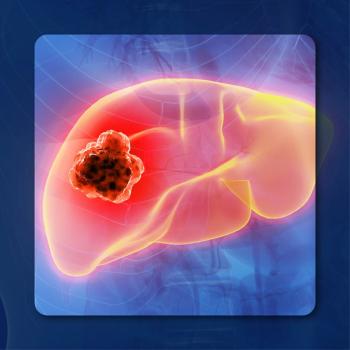
SCG101 T-cell therapy was safe and induced sustained HBV clearance and antitumor activity in patients with advanced HBV-related hepatocellular carcinoma.
Petros Grivas, MD, PhD, discusses data from CheckMate 274 and how emerging data from bladder cancer trials are shaping immunotherapy strategies in MIBC.
Petros Grivas, MD, PhD, discusses key findings from the NIAGARA trial and how these data support the use of perioperative durvalumab in MIBC management.
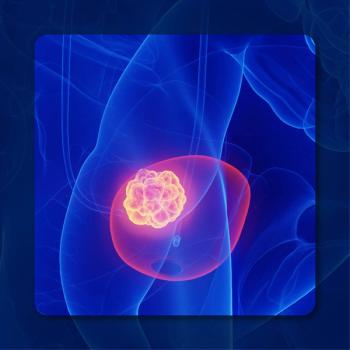
A meeting has been requested to address the FDA's refusal to file an sBLA for nogapendekin alfa inbakicept plus BCG in BCG-unresponsive papillary NMIBC.
An sBLA seeking the approval of epcoritamab plus rituximab and lenalidomide for relapsed/refractory FL is planned to be submitted to the FDA.
Experts from across oncology specialties shared some of the most talked-about abstracts and discussions from the 2025 AACR Annual Meeting.
Anna C. Pavlick, BSN, MSc, DO, MBA, discusses data for RP1 plus nivolumab and the evolving treatment landscape in advanced melanoma.