
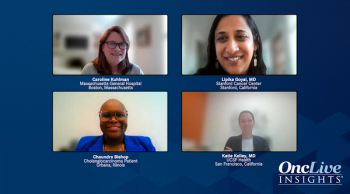
Provider and patient perspectives on why patient education about FGFRi treatment-associated adverse events and how to manage them are is essential in helping patients maintain a good quality of life and stay on treatment.
Provider and patient perspectives on why patient education about FGFRi treatment-associated adverse events and how to manage them are is essential in helping patients maintain a good quality of life and stay on treatment.
Many patients with cholangiocarcinoma being treated with FGFRi will experience stomatitis and dry mouth, but there are strategies that can help.
Experts share preventative and management strategies for nail toxicities and mouth sores that can cause significant quality of life issues for patients being treated with FGFRi.
Hyperphosphatemia is the most common AE associated with FGFRi treatments and can impact patient quality of life, but there are treatments and possible diet changes that may help mitigate this AE.
Ocular toxicities from dry eye to development of cataracts are potential risks with FGFRi treatment; providers share management strategies.
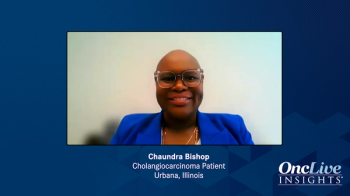
A patient with cholangiocarcinoma shares her experience while being treated with an FGFR inhibitor, as well as insights on what providers should tell their patients to help them best manage or possibly prevent these adverse events.
A review of how frequently adverse events from hyperphosphatemia to nail toxicities to stomatitis and more.
Provider perspectives on the importance of education patients about potential adverse events they may experience when initiating treatment with FGFR inhibitors.
Next-generation FGFR inhibitors show promise in early trials evaluating their efficacy and safety for the treatment of cholangiocarcinoma.
Experts discuss treatment options for cholangiocarinoma and how FGFR inhibitors have changed the treatment landscape in recent years.
Experts in treating cholangiocarcinoma share insights on when biomarker testing is needed and which biomarkers to test for.
Key opinion leaders illustrate how patients with intrahepatic cholangiocarcinoma present in a clinical setting.
The intricate web of risk factors influencing diverse forms of liver cancers are explored.
Medical experts discuss the pathology of intrahepatic cholangiocarcinoma.
January 10th 2024
January 10th 2024
December 14th 2023
January 10th 2024
January 17th 2024