Articles by Christine Bestvina, MD
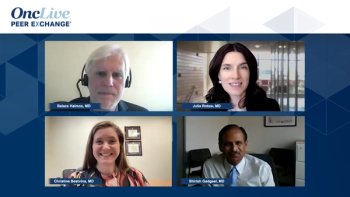
Panelists discuss the role of immunotherapy in the treatment landscape for BRAF-positive NSCLC, considering factors influencing the choice between immunotherapy and targeted therapy, emerging therapies, ongoing clinical trials, and approaches to dosing, sequencing, and toxicity management for both ALK and BRAF inhibitors.
Panelists discuss recent data on progression-free survival (PFS) and duration of response (DOR) for BRAF-MEK inhibitor combinations, including encorafenib + binimetinib and dabrafenib + trametinib, while also addressing emerging safety signals, differences in response based on treatment lines, and considerations for dose modifications and sequencing strategies in clinical practice.
Panelists discuss their insights on current and emerging combination strategies in the treatment of BRAF-positive NSCLC, focusing on the integration of targeted therapies, immunotherapies, or both.
Panelists discuss the findings from the ALINA study on adjuvant alectinib vs chemotherapy in resected ALK-positive NSCLC, considering how these results may influence early-stage management, sequencing strategies for ALK inhibitors, and the role of resistance mechanisms in treatment decisions.
Panelists discuss the efficacy of ALK inhibitors in treating brain metastases, referencing data from the REMARK study, the CROWN trial, ALTA-3, and ALTA-1L/brigatinib, among others.
Panelists discuss the circumstances under which they would consider switching patients on different first-line treatments to lorlatinib and outline approaches for CNS surveillance and management in ALK-positive patients.
Panelists discuss how recent data influence treatment choices for ALK-positive NSCLC patients, highlighting specific patient factors that guide decisions and potential concerns regarding the use of lorlatinib as first-line therapy.
Panelists discuss the key findings from the latest data from the CROWN and BRIGHTSTAR studies, emphasizing efficacy end points and comparing the effectiveness of these regimens with that of others in the treatment landscape for ALK-positive NSCLC.
Panelists discuss the importance of molecular testing in NSCLC, particularly for ALK rearrangements, and explore how recent advancements and emerging technologies are shaping first-line treatment selection for ALK-positive patients.

Christine Bestvina, MD, discusses strategies for managing adverse effects associated with the ROS1 TKI repotrectinib in patients with ROS1-positive metastatic non–small cell lung cancer.

Christine Bestvina, MD, discusses the emerging role of neoadjuvant chemoimmunotherapy in lung cancer.

Christine Bestvina, MD, discusses challenges with interpreting molecular reports in lung cancer.
Christine Bestvina, MD, discusses the phase III KEYNOTE-407 trial in squamous non–small cell lung cancer.
