

Count Me In, a patient-partnered research initiative led by Dana-Farber Cancer Institute and the Broad Institute of MIT and Harvard, is launching a project focused on translocation renal cell carcinoma.
Count Me In, a patient-partnered research initiative led by Dana-Farber Cancer Institute and the Broad Institute of MIT and Harvard, is launching a project focused on translocation renal cell carcinoma.

Kimberly Stegmaier, MD, was recently named Chair of Pediatric Oncology at Dana-Farber Cancer Institute.
Patients in a clinical trial being treated for stage III or IV clear cell renal cell carcinoma generated successful responses after a personalized cancer vaccine.

The model, called EpiBERT, was inspired by BERT, a deep learning model designed to understand and generate human-like language.
Patients with evidence of residual cancer in their blood after surgery, may benefit from adding of celecoxib to post surgery treatment.

Researchers at Dana-Farber Cancer Institute have developed a breakthrough method to detect inflammation in the body using positron emission tomography (PET) imaging.
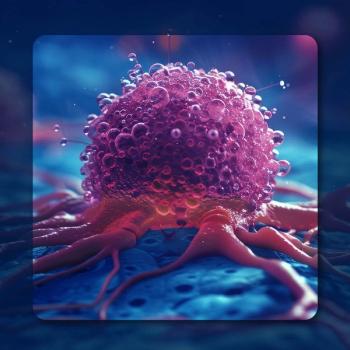
Stem cell transplant programs at the Dana-Farber Brigham Cancer Center received outstanding reviews from the CIBMTR.
Dana-Farber Cancer Institute and Gustave Roussy have announced that the topic of the Fourth Transatlantic Exchange in Oncology Conference will be “Radiopharmaceutical Therapy Meets Oncology.”
Dana-Farber Cancer Institute will launch the Center for RAS Therapeutics to advance scientific investigation and clinical care for RAS-driven cancers.

Researchers from Dana-Farber Cancer Institute will present more than 30 research studies at the 47th annual San Antonio Breast Cancer Symposium

Genomic heterogeneity and ploidy identify patients with intrinsic resistance to PD-1 blockade in metastatic melanoma.
Dana-Farber Cancer Institute announced that 42 of its researchers have been named to the Highly Cited Researchers list of 2024.
Investigators are opening a trial to evaluate a novel type of immune cellular therapy in patients with recurrent, platinum-resistant ovarian cancer.

David Pellman, MD, and Matthew Vander Heiden, MD, PhD of Dana-Farber Cancer Institute have been named to the National Academy of Medicine.

Researchers at Dana-Farber Cancer Institute have created a CRISPR-based rapid molecular diagnostic for two forms of leukemia that are driven by mutations that involve gene fusions.
U.S. News & World Report has recognized Dana-Farber/Boston Children's Cancer and Blood Disorders Center as the #2 pediatric cancer program in the nation.

Dana-Farber Cancer Institute has used weighted blankets to aid in patient care.

In focus groups conducted in the US, doctors and patients expressed openness to considering environmental factors when discussing treatment options.

Press Release
Cigall Kadoch, PhD, has been named as the Laureate of the Blavatnik National Awards for Young Scientists in the field of life sciences.

Press Release
Clinical trials may be inappropriately excluding some people with "Duffy-null phenotype," a trait found in people of African or Middle Eastern descent.

T-DXd shows substantial antitumor activity in brain metastases in patients with HER2-positive breast cancer in a major international clinical trial.

The SOLARIS trial results suggest that high-dose vitamin D3 cannot be recommended as a treatment for patients with untreated metastatic colon cancer.

Laurie H. Glimcher, MD, announced today that she will step down as Dana-Farber Cancer Institute President and CEO on October 1, 2024, and will assume the title of President Emerita.
The study alters the existing paradigm that CDK1-Cyclin B1 is the only CDK-cyclin complex essential for all stages of mitosis.

Systematic identification of minor histocompatibility antigens informs outcomes after allogeneic stem cell transplantation.
Edward Chouchani, PhD, of Dana-Farber Cancer Institute, has been named a Howard Hughes Medical Institute Investigator.

Botensilimab plus balstilimab generated responses in relapsed/refractory microsatellite stable metastatic colorectal cancer.
Dana-Farber Cancer Institute is proud to announce the launch of the Direct Connect Partnership with Massachusetts Firefighters, addressing the heightened cancer risk faced by firefighters.
A study found stage 3 colon cancer patients with PIK3CA mutations taking celecoxib post-surgery had longer survival and disease-free intervals.

Dana-Farber Cancer Institute investigators have found that people experience discrimination in different ways and in various realms of cancer care.