

PATINA shows palbociclib added to anti-HER2 plus endocrine maintenance prolongs progression-free survival by 15+ months in HR+, HER2+ metastatic breast cancer.
PATINA shows palbociclib added to anti-HER2 plus endocrine maintenance prolongs progression-free survival by 15+ months in HR+, HER2+ metastatic breast cancer.

Nicholas Polizzi, PhD, and Edward Boyden, PhD, are recipients of the December 2025 Medical Research Grant from the W. M. Keck Foundation.

A global analysis led by Dana-Farber combined patient data from 6 major clinical trials to compare 2 immunotherapies for advanced non–small cell lung cancer.

Extending endocrine therapy beyond 5e years significantly reduces relapse risk in young women with HR-positive early-stage breast cancer.

Investigators at Dana-Farber Cancer Institute have developed an AI-based noninvasive tool that can predict the likelihood of oropharyngeal cancer spread.

Dana-Farber Cancer Institute’s adult stem cell transplant program and Dana-Farber/Boston Children’s Cancer and Blood Disorders Center’s pediatric stem cell transplant program received exceptional ratings from the CIBMTR.

Dana-Farber Cancer Institute will present numerous presentations at ASH 2025 about studies in hematologic diseases and cancers.
Dana-Farber Cancer Institute was awarded a $20 million grant by The Elaine and Eduardo Saverin Foundation for advancements in metastatic breast cancer.

A study combined single-cell RNA sequencing data from patients with RCC to learn about patterns of interferon signaling across cell types in tumors.

The US FDA approved revumenib, a first-in-class oral menin inhibitor, for the treatment of adults and children one year and older with relapsed or refractory AML with NPM1 gene mutations.

Osimertinib plus chemotherapy resulted in a significant and improvement in OS in newly diagnosed EGFR-mutated advanced NSCLC vs osimertinib alone.

Philip J. Kranzusch, PhD, was one of three scientists awarded top honors at the 2025 Blavatnik National Awards for Young Scientists.

Proton therapy provides pediatric patients a treatment option that minimizes impact on long-term growth and development.
Five new faculty members have joined the Roswell Park Care Network, with St. Joseph’s Health in Syracuse to begin thoracic surgery services.

Through a new agreement, nurse scientists from Dana-Farber will become Northeastern faculty members, bringing oncology nursing science into the classroom.

Dana-Farber researchers have provided the mechanistic and preclinical evidence needed to support a clinical trial of a new class of drugs called direct cyclin inhibitors in patients with a range of cancers.

Findings from the Breast Cancer Weight Loss (BWEL) clinical trial set the stage for ongoing research to determine if weight loss following breast cancer treatment can reduce the risk of cancer recurrence and extend survival.

Alice T. Shaw, MD, PhD, has been named Chair of the Department of Medical Oncology at Dana-Farber Cancer Institute.

Dana-Farber Cancer Institute researchers have developed a blood test that could help transform the diagnosis and monitoring of multiple myeloma.

Fewer than 1 in 5 U.S. adults aged 45-49 screened for colorectal cancer, despite guidelines

A study led by Dana-Farber Cancer Institute researchers found that chemoimmunotherapy before surgery for stage III NSCLC can help make surgery possible.

Dana-Farber researchers unveil insights into aggressive pediatric brain tumors, paving the way for targeted therapies and improved patient outcomes.

A Dana-Farber study shows that an anti-inflammatory diet could extend overall survival after treatment for stage III colon cancer.
Dana-Farber researchers unveil insights into aggressive pediatric brain tumors, paving the way for targeted therapies and improved patient outcomes.
Dana-Farber Cancer Institute opened the Ning Zhao & Ge Li Simulation Center, which is devoted exclusively to ambulatory oncology care.
Dana-Farber Cancer Institute highlights research being presented at the 2025 AACR Annual Meeting.

Investigators found that the cancer-controlling effects of immune checkpoint inhibitors continue even after treatment is stopped due to immune-related adverse events in patients with advanced NSCLC.

Three researchers from Dana-Farber Cancer Institute have been selected by the American Association for Cancer Research (AACR) as recipients of 2025 Scientific Achievement Awards.
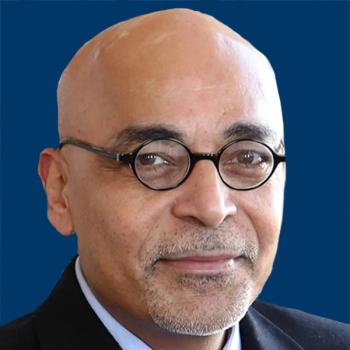
K. “Vish” Viswanath, PhD, of Dana-Farber Cancer Center, has been named Fellow of the American Association for the Advancement of Science.
A study showed transcription factor networks disproportionately enrich for heritability of blood cell phenotypes.