Articles by Gilberto Lopes, MD

Future Directions and Five-Year Outlook
ByBenjamin P. Levy, MD,D. Ross Camidge, MD, PhD, University of Colorado,Siddhartha Devarakonda, MD,Gilberto Lopes, MD,Julia K. Rotow, MD Dr. Camidge predicts TROP2-directed ADCs will become obsolete due to poor tolerability profiles, while better-tolerated ADC platforms will emerge. He anticipates advances in understanding persistent cell populations preventing complete tumor eradication, potentially through surface marker-directed ADCs or radiopharmaceuticals. Pleural-based therapies represent another frontier, given recurrent pleural involvement in EGFR-mutant disease.
Treatment Sequencing Algorithms and Clinical Approaches
ByBenjamin P. Levy, MD,D. Ross Camidge, MD, PhD, University of Colorado,Siddhartha Devarakonda, MD,Gilberto Lopes, MD,Julia K. Rotow, MD The panel presents individual sequencing strategies for EGFR-mutant advanced NSCLC. Dr. Camidge favors modified FLAURA-2 approaches, starting osimertinib monotherapy to establish patient relationships and toxicity tolerance before adding platinum-pemetrexed within 6 weeks unless contraindicated. Approximately 20% of his generally fit Denver population receives osimertinib monotherapy.
Emerging Resistance Mechanisms and ADC Development
ByBenjamin P. Levy, MD,D. Ross Camidge, MD, PhD, University of Colorado,Siddhartha Devarakonda, MD,Gilberto Lopes, MD,Julia K. Rotow, MD MET pathway involvement in EGFR resistance varies by initial treatment regimen. Dr. Devarakonda explains that MET amplification represents the most common known resistance mechanism following osimertinib-chemotherapy combinations, allowing EGFR blockade bypass.
Post-Intensification Treatment Strategies for EGFR-Mutant NSCLC
ByBenjamin P. Levy, MD,D. Ross Camidge, MD, PhD, University of Colorado,Siddhartha Devarakonda, MD,Gilberto Lopes, MD,Julia K. Rotow, MD The most challenging scenario involves patients who received frontline chemotherapy-osimertinib combinations and subsequently progress. Dr. Camidge reviews subgroup data from FLAURA-2 showing that approximately 70% of progressive patients received subsequent chemotherapy, with differences based on prior platinum exposure.
Second-Line Treatment Decision-Making
ByBenjamin P. Levy, MD,D. Ross Camidge, MD, PhD, University of Colorado,Siddhartha Devarakonda, MD,Gilberto Lopes, MD,Julia K. Rotow, MD Following osimertinib monotherapy progression without CNS involvement, clinicians choose between COMPEL (continuing osimertinib plus chemotherapy) and MARIPOSA-2 (amivantamab plus chemotherapy without osimertinib continuation).
Disease Progression Workup and Resistance Testing
ByBenjamin P. Levy, MD,D. Ross Camidge, MD, PhD, University of Colorado,Siddhartha Devarakonda, MD,Gilberto Lopes, MD,Julia K. Rotow, MD At disease progression, comprehensive tumor characterization becomes as important as initial diagnosis. Dr. Camidge argues against using regimens that don't require resistance mechanism identification, emphasizing that understanding heterogeneous resistance mechanisms guides optimal therapy selection.
TP53 Mutations in EGFR-Mutant and Risk Stratification
ByBenjamin P. Levy, MD,D. Ross Camidge, MD, PhD, University of Colorado,Siddhartha Devarakonda, MD,Gilberto Lopes, MD,Julia K. Rotow, MD TP53 mutations occur in over 50% of patients with EGFR-mutant lung cancer, representing a consistently negative prognostic factor. Dr. Rotow explains that TP53 mutations appear prominently on NGS reports, requiring clinicians to determine appropriate management strategies.
Subcutaneous Amivantamab and Administration Considerations
ByBenjamin P. Levy, MD,D. Ross Camidge, MD, PhD, University of Colorado,Siddhartha Devarakonda, MD,Gilberto Lopes, MD,Julia K. Rotow, MD The FDA approval of subcutaneous amivantamab with monthly dosing represents a significant advancement in treatment convenience. Dr. Devarakonda emphasizes that while toxicity concerns shouldn't discourage effective regimen use, practical barriers including time and supportive care requirements make subcutaneous administration valuable.
Patient-Reported Outcomes and Toxicity Assessment
ByBenjamin P. Levy, MD,D. Ross Camidge, MD, PhD, University of Colorado,Siddhartha Devarakonda, MD,Gilberto Lopes, MD,Julia K. Rotow, MD Dr. Rotow discusses limitations of traditional CTCAE toxicity grading for capturing patient experiences with EGFR-targeted therapies. Although useful for discrete, measurable, and life-threatening toxicities, CTCAE poorly captures lower-grade effects like skin rash or fatigue that significantly impact quality of life over extended treatment periods.
Comparing Intensification Strategies and Toxicity Profiles
ByBenjamin P. Levy, MD,D. Ross Camidge, MD, PhD, University of Colorado,Siddhartha Devarakonda, MD,Gilberto Lopes, MD,Julia K. Rotow, MD The panel contrasts FLAURA-2 (osimertinib plus chemotherapy) with MARIPOSA (osimertinib plus amivantamab), acknowledging similar efficacy profiles with overall survival approaching four years in both regimens. However, significant differences exist in toxicity profiles and supportive care requirements.
Shared Decision-Making and Risk Stratification in EGFR-Mutant NSCLC
ByBenjamin P. Levy, MD,D. Ross Camidge, MD, PhD, University of Colorado,Siddhartha Devarakonda, MD,Gilberto Lopes, MD,Julia K. Rotow, MD Dr. Julia Rotow emphasizes shared decision-making as essential for frontline treatment selection, noting the dramatic shift from osimertinib monotherapy as standard to combination therapy as default over the past 2 to 3 years. Treatment decisions require balancing disease-associated risk factors with patient-specific considerations.
Introduction and Frontline Treatment Options for EGFR-Mutated NSCLC
ByBenjamin P. Levy, MD,D. Ross Camidge, MD, PhD, University of Colorado,Siddhartha Devarakonda, MD,Gilberto Lopes, MD,Julia K. Rotow, MD Dr. Benjamin Levy introduces an expert panel to discuss the increasingly complex landscape of EGFR-mutant advanced non-small cell lung cancer (NSCLC) treatment. The frontline setting now includes three viable options representing a significant shift from the previously straightforward osimertinib monotherapy approach.
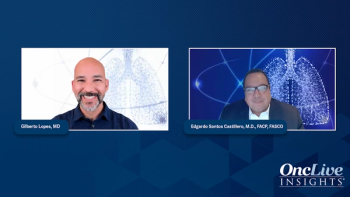
Drs. Santos and Lopes provide a forward-looking perspective on the future of HER2-targeted therapy in NSCLC, emphasizing ongoing clinical trials and anticipated paradigm shifts. They discuss the potential for earlier-line use of ADCs, as well as combination strategies that may further improve outcomes.
This section provides practical insights that help oncologists bridge the gap between evidence and practice, enhancing the applicability of HER2-targeted therapies in diverse patient populations.
The discussion turns to mechanisms of resistance to HER2-targeted therapies and the implications for future research and clinical practice. Drs. Santos and Lopes note that, as with other targeted therapies, resistance inevitably develops, necessitating ongoing innovation.
Dr. Santos and Dr. Lopes address the incidence of brain metastases and management of central nervous system (CNS) metastases in patients with HER2-mutated NSCLC, a clinically significant challenge in thoracic oncology.
In this segment, Drs. Santos and Lopes explore treatment sequencing strategies for patients with HER2-mutated NSCLC, a rapidly evolving area of clinical decision-making. The discussion addresses the current positioning of HER2-targeted therapies relative to chemotherapy and immunotherapy, particularly in the first-line setting.
This segment addresses the safety profile and toxicity management of HER2-targeted ADCs, a critical consideration for oncologists integrating these therapies into routine practice.
In this section, the discussion shifts to therapeutic advances in HER2-mutated NSCLC, with a particular focus on antibody-drug conjugates (ADCs) as a transformative treatment modality.
Dr. Edgardo Santos and Dr. Gilberto Lopes introduce the program and establish the clinical relevance of HER2-mutated NSCLC as an emerging target in thoracic oncology.
Gilberto Lopes, MD, MBA, FAMS, discusses findings from a cost-effectiveness analysis of osimertinib/chemotherapy vs amivantamab/lazertinib in EGFR-mutated NSCLC.
Experts in cancer management share their final thoughts on effective treatment and individualized care vs financial toxicity.
A panel of experts debate the cost of innovation vs disruptive pricing of therapy.
Jack West, MD, and Gilberto Lopes, MD, share their thoughts on mitigating strategies of therapy associated with financial toxicity.
A panel of experts in cancer treatment review the need for PD-1/PD-L1 testing for immunotherapy.
Gilberto Lopes, MD, Jack West, MD, and Mark Socinski, MD, provide their insight on the pharmacoeconomic considerations for immunotherapy.
Experts in cancer care management review PD-1/PD-L1 immunotherapy for patients with NSCLC and GI cancers.

A panel of experts discuss treatment options based on efficacy and out-of-pocket cost for patients.
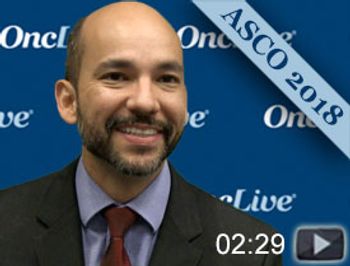
Gilberto Lopes, MD, a medical oncologist at the Sylvester Comprehensive Cancer Center, University of Miami Health System, discusses findings from the KEYNOTE-042 trial of frontline pembrolizumab (Keytruda) as a treatment for patients with squamous and nonsquamous non–small cell lung cancer in an interview with OncLive during the 2018 ASCO Annual Meeting.