
Opinion|Videos|July 15, 2026
Second-Line Treatment Decision-Making
Following osimertinib monotherapy progression without CNS involvement, clinicians choose between COMPEL (continuing osimertinib plus chemotherapy) and MARIPOSA-2 (amivantamab plus chemotherapy without osimertinib continuation).
Advertisement
Episodes in this series
Following osimertinib monotherapy progression without CNS involvement, clinicians choose between COMPEL (continuing osimertinib plus chemotherapy) and MARIPOSA-2 (amivantamab plus chemotherapy without osimertinib continuation).
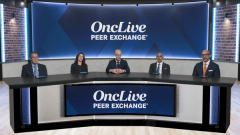
Dr. Lopes analyzes the evidence hierarchy, noting stronger evidence for MARIPOSA-2 with over 600 patients in a fully-powered study versus COMPEL's under 100 patients in an early-stopped trial. MARIPOSA-2 was restricted to non-CNS progression patients, creating different population characteristics.
Despite stronger methodological evidence for MARIPOSA-2, Dr. Lopes pragmatically favors adding chemotherapy to continued osimertinib, acknowledging this represents their frontline bias confirmation. Most patients receive chemotherapy addition rather than the amivantamab-chemotherapy combination.
Dr. Devarakonda prioritizes continuing tyrosine kinase inhibition due to disease flare risks when discontinuing EGFR inhibitors, particularly CNS progression including leptomeningeal disease. He favors carboplatin-pemetrexed addition to osimertinib as the most convenient and familiar approach.
Dr. Rotow balances the stronger evidence for MARIPOSA-2 against real-world patient considerations including continued EGFR inhibitor benefits. For patients with extensive CNS involvement or leptomeningeal disease, she strongly favors COMPEL to maintain tyrosine kinase inhibitor coverage. For indolent progression with continued TKI benefit, chemotherapy addition may suffice, while aggressive progression warrants the full MARIPOSA-2 approach.
Dr. Levy notes improved tolerability with second-line amivantamab-chemotherapy combinations compared to frontline experiences, particularly with subcutaneous formulations, though acknowledging ongoing challenges requiring careful patient selection and monitoring.
Advertisement
Related to this article

In TASKIN, the 12-month OS rate was 61.3% with vilamakitug vs 55.7% with placebo plus trifluridine/tipiracil.

The 510(k) clearance covers an MRI-derived AI risk score for stage I to IIIA disease; the high-risk category carried an HR of 2.81 for recurrence.

The FDA has approved dostarlimab for MSI-H or dMMR locally advanced rectal cancer.

The FDA accepted an NDA for UGN-103 for recurrent low-grade intermediate-risk NMIBC, with a target action date of June 14, 2027.

Ulrich Steidl, MD, PhD, has finalized his Montefiore Einstein Comprehensive Cancer Center senior leadership team.

The CirCLIQ Injector approval for subcutaneous isatuximab in multiple myeloma is the first anticancer treatment delivered via an on-body injector in Japan.

The top 5 OncLive TV videos of the week cover insights in multiple myeloma, HR+ breast cancer, CAR T-cell therapy, CLL, and oral SERDs.

Moh’d Khushman, MD, discusses INCA33890’s mechanism of action, phase 1 safety and efficacy data, and the design of NEXERA-303 in MSS colorectal cancer.
Advertisement
Advertisement
Trending on OncLive
1
FDA Approves Dostarlimab for dMMR/MSI-H Locally Advanced Rectal Cancer
2
FDA Clears TumorSight Risk, an MRI-Derived AI Recurrence Tool for HR+, HER2– Breast Cancer
3
Dr Cercek on the FDA Approval of Dostarlimab for dMMR/MSI-H Locally Advanced Rectal Cancer
4
Vilamakitug Meets OS Threshold in Phase 1/2 Refractory mCRC Trial
5