
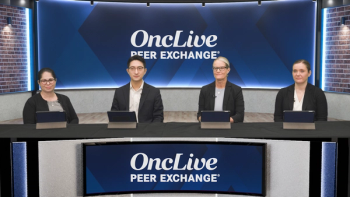
In this final segment, the panel reflects on where the field stands and what they are most closely watching as the treatment landscape for EGFR-mutant non-small cell lung cancer continues to evolve.

Karen L. Reckamp, MD, is director of Medical Oncology, associate director of Clinical Research, and the medical oncology director of the Lung Institute at the Samuel Oschin Cancer Center at Cedars Sinai
In this final segment, the panel reflects on where the field stands and what they are most closely watching as the treatment landscape for EGFR-mutant non-small cell lung cancer continues to evolve.
In this segment, the panel turns to EGFR exon 20 insertion mutations, a subgroup that has historically been underserved by the major advances in the classical EGFR mutation space and that requires comprehensive testing to identify reliably.
In this segment, the panel focuses on MET alterations as one of the most consistently actionable resistance mechanisms in EGFR-mutant non-small cell lung cancer and discusses the first randomized trial data now available in this setting.
In this segment, the panel addresses what happens when a patient progresses on frontline EGFR-directed therapy, starting with how to approach repeat molecular profiling and what resistance mechanisms to look for.
In this segment, the panel discusses the eight-year overall survival update from the adjuvant TKI trial being presented at the presidential session of this year's World Conference on Lung Cancer.
In this segment, the panel digs into the new data from the FLAURA-2 trial being presented at this year's World Conference on Lung Cancer, covering both a biomarker analysis examining TP53 co-mutation and acquired resistance mechanisms and an extended safety follow-up.
Explore how brain metastases and TP53 co-mutations shape EGFR-mutant NSCLC first-line care, including intracranial control, radiation sequencing, and key trial insights.
Experts weigh first-line EGFR lung cancer options, from osimertinib alone to combos, with guidance for brain mets and TP53 high-risk patients.
Drs Camidge and Reckamp discuss Dr Reckamp's journey as an oncology specialist and now a caregiver for her husband, who has cancer.
Karen L. Reckamp, MD, discusses the feasibility of future pragmatic clinical trials for patients with lung cancer.
Dr Reckamp discusses the definition of pragmatic clinical trials and ways that clinical trial investigators can make their research more pragmatic.
Karen Reckamp, MD, compares capmatinib and tepotinib, 2 drugs that are approved for the treatment of MET exon 14–mutated non–small cell lung cancer.
Karen L. Reckamp, MD, discusses the significance of the final results of the ALTA trial in patients with ALK-positive non–small cell lung cancer.
Karen Reckamp, MD, co-director, Lung Cancer and Thoracic Oncology Program, medical director, Clinical Research Operations, professor, Department of Medical Oncology & Therapeutics Research, thoracic oncologist, discusses current and emerging therapeutic strategies to target MET in non-small cell lung cancer.
Karen L. Reckamp, MD, discusses the results of a phase II study of the AKT inhibitor MK-2206 plus erlotinib in patients with advanced non-small cell lung cancer (NSCLC) who progressed on erlotinib.

Dr. Karen Reckamp, from City of Hope, evaluates the predictive efficacy of the pretreatment serum test VeriStrat for non-small cell lung cancer.

Dr. Karen Reckamp from the City of Hope Cancer Center Discusses the Use of Hsp90 Inhibitors

Dr. Karen Reckamp City of Hope cancer center on Current Heat Shock Protein Clinical Trials
Dr. Karen Reckamp from City of Hope Cancer Center Describes the Use of Heat Shock Proteins

Dr. Karen Reckamp from City of Hope Cancer center Discusses Heat Shock Proteins in Lung Cancer

August 17th 2011

August 19th 2011

August 22nd 2011


