
Opinion|Videos|September 25, 2026
Brain Metastases and TP53: How Tumor Features Shape Frontline Intensification
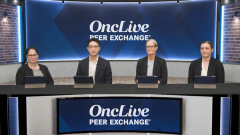
Explore how brain metastases and TP53 co-mutations shape EGFR-mutant NSCLC first-line care, including intracranial control, radiation sequencing, and key trial insights.
Advertisement
In this segment, the panel addresses two of the most clinically relevant features that influence frontline treatment decisions in EGFR-mutant non-small cell lung cancer: brain metastases at diagnosis and TP53 co-mutation status. You will hear why the presence of brain metastases does not necessarily change the frontline regimen choice given the intracranial activity of available options, and how systemic therapy and radiation oncology are sequenced in practice. The panel also walks through the randomized data supporting intensification in TP53 co-mutated disease, what that trial tells us about the benefit of combination therapy in this subgroup, and what important questions it leaves unanswered for patients without the co-mutation.
Advertisement
Related to this article

Read a refresh of GI cancer FDA news from August 2026, including the approval of a RAS(ON) inhibitor in metastatic pancreatic cancer.

The FDA has approved belzutifan (Welireg) plus lenvatinib (Lenvima) for use in patients with advanced renal cell carcinoma with a clear cell component after PD-1 or PD-L1 inhibition.

R. Lor Randall, MD, FACS, discusses AI in musculoskeletal tumor diagnosis, surgical planning and robotics, and validation of AI tools.

MAPK drugs restore TSHR in aggressive thyroid tumors, helping CAR-T cell therapy see and control solid tumors again.

An FDA advisory committee voted in favor of the benefits of the Galleri MCED test outweighing its risks in patients 50 years of age and older.
Novel approaches to the use of AI in oncology may require discussion and ultimately modification of existing proprietary and regulatory barriers.
Extended follow-up from the phase 1b CAMMA 1 trial showed durable responses across two cevostamab dose levels, supporting selection of a recommended phase 3 regimen.

A MAIC found anito-cel produced response rates similar to those of cilta-cel, with fewer high-grade toxicities, in relapsed/refractory multiple myeloma.
Advertisement
Advertisement
Trending on OncLive
1
FDA Approves Belzutifan Plus Lenvatinib for Advanced ccRCC
2
Study Shows Reprogramming Thyroid Tumors May Improve CAR-T Cell Therapy
3
AI Enables Enhanced Decision Making and New Opportunities in Orthopedic Oncology
4
Breaking Down the FDA Approval of Zanidatamab-Based Regimens in HER2+ Gastric Cancer
5