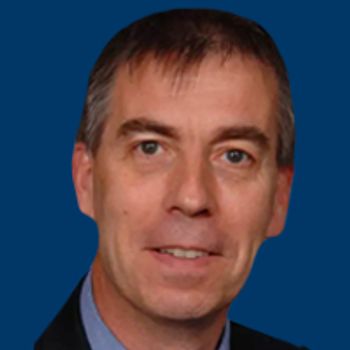

Thomas Herzog, MD, discusses the FDA approval of olaparib plus bevacizumab for the frontline maintenance treatment of patients with homologous recombination deficiency–positive ovarian cancer.

Your AI-Trained Oncology Knowledge Connection!


Associate Editorial Director, OncLive®
Kristi Rosa joined MJH Life Sciences in 2016 and has since held several positions within the company. She helped launch the rapidly growing infectious disease news resource Contagion, strengthened the Rare Disease Report, of HCPLive, and now oversees OncLive and its flagship publication OncologyLive. Prior to working at the company, she served as lead copywriter and marketing coordinator at The Strand Theater. Email: krosa@onclive.com

Thomas Herzog, MD, discusses the FDA approval of olaparib plus bevacizumab for the frontline maintenance treatment of patients with homologous recombination deficiency–positive ovarian cancer.

Shannon N. Westin, MD, MPH, FACOG, discusses future directions in endometrial cancer.

COM701, a novel, first-in-class immune checkpoint inhibitor, was found to demonstrate encouraging preliminary antitumor activity and good tolerability when used as either a monotherapy and in combination with nivolumab in a number of heavily pretreated patients with advanced or metastatic solid tumors, according to data from a phase 1 trial.

Early data from TERAVOLT, a global registry collecting characteristics and outcomes of patients with thoracic cancers affected by COVID-19, suggested an unexpectedly high mortality among this patient population.

Treatment with atezolizumab in combination with vemurafenib and cobimetinib was found to significantly improve progression-free survival and produce durable responses versus vemurafenib and cobimetinib alone in treatment-naïve patients with BRAF V600–mutant advanced melanoma.

Rashmi Murthy, MD, MBE, discusses the data that led to the approval of the tucatinib triplet, the clinical implications of the approval on practice, and the next steps for research with the agent.

Balazs Halmos, MD, MS, provides insight on preventive measures put in place at his institution, day-to-day challenges faced in practice, and how he is staying connected with the broader community to share information.

As the COVID-19 pandemic beats down on major cities like New York, oncologists across the United States are either bracing themselves for what will hopefully be a peak in cases or desperately preparing for when the storm will hit their own health systems.

The addition of trastuzumab to carboplatin and paclitaxel resulted in a significant survival benefit in women with advanced or recurrent, HER2-positive uterine serous carcinoma, with the greatest benefit observed in those with stage III/IV disease who received the regimen up front.

Joshua M. Bauml, MD, discusses challenges in providing care to patients with lung cancer in light of the COVID-19 pandemic and ongoing efforts to reduce unnecessary exposure to the virus.

Experts from The Ohio State University Comprehensive Cancer Center–The James as well as Blanchard Valley Health System discussed the impact of the COVID-19 pandemic on cancer care.

An expert panel of oncologists addresses the oncology community’s response to the COVID-19 crisis.

Experts from Mayo Clinic, Ironwood Cancer and Research Centers, and Banner MD Anderson Cancer Center Clinic discuss the impact of the COVID-19 pandemic on cancer care and shared what advice they have been giving their patients.

As the number of confirmed cases of COVID-19 continues to grow, oncologists from all over the world are working together to stay informed on the latest developments, participate in pivotal research efforts, develop potentially life-saving medications, and share personal experiences faced in practice to ultimately improve patient care.

Omid Hamid, MD, discusses ongoing efforts to quell the COVID-19 pandemic, the benefits of telemedicine, and promising research being done to combat the virus.

Balazs Halmos, MD, MA, discusses the advances that have been made in the treatment of patients with metastatic non–small cell lung cancer, ongoing biomarker research, and the importance of molecular testing.

As the novel coronavirus continues its rapid global spread, many oncology-based organizations have been forced to make the difficult decision to either cancel or postpone highly anticipated medical conferences.

Balazs Halmos, MD, discusses the implications of the emergence of osimertinib in the frontline treatment of patients with EGFR-mutated non–small cell lung cancer, the efforts being made to address resistance to the third-generation EGFR TKI, and the promise of circulating tumor DNA in the space.

Key opinion leaders in the field share what they considered to be the greatest takeaways from the 2020 Genitourinary Cancers Symposium and provide insight on where treatment is headed in their respective areas of expertise.

In metastatic renal cell carcinoma, the use of frontline combination immunotherapy regimens has led to significant survival benefits for patients, and efforts are now being focused on exploring novel options for those who become refractory to this approach.

The first-in-class nucleotide analogue NUC-1031 has demonstrated early clinical activity in heavily pretreated patients with platinum-resistant ovarian cancer.

As coronavirus disease 2019 (COVID-19) continues to spread around the world, several oncology-based organizations are taking precautionary measures to protect physicians and patients alike from infection, including making the decision to postpone, or even cancel, select medical conferences.

Despite advances made in the treatment of patients with diffuse large B-cell lymphoma, investigators are on a quest to move more novel agents through the pipeline, says Craig Moskowitz, MD, in a presentation during the 24th Annual International Congress on Hematologic Malignancies®: Focus on Leukemias, Lymphomas, and Myeloma.

Experts from Memorial Sloan Kettering Cancer Center and NYU Langone Health’s Perlmutter Cancer Center highlight some of the exciting research efforts being conducted at their respective institutions.

The United Kingdom’s National Institute for Health and Care Excellence has chosen not to recommend polatuzumab vedotin plus rituximab and bendamustine for use in adult patients with relapsed/refractory diffuse large B-cell lymphoma who cannot undergo hematopoietic stem cell transplant.

Experts from Virginia Cancer Specialists, Georgetown University, Dana-Farber Cancer Institute, and Johns Hopkins Medicine to provide insight on some of the pivotal research being conducted at their respective institutions.

R. Lor Randall, MD, FACS, highlights the specific challenges faced by adolescent and young adult patients with sarcomas, the importance of promoting awareness of this issue, and the resources available to improve outcomes in this population.

Neeraj Agarwal, MD, discusses the COSMIC-021 trial and shares the next steps for this research.

Karen Reckamp, MD, MS, highlights the different agents that have been developed to target rarer abnormalities in non–small cell lung cancer.

Yelena Janjigian, MD, highlights key updates from the 2020 Gastrointestinal Cancers Symposium and explained the impact that new data will have on clinical practice.