Marc J. Braunstein, MD, PhD
Articles by Marc J. Braunstein, MD, PhD
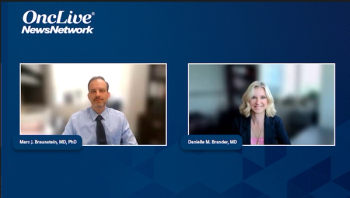
Closing the OncLive News Network discussion, Danielle M. Brander, MD, of Duke University School of Medicine, asks Marc J. Braunstein, MD, PhD, of NYU Grossman Long Island School of Medicine, for the limitations clinicians should keep in mind when weighing infection risk between regimens in chronic lymphocytic leukemia (CLL) and for a single takeaway.
Danielle M. Brander, MD, of Duke University School of Medicine, asks how much weight to give real-world and comparative effectiveness data on infection risk in chronic lymphocytic leukemia (CLL), noting that trials do not answer every question and that cross-trial comparison should be avoided.
Danielle M. Brander, MD, of Duke University School of Medicine, compares infection rates across covalent Bruton tyrosine kinase (BTK) inhibitors in chronic lymphocytic leukemia (CLL).
Danielle M. Brander, MD, of Duke University School of Medicine, notes that long-term CLL14 follow-up in chronic lymphocytic leukemia (CLL) showed a median progression-free survival of about 76 months with venetoclax plus obinutuzumab overall but roughly 64 months in unmutated IGHV disease and 49 to 50 months with TP53 aberrations.
Danielle M. Brander, MD, of Duke University School of Medicine, summarizes the CLL14 trial in chronic lymphocytic leukemia (CLL), which randomized patients to chlorambucil plus obinutuzumab or fixed-duration venetoclax plus obinutuzumab given for about 12 months.
Danielle M. Brander, MD, of Duke University School of Medicine, turns to the ELEVATE-TN trial in chronic lymphocytic leukemia (CLL), which compared continuous acalabrutinib monotherapy with acalabrutinib plus 6 cycles of obinutuzumab.
Danielle M. Brander, MD, of Duke University School of Medicine, reviews infection data from the AMPLIFY trial in chronic lymphocytic leukemia (CLL), which randomized patients to chemoimmunotherapy, acalabrutinib plus venetoclax, or acalabrutinib plus venetoclax plus obinutuzumab.
Danielle M. Brander, MD, of Duke University School of Medicine, outlines frontline options in chronic lymphocytic leukemia (CLL), continuous Bruton tyrosine kinase (BTK) inhibitors with or without anti-CD20 antibodies versus fixed-duration venetoclax plus obinutuzumab, and asks what immune recovery looks like once fixed-duration therapy ends.
Marc J. Braunstein, MD, PhD, of NYU Grossman Long Island School of Medicine, walks Danielle M. Brander, MD, of Duke University School of Medicine, through the immune defects intrinsic to chronic lymphocytic leukemia (CLL).
Danielle M. Brander, MD, of Duke University School of Medicine, opens the discussion with Marc J. Braunstein, MD, PhD, of NYU Grossman Long Island School of Medicine, on infection as a competing risk in chronic lymphocytic leukemia (CLL).
Marc J. Braunstein, MD, PhD, discusses the clinical implications of the FDA approval of subcutaneous daratumumab with VRd for newly diagnosed multiple myeloma, ineligible ASCT.

Marc J. Braunstein, MD, PhD, discusses VOD risk factors, management strategies, and prevention strategies in the post-HSCT hematologic malignancy setting.

Marc J. Braunstein, MD, PhD, FACP, of NYU Grossman Long Island School of Medicine, discusses lessons learned with program building and medical education with hematologic cancers.

Marc J. Braunstein, MD, PhD, discusses the evolution of autologous stem cell transplantation and ongoing treatment needed to better determine when ASCT should be recommended for patients with multiple myeloma.
Marc J. Braunstein, MD, PhD, discusses the evolution of stem cell transplant eligibility criteria in patients with multiple myeloma and highlights unanswered questions about the role of autologous stem cell transplantation following quadruplet induction regimens in this population.
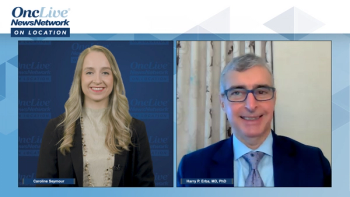
OncLive® will be LIVE with OncLive® News Network: On Location at the 2022 ASH Annual Meeting. Each day, we will broadcast a series of interviews with top thought leaders, to learn their thoughts and reactions to data presented across hematologic oncology during the conference.

When treating cancers that are considered generally incurable, such as multiple myeloma, one of the paradigms in oncology is to deliver the most effective therapies upfront to maximize the chances of prolonging remission.
Marc J. Braunstein, MD, PhD, discusses the role of daratumumab in multiple myeloma.

Marc J. Braunstein, MD, PhD, discusses management strategies in multiple myeloma.

Marc J. Braunstein, MD, PhD, discusses the expanding treatment armamentarium in multiple myeloma.

In light of the recent approvals of combination anti-myeloma regimens containing monoclonal antibodies, as well as the robust pipeline of novel targeted agents likely to be approved in the next year, there is much optimism in the field of multiple myeloma.
Marc J. Braunstein, MD, PhD, discusses the utility of maintenance therapy in patients with multiple myeloma.
Marc J. Braunstein, MD, PhD, discusses updated results from the GRIFFIN trial in multiple myeloma.
Marc J. Braunstein, MD, PhD, discusses updated results from the GRIFFIN trial in multiple myeloma.
Marc J. Braunstein, MD, PhD, discusses quadruplet therapies in multiple myeloma.
Marc J. Braunstein, MD, PhD, factors to consider when determining whether a patient with multiple myeloma is eligible for stem cell transplant.
Marc J. Braunstein, MD, PhD, discusses transplant eligibility in multiple myeloma.

Marc J. Braunstein, MD, PhD, discusses challenges pertaining to the bone marrow microenvironment in multiple myeloma.
Marc J. Braunstein, MD, PhD, discusses the ultra–high-risk patient population in smoldering multiple myeloma.