
Opinion|Videos|October 14, 2026
Key Takeaways on Infection Risk in CLL Treatment Selection
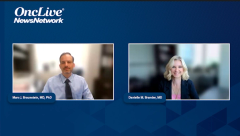
Closing the OncLive News Network discussion, Danielle M. Brander, MD, of Duke University School of Medicine, asks Marc J. Braunstein, MD, PhD, of NYU Grossman Long Island School of Medicine, for the limitations clinicians should keep in mind when weighing infection risk between regimens in chronic lymphocytic leukemia (CLL) and for a single takeaway.
Advertisement
Episodes in this series
Closing the OncLive News Network discussion, Danielle M. Brander, MD, of Duke University School of Medicine, asks Marc J. Braunstein, MD, PhD, of NYU Grossman Long Island School of Medicine, for the limitations clinicians should keep in mind when weighing infection risk between regimens in chronic lymphocytic leukemia (CLL) and for a single takeaway. Dr Braunstein frames the main decision as continuous versus fixed-duration therapy, guided by guidelines and biomarkers that identify high-risk patients who may benefit from indefinite therapy or a clinical trial. His takeaway is to counsel patients that even chemotherapy-free regimens carry infection as the important risk, a major cause of morbidity and mortality that can interrupt a fixed-duration course, and to follow guideline recommendations on vaccination and infection prevention. Dr Brander echoes the need to prevent infections and other risks such as second malignancies and highlights the role of nurses, advanced practice providers, pharmacists, and infectious disease colleagues.
Advertisement
Related to this article

Experts in gynecologic oncology overview top research being presented at the 2026 ESMO Congress.
Matthew P. Goetz, MD, explores menopausal status, recurrence risk, and adjuvant CDK4/6 inhibitor selection in HR-positive breast cancer.
First-line IO-based combination regimens were increasingly used and associated with longer observed survival in advanced renal cell carcinoma.

Tenumomeran/raplemomeran plus pembrolizumab missed the PFS end point in HPV16-positive HNSCC.
Matthew P. Goetz, MD, explores first-line treatment selection, emerging targeted therapies, and unmet sequencing needs in metastatic breast cancer.

AI-assisted scoping review of code sharing in clinical prediction model research
Omar Castaneda Puglianini, MD, discusses earlier CAR T-cell therapy use, sequencing with bispecific antibodies, and access barriers in multiple myeloma.

Readers share their opinions on some of the most talked-about breast cancer abstracts they’re looking forward to seeing at ESMO 2026.
Advertisement
Advertisement
Trending on OncLive
1
Earlier CAR T-Cell Therapy Use Highlights Sequencing and Access Considerations in Myeloma
2
Dr Fradley on Real-World Atrial Fibrillation and Cardiovascular Outcomes in CLL
3
CDK4/6 Inhibitors Anchor First-Line Metastatic Breast Cancer Care, But Oral SERDs May Fall Short
4
Real-World, First-Line IO-Based Combos Are Associated With Improved OS vs TKI Monotherapy in Advanced RCC
5