Nataliya Uboha, MD, PhD, discusses zanidatamab-based regimens, their recent approval, and the HERIZON-GEA-01 trial in gastric cancer.

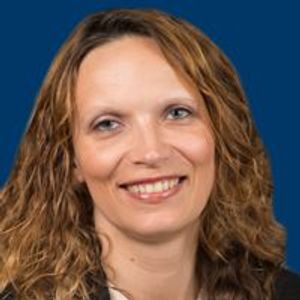
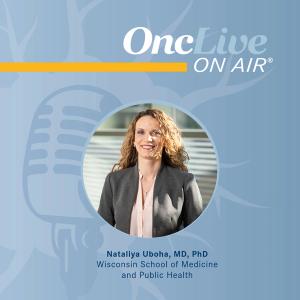
Nataliya Uboha, MD, PhD, a medical oncologist at University of Wisconsin Health, as well as an associate professor and researcher in the Department of Medicine at the University of Wisconsin School of Medicine and Public Health
Nataliya Uboha, MD, PhD, discusses zanidatamab-based regimens, their recent approval, and the HERIZON-GEA-01 trial in gastric cancer.
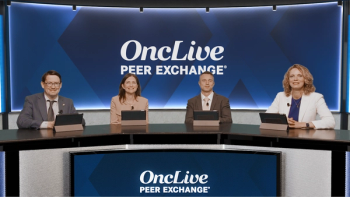
Panelists discuss the key takeaways, including the establishment of durvalumab plus FLOT as the new standard requiring proper laparoscopic staging and multidisciplinary care. Future questions focus on optimizing treatment for nonresponders and developing more personalized therapeutic approaches.
Panelists discuss how perioperative immunotherapy (IO) will serve as the foundation for future therapeutic advances, with potential directions including biomarker-driven personalized treatment, organ preservation strategies for complete responders, and integration of novel targeted therapies into the treatment paradigm.
Panelists discuss how successful implementation of durvalumab plus FLOT requires enhanced multidisciplinary coordination involving oncologists, surgeons, pharmacists, nurses, and nutritionists to optimize patient outcomes and manage the complexities of perioperative care.
Panelists discuss how adding durvalumab to FLOT does not significantly increase toxicity profiles and can be safely delivered using standard oncology practices with appropriate dose modifications, nutritional support, and multidisciplinary care coordination.
Panelists discuss how MATTERHORN establishes durvalumab plus FLOT as the new standard of care for all patients with resectable gastric cancers (GC) and gastroesophageal junction cancers (GEJC) who are candidates for curative-intent surgery, with plans to implement this regimen immediately upon regulatory approval.
Panelists discuss how other immunotherapy trials in the perioperative setting, including studies with pembrolizumab and atezolizumab, have shown mixed results, with improved pathologic responses not necessarily translating to survival benefits. They note the negative results from the adjuvant CheckMate 577 trial.
Panelists discuss how adding immunotherapy (IO) to perioperative chemotherapy does not appear to complicate surgical procedures or compromise the ability to achieve negative margins, with R0 resection rates remaining unchanged between treatment arms in the MATTERHORN trial.
Panelists discuss how the MATTERHORN results represent a practice-changing advancement that they are ready to implement clinically, with improved pathologic complete response rates and event-free survival providing confidence in the regimen’s efficacy across most patient subgroups except those with microsatellite instability–high (MSI-H) tumors.
Panelists discuss how the MATTERHORN trial successfully demonstrated that adding durvalumab immunotherapy to perioperative FLOT chemotherapy significantly improved event-free survival with an 8-percentage point improvement at 24 months, representing a clear advancement in the treatment paradigm.
Panelists discuss how perioperative FLOT chemotherapy has simplified treatment decisions but presents toxicity challenges for patients with comorbidities, while emphasizing the critical importance of laparoscopic staging and acknowledging that current approaches still fail to cure approximately half of patients.
Panelists discuss how gastric cancers (GC) and gastroesophageal junction cancers (GEJC) present with nonspecific symptoms, affect approximately 1.2 million patients worldwide annually, and are managed with perioperative FLOT chemotherapy as the established standard of care for resectable disease.
Nataliya Uboha, MD, PhD, discusses how biomarkers help guide treatment decision-making in esophageal adenocarcinoma.
Nataliya Uboha, MD, PhD, discusses the FDA approval of first-line tislelizumab-jsgr with platinum-containing chemotherapy for unresectable or metastatic ESCC.
Nataliya Uboha, MD, PhD, discusses how the FDA approval of tislelizumab plus chemotherapy addresses unmet needs for patients with metastatic ESCC.

Sam Klempner, MD; Daniel H. Ahn, DO; Nataliya V. Uboha, MD, PhD; and Manish A. Shah, MD, FASCO, review recent updates in second-line gastric cancer, CAR T-cell therapy in solid tumors, and colorectal cancer presented at ESMO 2021.
Key opinion leaders in gastric cancers comment on ESMO 2021 updates in metastatic HER2+ esophagogastric adenocarcinoma and metastatic HER2+ gastric or gastroesophageal junction cancer.
Drs Sam Klempner, Nataliya V. Uboha, Daniel H. Ahn, and Manish A. Shah discuss recent data presented at ESMO 2021 for metastatic or locally advanced gastroesophageal and gastric adenocarcinomas.
Experts in gastrointestinal cancers review recent updates and clinical implications from phase 3 trials presented at ESMO 2021 in metastatic esophageal squamous cell carcinoma (ESCC).
The debate continues as to how to define oligometastatic disease and whether it represents a unique stage between limited-stage and widely metastatic disease.
Nataliya V. Uboha, MD, PhD, discusses early efficacy data demonstrated with zanidatamab in HER2-expressing upper gastrointestinal cancers.

December 6th 2021