

World Cancer Day is held every year on February 4th, prompting individuals across the globe to expand awareness within cancer care.

Ryan Scott joined MJH Life Sciences in 2021. In addition to writing and editing timely news and article coverage, she has managed OncLive's social media accounts; check us out @onclive across platforms such as LinkedIn, Facebook, X, and Instagram! She attends conferences live and virtually to conduct video interviews and produce written coverage. Email: [email protected]
World Cancer Day is held every year on February 4th, prompting individuals across the globe to expand awareness within cancer care.
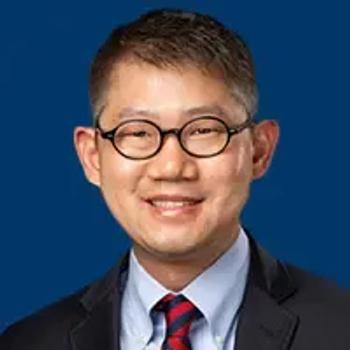
Hans Lee, MD, discusses updated data from the LINKER-MM1 study in heavily pretreated relapsed/refractory multiple myeloma.

Lenvatinib/pembrolizumab demonstrated efficacy irrespective of tumor burden in advanced renal cell carcinoma in the overall patient population of the phase 3 CLEAR study.
The FDA has accepted for priority review the BLA seeking the approval of afamitresgene autoleucel for the treatment of advanced synovial sarcoma.

Momelotinib gets market authorization from the European Commission for patients with MPNs and disease-related splenomegaly or moderate to severe anemia.

CD19 CAR T cell therapy plus acalabrutinib demonstrated early efficacy in patients with relapsed/refractory mantle cell lymphoma.
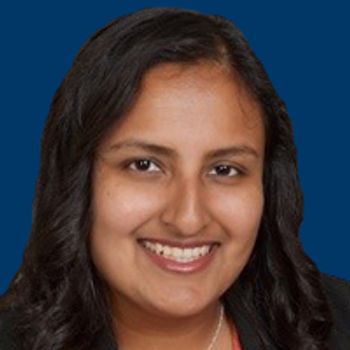
Nikita Sinha, MD, discusses the effects of onvansertib on cellular proliferation, adhesion, apoptosis, and stress in endometrial cancer cells.
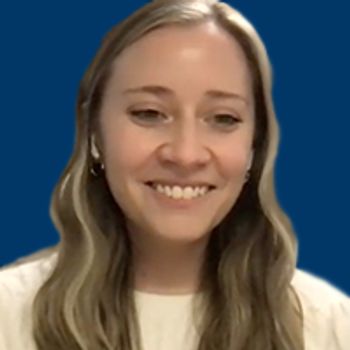
Paulina J. Haight, MD, discusses the association between the occurrence of toxicities with response to treatment with lenvatinib and pembrolizumab.

Patients with HRR gene–mutated mCRPC treated with olaparib have an unmet need for early and consistent genetic testing to optimize treatment outcomes.

Jason Porter, MD, discusses the progress in the development of treatment options for patients with KRAS G12C-mutated non–small cell lung cancer.

Jason Porter, MD, discusses the implications of adjuvant EGFR TKI use, the importance of the potential FDA approval of osimertinib in EGFR+ NSCLC, & more.

Disitamab vedotin alone and with ICIs, TKIs, or other antiangiogenic agents had consistent efficacy in patients with HER2-positive or -low breast cancers.

Sacibertinib plus endocrine therapy had acceptable safety with early clinical activity in patients with ER+/HER2+ metastatic breast cancer.
Neoadjuvant pegylated liposomal doxorubicin and cyclophosphamide, followed by a taxane, concomitant with trastuzumab/pertuzumab elicited responses in patients with HER2+ breast cancer.

Amit Mahipal, MD, discusses clinical outcomes with camrelizumab plus rivoceranib in unresectable HCC, based on data from the phase 3 CARES-310 trial.
Neil D. Gross, MD, FACS, shares how neoadjuvant cemiplimab followed by surgery improved EFS in patients with stage II-IV cutaneous squamous cell carcinoma.
R. Lor Randall, MD, FACS, emphasizes the overall potential for investigating the utility of engineered bone marrow in patients with osteosarcoma.

Cobolimab plus dostarlimab-gxly showed activity and acceptable safety across all dose levels assessed in patients with non–small cell lung cancer.

Eirwen M. Miller, MD, spotlights updated data within the endometrial, cervical, and ovarian cancer spaces following the 2023 ESMO Congress.
Eirwen M. Miller, MD, highlights data that have impacted the treatment armamentarium for patients with endometrial cancer and mismatch repair–deficient or mismatch repair–proficient disease throughout the course of 2023.
A planned 5-year trip in the United States coupled with a thirst for knowledge turned into a lifetime of surgical oncology accomplishments for Eleftherios “Terry” Mamounas, MD, MPH.

Lenvatinib plus pembrolizumab, pemetrexed, and carboplatin or cisplatin did not improve treatment outcomes compared with placebo plus pembrolizumab, pemetrexed, and carboplatin or cisplatin when given as first-line therapy in patients with stage IV nonsquamous non–small cell lung cancer.
Intravenous and intratumoral treatment with TILT-123 was found to be safe and feasible, with no dose-limiting toxicities when given alone or in combination with tumor infiltrating lymphocyte therapy in patients with advanced, metastatic melanoma.

The oral XPO1 inhibitor selinexor in combination with ruxolitinib was associated with a tolerable and manageable adverse effect profile and elicited signals of clinical efficacy in patients with JAK inhibitor–naive myelofibrosis.
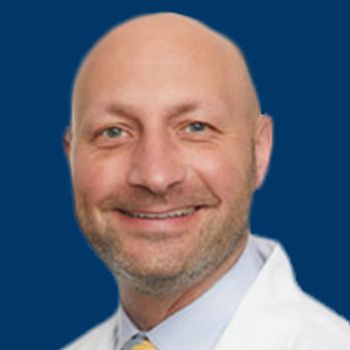
Michael P. Stany, MD, discusses the optimization of PARP inhibitors in the upfront maintenance setting of ovarian cancer, the benefit of novel targets and immunotherapy combinations, and the role of immunotherapy in the treatment of advanced endometrial cancer.

Sandip P. Patel, MD, discusses the exploration of sacituzumab govitecan in the EVOKE-01 and EVOKE-02 trials in NSCLC and expands on future treatment directions with the agent in this patient population.

Paolo Ghia, MD, PhD, describes the various cohorts of the SEQUOIA study, expands on outcomes from a biomarker subgroup analysis with zanubrutinib vs bendamustine plus rituximab, and more.
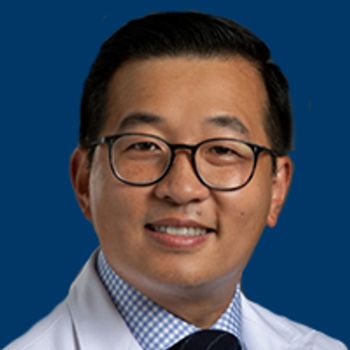
Alan Tan, MD, discusses how utilizing circulating tumor DNA may provide valuable insight into when to escalate vs de-escalate treatment for patients with renal cell carcinoma.

Jennifer R. Brown, MD, PhD, discusses the clinical implications of the ALPINE study and highlights a subgroup analysis of acquired mutations in patients with chronic lymphocytic leukemia, demonstrating which mutations were associated with resistance to covalent BTK inhibitors.
Treatment with SD-101 distributed via pressure-enabled drug delivery with immune checkpoint inhibition was tolerated and resulted in the depletion of Tregs, M-MDSCs, and M2 macrophages in liver metastases in patients with uveal melanoma.