
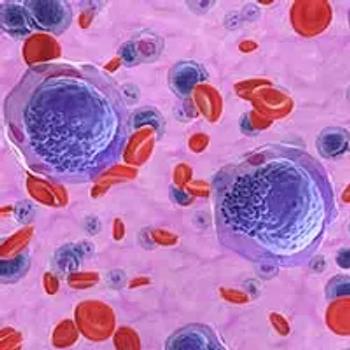
The novel CD20xCD3 bispecific antibody EX103 displayed a favorable safety profile and produced preliminary antitumor activity in heavily pretreated patients with relapsed/refractory B-cell non-Hodgkin lymphoma.

Ryan Scott joined MJH Life Sciences in 2021. In addition to writing and editing timely news and article coverage, she has managed OncLive's social media accounts; check us out @onclive across platforms such as LinkedIn, Facebook, X, and Instagram! She attends conferences live and virtually to conduct video interviews and produce written coverage. Email: [email protected]
The novel CD20xCD3 bispecific antibody EX103 displayed a favorable safety profile and produced preliminary antitumor activity in heavily pretreated patients with relapsed/refractory B-cell non-Hodgkin lymphoma.
Fam-trastuzumab deruxtecan-nxki elicited responses that proved to be durable in patients with a range of solid tumors harboring HER2 mutations.

The addition of pembrolizumab to combination of trastuzumab and chemotherapy led to an improvement in progression-free survival vs placebo plus trastuzumab and chemotherapy in the first-line treatment of patients with metastatic HER2-positive gastric or gastroesophageal junction cancer, particularly in those whose tumors had a PD-L1 combined positive score.
Kevin Kayvan Zarrabi, MD, MS, FACP, discusses the emergence of triplet therapy of ADT, AR-targeted therapy, and cytotoxic chemotherapy for patients with mHSPC; highlights key trials that have explored and supported the use of these triplets; and expands on the unanswered questions that remain regarding patient selection and chemotherapy eligibility.
Francisco Javier Esteva, MD, PhD, discusses the management of early-stage HER2-positive breast cancer with a focus on de-escalation strategies, emphasizes the ongoing efforts to de-escalate chemotherapy without compromising effective treatments, and expands on the ongoing debate regarding the role of carboplatin in this setting.
Sneha Phadke, DO, MPH, expands on the investigation of trastuzumab deruxtecan as a possible treatment option for patients with HER2-positive breast cancer who have high-risk residual disease following neoadjuvant systemic therapy.

Lubna Chaudhary, MD, MS, discusses how findings from the various DESTINY-Breast trials affected the treatment landscape in HER2-positive breast cancer, the trials’ impact on the treatment arena, the evolving treatment landscape for patients with HER2-positive breast cancer, and the importance of staying updated on new drugs and clinical trials.
Kari Wisinski, MD, highlights the use of oral selective estrogen receptor degraders and CDK4/6 inhibitors in the treatment of patients with hormone receptor–positive/HER2-negative breast cancer, the growing role of antibody-drug conjugates across the breast cancer spectrum, and ongoing research taking place at Carbone Cancer Center.
R. Lor Randall, MD discusses the primary results of the PARITY study and their implications for the use of antibiotics for patients with lower extremity bone tumors undergoing surgery and highlighted the findings from the secondary analysis of the study on the effect of surgical duration on risk of infection

Treatment with the combination of ceralasertib and durvalumab elicited preliminary efficacy signals in patients with advanced non–small cell lung cancer with and without RAS mutations who received prior treatment with immune checkpoint blockade.

Treatment with the novel, ALK-selective TKI NVL-655 generated responses and was well tolerated in heavily pretreated patients with ALK-positive, advanced non–small cell lung cancer.
Daneng Li, MD, discusses the current options available for the frontline treatment of patients with unresectable HCC, factors to consider when selecting a treatment regimen for this patient population, how Child-Pugh B score and bleeding could affect these decisions, and ongoing research using the atezolizumab/bevacizumab backbone in novel combinations.

The FDA has granted fast track designation to the investigational vaccine SurVaxM for the treatment of patients with newly diagnosed glioblastoma.

Hemant S. Murthy, MD, emphasizes the importance of an accelerated manufacturing process for CAR T-cell therapy, discusses the use of CAR T-cell therapy in older and frail patients, and highlights toxicity management strategies that have implemented and are under evaluation for patients receiving CAR T-cell therapy.

The FDA has granted an orphan drug designation to SLS009 for the treatment of patients with acute myeloid leukemia.

Ajay Kumar Nooka, MD, MPH, FACP, highlights the significance of the FDA approval of elranatamab for select patients with relapsed/refractory multiple myeloma and sheds light on the agent’s role in the expanding field of T cell–redirecting therapies approved for the treatment of this patient population.

Treatment with reduced-dose or partial-breast radiotherapy sustained long-term safety and elicited similar rates of ipsilateral breast tumor relapse compared with whole-breast radiotherapy in patients with early-stage breast cancer.
The FDA has granted an orphan drug designation to FG001 as an optical imaging agent for the visualization of malignant tissue during surgery for patients with high-grade glioma.
Second-line treatment with NT219 alone and in combination with cetuximab demonstrated safety and tolerability, and the combination produced confirmed partial responses in patients with recurrent and/or metastatic head and neck squamous cell carcinoma.
Second- or third-line treatment with the CD47 blocker evorpacept in combination with trastuzumab, ramucirumab, and paclitaxel improved responses vs trastuzumab/ramucirumab/paclitaxel alone in patients with HER2-positive, advanced gastric and gastroesophageal junction cancer.
The FDA has granted fast track designation to AVB-001 for the treatment of adult patients with relapsed/refractory, platinum-resistant, high-grade serous adenocarcinoma of the ovary, primary peritoneum, or fallopian tube.

The FDA has granted an orphan drug designation to alisertib (MLN8237) for the treatment of patients with extensive-stage small cell lung cancer.
The novel anti-BCMA CAR T-cell therapy NXC-201 displayed safety and elicited hematologic and organ responses in patients with relapsed/refractory amyloid light chain amyloidosis, including frail patients.
Andrew Ko, MD, FASCO, highlights what the potential approval of zolbetuximab could mean for the first-line treatment paradigm for patients with CLDN18.2-positive gastric/gastroesophageal junction adenocarcinoma and detailed other ongoing research in the gastrointestinal cancer space.
Treatment with the combination of sotorasib carboplatin, and pemetrexed produced responses and demonstrated safety in patients with KRAS G12C–mutated, advanced non–small cell lung cancer, according to data from the phase 1/2 CodeBreaK 101 trial.
Stephen M. Ansell, MD, PhD, discusses the successes and challenges of utilizing immune therapy across the landscape of hematologic malignancies, the importance of increasing the understanding of how the immune system functions in patients with lymphoma, and ongoing research of immune therapy for this patient population.
Paolo Strati, MD, discusses novel combinations for the treatment of indolent B-cell lymphoma, emphasizes the primary goal of improving the efficacy of immunotherapy and providing patients with chemotherapy-free treatment options, and highlights ongoing trials are investigating various approaches to enhance the activity of lenalidomide/rituximab

Ajai Chari, MD, discusses selecting between CAR T-cell therapies and bispecific antibodies in multiple myeloma, expands on the factors that can help inform these decisions, and highlights the need for additional data to help inform sequencing and potential combinations for these therapies.
Courtney D. DiNardo, MD, MSCE, discusses ongoing investigations of triplet regimens with an azacitidine/venetoclax backbone for the treatment of patients acute myeloid leukemia and highlights the unmet needs that remain in older and high-risk subgroups within this patient population.

Second-line treatment with regorafenib displayed safety in patients with advanced hepatocellular carcinoma who were not eligible for treatment on the phase 3 RESORCE trial, according to data from the phase 2 REGAIN trial.