
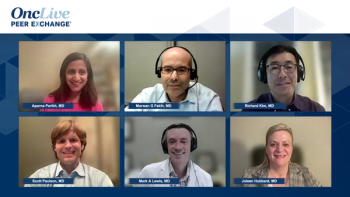
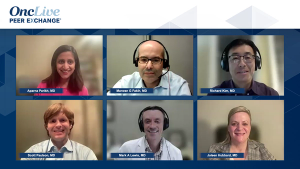
The experts provide their final thoughts surrounding the impact of prospective trials and therapy regimens for treating patients with refractory mCRC.
The experts provide their final thoughts surrounding the impact of prospective trials and therapy regimens for treating patients with refractory mCRC.
Key opportunities to improve the mCRC treatment landscape are illustrated by the expert panelists.
Dr Kim offers key perspective for MSI-high patients based on data presented at ASCO 2024.
Multiple abstracts from ESMO 2023, including a focus on tumor location, are highlighted.
Data presented at ESMO 2023 and ASCO GI 2024 highlight the impact of prior therapy, including VEGF inhibitors or fluoropyrimidine, on mCRC treatment approach.
Key factors, particularly neuropathy, drive the discussion for platinum-based therapy for patients with non-refractory mCRC.
Considerations for patients to receive aggressive mCRC therapy regimens are navigated by the panelists.
Side effect profiles driven by fruquintinib use are discussed.
Mark A Lewis, MD, and Scott Paulson, MD, share their experiences utilizing fruquintinib.
Richard Kim, MD, discusses the significance of real-world evidence when selecting treatment sequencing strategy.
Managing dose adjustments and tolerability in metastatic colorectal cancer (mCRC) treatment regimens for optimal efficacy is underscored.
Medical experts provide key takeaways and impacts from the FRESCO-2 study.
Marwan G Fakih, MD, drives a discussion highlighting a significant combination therapy in mCRC treatment.
Key safety considerations for the use of fruquintinib are explored.
Dr Parikh drives a conversation surrounding 3L treatment for patients diagnosed with metastatic colorectal cancer.
Medical experts open a discussion providing an update on the current impact of metastatic colorectal cancer and common treatment strategies.
Scott Paulson, MD, co-director of the Gastrointestinal Research Program for The US Oncology Network, medical director for the Neuroendocrine Research and Treatment Center at Baylor Charles A. Sammons Cancer Center, Baylor University Medical Center, discusses unmet needs in the treatment of patients with neuroendocrine tumors.
Scott Paulson, MD, co-director of the Gastrointestinal Research Program for The US Oncology Network, medical director for the Neuroendocrine Research and Treatment Center at Baylor Charles A. Sammons Cancer Center, Baylor University Medical Center, discusses the current treatment of patients with neuroendocrine tumors.

Scott Paulson, MD, co-director of the Gastrointestinal Research Program for The US Oncology Network, medical director for the Neuroendocrine Research and Treatment Center at Baylor Charles A. Sammons Cancer Center, Baylor University Medical Center, discusses when to consider using Lutathera (lutetium Lu 177 dotatate) in patients with neuroendocrine tumors (NETs).
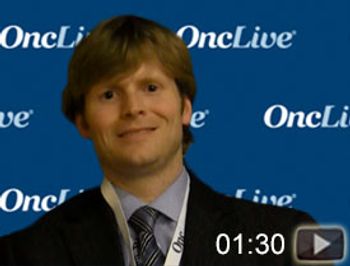
Scott Paulson, MD, co-director of the Gastrointestinal Research Program for The US Oncology Network, medical director for the Neuroendocrine Research and Treatment Center at Baylor Charles A. Sammons Cancer Center, Baylor University Medical Center, discusses the unmet need for symptom control in patients with gastrointestinal cancers.
March 14th 2024
February 22nd 2024
February 29th 2024