



Gastrointestinal Cancer
Latest News
Advertisement
Latest Videos





























































Advertisement
More News
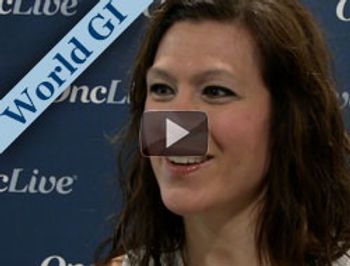
Johanna Bendell, MD, director of GI Cancer Research Program, associate director, Drug Development Program, Sarah Cannon Research Institute, discusses a randomized phase III placebo-controlled trial that explored apatinib as a treatment for patients with advanced gastric cancer.
Alan P. Venook, MD, a professor in the Department of Medicine (Hematology/Oncology) at the University of California, San Francisco, discusses implications from the CALGB/SWOG 80405 trial on the targeted therapies administered in colorectal cancer.

Treatment with the oral nucleoside TAS-102 significantly extended OS and PFS for patients with metastatic colorectal cancer refractory to standard therapies.
Andrea Wang-Gillam, MD, PhD, from the Siteman Cancer Center, discusses the trial design and results of the phase III NAPOLI-1 trial that examined MM-398 with 5-fluorouracil and leucovorin in patients with metastatic pancreatic cancer following progression on gemcitabine-based therapy.

Two active maintenance regimens following disease stabilization with standard induction therapy demonstrated superior disease-free outcomes compared with no treatment in patients with metastatic colorectal cancer.

A geographic analysis of clinical trial results supporting the use of ramucirumab in advanced gastric cancer demonstrated that patients in the United States and other Western nations experienced similar survival gains and adverse events as did their counterparts in two other regions of the world.

Treatment with regorafenib significantly improved OS and PFS in an Asian population of patients with previously treated mCRC.

Second-line treatment with MM-398 plus 5-FU and leucovorin extended OS, PFS, and ORR compared with 5-FU and leucovorin alone for patients with metastatic pancreatic cancer.

Marc Peeters, MD, PhD, department of oncology, Antwerp University Hospital, Antwerpen, Belgium, discusses the frequency of S492R mutations found in patients with metastatic colorectal cancer patients who were treated with panitumumab or cetuximab monotherapy.
Josep Tabernero, MD, PhD, head, Medical Oncology Department, Vall d'Hebron University Hospital, director, Vall d'Hebron Institute of Oncology, discusses his opinions on which patients with metastatic colorectal cancer should receive aflibercept following bevacizumab.

Adding ruxolitinib to capecitabine as a second-line treatment for patients with metastatic pancreatic cancer significantly improved survival for a subgroup with a high degree of local and systemic inflammation compared with capecitabine plus placebo.

Adding cetuximab to concurrent chemoradiotherapy did not improve overall survival in patients with adenocarcinoma or squamous cell carcinoma of the esophagus

Four independent prognostic factors for improved overall survival in patients with locally advanced pancreatic cancer emerged from an analysis of the LAP 07 phase III trial.

Eileen M. O'Reilly, MD, associate director, David M. Rubenstein Center for Pancreatic Cancer Research, Memorial Sloan Kettering Cancer Center, discusses using nab-paclitaxel plus gemcitabine versus FOLFIRINOX as treatment for patients with untreated metastatic pancreatic cancer.
Margaret A. Tempero, MD, director, Pancreas Center, University of California, San Francisco, discusses the two main types of hereditary pancreatic cancer.
Markus Renschler, MD, vice president, global head, Hematology Oncology Medical Affairs at Celgene, discusses updated results of the MPACT study, which examined nab-paclitaxel plus gemcitabine vs gemcitabine for patients with metastatic pancreatic cancer.

A regimen of nab-paclitaxel (Abraxane) and gemcitabine is a cost-effective option for the first-line treatment of patients with metastatic pancreatic cancer because it delivers a survival advantage at a price comparable to the cost of an existing combination therapy

A multitude of studies presented over the course of the past year have emphasized the importance of broader RAS mutational analyses outside of traditional KRAS testing for patients with metastatic colorectal cancer.
Andrew Kennedy, MD, physician-in-chief, Radiation Oncology, Sarah Cannon, director, Radiation Oncology Research, Sarah Cannon Research Institute, discusses the utilization of radioactive microspheres.

The phase III REACH trial, which examined ramucirumab (Cyramza) for the second-line treatment of patients with hepatocellular carcinoma (HCC), failed to meet its primary endpoint of overall survival (OS), as announced by Eli Lilly and Company, the sponsor of the study and developer of the drug.

At the recent National Comprehensive Cancer Network (NCCN) 19th Annual Conference, experts discussed this year's updates to the NCCN Clinical Practice Guidelines in Oncology. The meeting also included reviews of NCCN Task Force reports on issues in supportive care. We asked eleven NCCN panel members to select the most significant updates and insights presented at the conference.

While the combination of gemcitabine and nab-paclitaxel (Abraxane) has demonstrated survival benefits for patients with metastatic pancreatic cancer, oncologists are interested in knowing whether the regimen will transfer well into the adjuvant setting
Johanna Bendell, MD, director of GI Cancer Research Program, associate director, Drug Development Program, Sarah Cannon Research Institute, discusses two studies in BRAF-mutated colorectal cancer.

Frontline therapy with bevacizumab (Avastin) or cetuximab (Erbitux) combined with either FOLFOX or FOLFIRI yielded a comparable survival benefit of approximately 29 months in patients with KRAS wild-type metastatic colorectal cancer

The FDA has expanded the approval of panitumumab to include the frontline treatment of patients with KRAS wild-type mCRC in combination with chemotherapy.
Advertisement
Advertisement
Trending on OncLive
1
INBRX-106 Plus Pembrolizumab Improves Responses and PFS in First-Line PD-L1–Positive HNSCC
2
FDA Approves Pirtobrutinib for Previously Untreated CLL/SLL
3
Five Under 5: Top Oncology Videos for the Week of 9/27
4
AUA Releases Guideline Amendment for NMIBC
5