





Gastrointestinal Cancer
Latest News
Advertisement
Latest Videos




































































Advertisement
More News









The FDA has assigned a priority review designation to ramucirumab as a second-line treatment for patients with advanced gastric cancer.

Marc Peeters, MD, PhD, department of oncology, Antwerp University Hospital, Antwerpen, Belgium, discusses the utility of aflibercept in patients with advanced colorectal cancer.

A meta-analysis of nearly 2000 patients has shown that physical activity may substantially reduce the risk of developing esophageal cancer, especially esophageal adenocarcinoma.

Josep Tabernero, MD, PhD, of Vall d'Hebron University Hospital, Barcelona, discusses new characterizations of colorectal cancer.
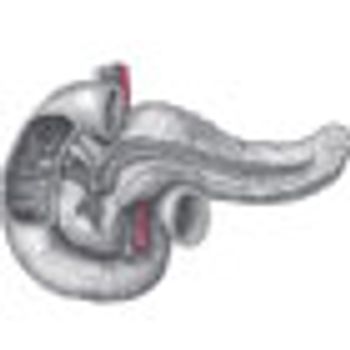
A VEGF level greater than 0.5 ng/mL in bile aspirated from the pancreas was 93% effective at identifying pancreatic cancer in patients with biliary stricture

Alan P. Venook, MD, a professor in the Department of Medicine (Hematology/Oncology) at the University of California, San Francisco, discusses the need for collaboration in cancer research.

Paul Ruff, MD, director of Medical Oncology at the University of Witwatersrand, Johannesburg, South Africa, discusses treating elderly patients with colorectal cancer with aflibercept.

The American Cancer Society estimates that in 2013, 142,820 individuals in the United States will be diagnosed with colorectal cancer and 72,570 with bladder cancer

Paul Ruff, MD, director of medical oncology at the University of Witwatersrand, Johannesburg, South Africa, discusses the analysis of prior bevacizumab in the VELOUR trial in patients with metastatic colorectal cancer.

Takayuki Yoshino, MD, medical oncologist, National Cancer Center Hospital East, Chiba, Japan, discusses U3-1565 and TAS-102, two agents used to treat colorectal cancer.

Cetuximab plus FOLFIRI may offer a survival advantage over FOLFIRI plus bevacizumab in the first-line treatment of patients with KRAS wild-type metastatic colorectal cancer who do not have RAS mutations.

Panitumumab proved noninferior to cetuximab in extending overall survival in patients with chemorefractory KRAS wild-type metastatic colorectal cancer.





Advertisement
Advertisement
Trending on OncLive
1
INBRX-106 Plus Pembrolizumab Improves Responses and PFS in First-Line PD-L1–Positive HNSCC
2
FDA Approves Pirtobrutinib for Previously Untreated CLL/SLL
3
Five Under 5: Top Oncology Videos for the Week of 9/27
4
AUA Releases Guideline Amendment for NMIBC
5