




News
Latest News


Ponatinib Dose Adjustments Preserve Potency and Improve Toxicity in CML
By Riley Kandel
Advertisement
Latest Videos











































































Advertisement
More News

The regulatory path to approval for RP1 plus nivolumab in anti–PD-1–pretreated melanoma ran through 3 BLAs, 2 CRLs, and a divided advisory committee vote.

Peter Voorhees, MD, discusses the integration of CAR T-cell therapy in early-relapsed myeloma and the importance of early T-cell–redirecting therapy use.

Peter WT Pisters, MD, MHCM, will retire as president of The University of Texas MD Anderson Cancer Center.

The FDA has granted fast track designation to varsetatug masetecan for relapsed/refractory metastatic colorectal cancer.

SYS6090, a first-in-class PD-1/IL-15 bispecific fusion protein, earned fast track status for MSS/pMMR metastatic colorectal cancer that has progressed on standard systemic therapy.

Cathy Eng, MD, FACP, FASCO, discusses how oncology fellows can navigate the journal submission and review process.

ASCO issued an alert regarding dwindling supplies of ifosfamide, which is used across testicular cancer and sarcoma regimens.

The WVU Heart and Vascular Institute and WVU Cancer Institute performed West Virginia’s first single-port robotic-assisted thoracoscopic lobectomy.
The FDA approval of daraxonrasib was based on data from the phase 3 RASolute 302 trial in previously treated metastatic pancreatic ductal adenocarcinoma.

SOT106 earned an FDA fast track designation for advanced or recurrent soft tissue sarcoma.

The sNDA is supported by VIKTORIA-1 Study 2 data showing that gedatolisib-based regimens approximately doubled median PFS vs alpelisib plus fulvestrant.
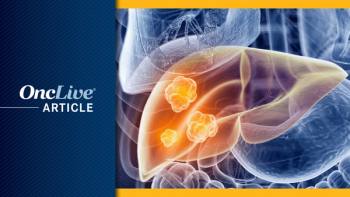
Ivonescimab plus chemotherapy significantly improved overall survival vs durvalumab plus chemotherapy in advanced biliary tract cancer.

The pertuzumab biosimilar TQB2440 met equivalence margins for tpCR vs reference pertuzumab in ER/PR-negative, HER2-positive early breast cancer.

An OncLive Scientific Interchange and Workshop examined community integration of bispecific antibodies in multiple myeloma.

Olverembatinib produced progressively deepening cytogenetic and molecular responses in second-line chronic-phase chronic myeloid leukemia.

The phase 3 INTREPID trial is evaluating sapablursen in phlebotomy-dependent polycythemia vera.
The FDA has approved zanidatamab plus chemotherapy with/without tislelizumab in frontline HER2-positive GEA based on data from HERIZON-GEA-01.

MD Anderson Cancer Center recognized outstanding faculty members for their exceptional contributions to cancer research, patient care, prevention, education and leadership.

Subcutaneous amivantamab produced a 42% objective response rate and a 15% complete response rate in patients with recurrent/metastatic HNSCC.
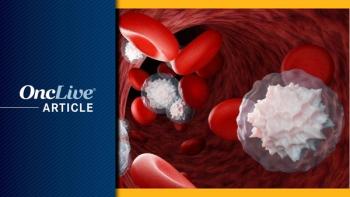
Patients who received MBTF prior to allo-HSCT achieved promising survival outcomes and manageable safety in relapsed/refractory acute myeloid leukemia.

Sagar Lonial, MD, FACP, FASCO, and Sikander Ailawadhi, MD, discuss the investigation of cemsidomide in relapsed/refractory multiple myeloma.

Mayo Clinic Study Estimates Cancer Risk in Patients With Pancreatic Cysts, Advancing Early Detection
Mayo Clinic researchers have estimated the risk that pancreatic cysts with worrisome or high-risk features will progress to pancreatic cancer or advanced precancerous changes.

The oral pan-RAS molecular glue ERAS-0015 has received FDA fast track designation for the management of metastatic pancreatic adenocarcinoma.

The MHLW approval covers all lines of therapy, including first-line use, in unresectable advanced or recurrent HER2-mutant NSCLC.
The FDA set a target action date of February 2027 for the dostarlimab-gxly sBLA in dMMR/MSI-H locally advanced rectal cancer.
Advertisement
Advertisement
Trending on OncLive
1
Lifileucel Shows Feasibility and Promise in Sarcoma
2
Dr Sallman on How Bleximenib Compares With Other Menin Inhibitors in R/R AML
3
FDA Approves Bezuclastinib Plus Sunitinib for Previously Treated GIST
4
New Data Reinforce the Strength of TKIs in Advanced GIST
5