




News
Latest News
Advertisement
Latest Videos








































































Advertisement
More News

Patients with advanced abdominal cancers who are not candidates for tumor-removing surgery now have access to a treatment that may help control disease within the abdomen, reduce symptoms, preserve quality of life, and potentially extend survival.

The FDA approved sevabertinib for advanced or metastatic nonsquamous NSCLC harboring HER2 (ERBB2) TKD activating mutations.

Dabogratinib led to a high rate of responses FGFR3-altered low-grade intermediate-risk non–muscle-invasive bladder cancer.
Mipletamig plus venetoclax and azacitidine produced a CBR of 93% in induction-ineligible, TP53-mutated acute myeloid leukemia.

A UCLA-led review found there is not yet enough real-world evidence to determine whether using AI in routine screening actually reduces the number of breast cancers diagnosed between screenings

Durvalumab plus tarlatamab significantly improved OS and PFS vs durvalumab alone as maintenance in extensive-stage SCLC, per topline phase 3 data.

Signatera assay ctDNA testing showed stronger prognostic and predictive value than PET/CT imaging across lymphomas.

D. Ross Camidge, MD, PhD, and Eric K. Singhi, MD, preview the SCLC and NSCLC abstracts they are anticipating at the 2026 World Conference on Lung Cancer.

Arlocabtagene autoleucel met the primary end point of overall response rate in the registrational phase 2 QUINTESSENTIAL trial.

Patients with triple-class–exposed relapsed/refractory multiple myeloma reported improvements in pain, fatigue, and functioning during up to 2 years of linvoseltamab.

Pegylated G-CSF produced rates of successful CD34-positive cell collection and safety comparable to daily G-CSF in healthy allogeneic transplant donors.

The top 5 OncLive TV videos of the week cover insights in essential thrombocythemia, CML, pancreatic cancer, myelofibrosis, and chronic neutropenia.
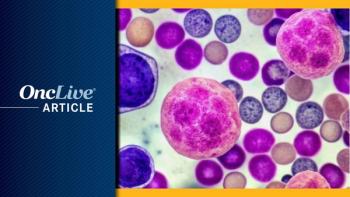
Alternating VR-CAP and rituximab plus cytarabine with continuous acalabrutinib produced deep responses and high MRD negativity in untreated MCL.
The FDA approved camizestrant for ESR1-mutated breast cancer, cleared ropeginterferon alfa-2b for essential thrombocythemia, and more.
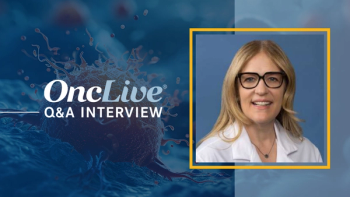
Dana Chase, MD, discusses why B7-H4 has emerged as a promising antibody-drug conjugate target in ovarian and endometrial cancer.
The FDA approved camizestrant plus a CDK4/6 inhibitor for hormone receptor–positive, HER2-negative metastatic breast cancer that acquires an ESR1 mutation.

Brain cancer experts explain the current wave of surgical advances and advocate for team-based, multidisciplinary strategies to individualize patient care.

Huntsman Cancer Institute at the University of Utah celebrated a major milestone in the development of Huntsman Cancer Institute in Vineyard.
Did you catch all of this week's top oncology news? Test your knowledge with OncLive's Weekly News Quiz.

A new life-years-saved methodology found blood cancer treatments saved million years of life since 1949, with future gains reliant on funding and access.

Tycel Phillips, MD, discusses sonrotoclax’s FDA approval for mantle cell lymphoma and why the BCL2 inhibitor opens more possibilities.

Daraxonrasib produced a 42% overall response rate and 16.0-month median OS in previously treated RAS-mutant NSCLC in a phase 1/2 trial.

Ivonescimab significantly improved OS vs pembrolizumab at a prespecified interim analysis of the HARMONi-2 trial in first-line PD-L1–positive NSCLC.

Alcohol-attributable cancer deaths in the U.S. doubled from about 11,400 in 1990 to more than 23,100 in 2023.

Experts break down SOHO 2026 and topics at the meeting that will shape hematologic oncology for the rest of the year.
Advertisement
Advertisement
Trending on OncLive
1
Lifileucel Shows Feasibility and Promise in Sarcoma
2
Dr Sallman on How Bleximenib Compares With Other Menin Inhibitors in R/R AML
3
FDA Approves Bezuclastinib Plus Sunitinib for Previously Treated GIST
4
New Data Reinforce the Strength of TKIs in Advanced GIST
5