























































Treatment with FDA-approved CAR T-cell therapies for non-Hodgkin lymphoma was efficacious and feasible in patients with Richter transformation.

Treatment with FDA-approved CAR T-cell therapies for non-Hodgkin lymphoma was efficacious and feasible in patients with Richter transformation.
Press Release
Mayo Clinic researchers report on a new surgical platform used during surgery that informs decision-making about tumor treatment within minutes.

Zanubrutinib was associated with improved cost savings and quality-adjusted life year benefits vs acalabrutinib in B-cell malignancies.

Arsenic trioxide plus all-trans retinoic acid & idarubicin improved EFS vs standard ATRA and anthracycline-based chemotherapy in high-risk APL.

Adding fixed-duration glofitamab-gxbm (Columvi) to gemcitabine and oxaliplatin led to a statistically significant and clinically meaningful improvement in survival vs rituximab (Rituxan) plus gemcitabine/oxaliplatin in patients with relapsed/refractory diffuse large B-cell lymphoma not eligible for autologous stem cell transplant.

The combination of zanubrutinib, obinutuzumab, and venetoclax was safe and well-tolerated in older patients with untreated mantle cell lymphoma.
The FDA has approved blinatumomab (Blincyto) for use in select patients with CD19+ Ph– B-cell precursor acute lymphoblastic leukemia in the consolidation phase.
The FDA had approved durvalumab plus, followed by single-agent durvalumab, for dMMR primary advanced or recurrent endometrial cancer.

Earlier use of acalabrutinib was associated with improved survival in patients with chronic lymphocytic leukemia.

The administration of CAR T-cell therapy in the outpatient setting was deemed feasible and safe in patients with relapsed/refractory NHL.

Englumafusp alfa plus glofitamab showed activity and tolerability in patients with relapsed/refractory aggressive B-cell non-Hodgkin lymphoma.

Patients with new or worsening anemia from their myelofibrosis did not experience lessened clinical benefit of ruxolitinib treatment.

The CD7-targeted CAR T-cell therapy WU-CART-007 had a manageable safety profile and elicited preliminary efficacy signals in relapsed/refractory T-ALL/LBL.

Time from diagnosis, elevated WBC count, and VAF were all significantly associated with an increased risk of disease progression of polycythemia vera.

Over a 4-year period, most patients with lower-risk myelofibrosis experienced disease progression, according to the prospective MOST study.

Clinically meaningful activity was found across all subgroups in a posthoc subgroup analysis of patients with MCL treated with liso-cel.

Zanubrutinib/venetoclax elicited a 100% overall response rate in untreated chronic lymphocytic leukemia harboring 17p deletions or TP53 mutations.
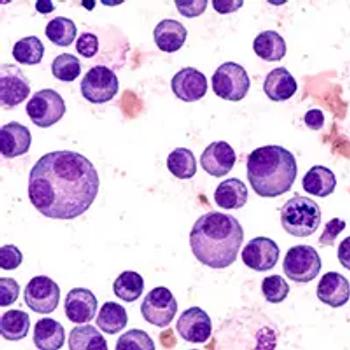
Ide-cel induced improved PFS outcomes in patients with relapsed/refractory multiple myeloma with characteristics including lower tumor burden.

Marie Hu, MD, discusses considerations for the use of CAR T-cell therapy and bispecific antibodies in relapsed/refractory diffuse large B-cell lymphoma.
Luspatercept elicited superior erythroid response rates and duration of RBC transfusion independence compared with epoetin alfa in lower-risk MDS.
Minoo Battiwalla, MD, MS, discusses the impact of earlier-line FDA approvals for CAR T-cell therapies on treatment outcomes in multiple myeloma.

VK Gadi, MD, PhD, discusses findings from the DESTINY-Breast06 trial and the implications for hormone receptor–positive, HER2-low metastatic breast cancer.
The FDA granted accelerated approval to repotrectinib (Augtyro) for select patients with solid tumors harboring a NTRK gene fusion.

The FDA granted fast track designation to IBI343 monotherapy for relapsed/refractory advanced unresectable or metastatic pancreatic ductal adenocarcinoma.

Venetoclax plus obinutuzumab with or without ibrutinib significantly improved PFS vs chemoimmunotherapy and vs venetoclax plus rituximab in frontline CLL.