





Prostate Cancer
Latest News
Advertisement
Latest Videos







CME Content











































Advertisement
More News

Robot-assisted radical prostatectomy adoption into medical practice has been swift and encompassing, even as questions remain about its efficacy, added costs, and perioperative and longer-term outcomes versus alternatives.

Howard M. Sandler, MD, the Chair of Radiation Oncology at Cedars-Sinai Medical Center, discusses radium-223, a novel alpha radiation emitting agent under evaluation by the FDA for patients with bone metastases from advanced castration-resistant prostate cancer (CRPC).
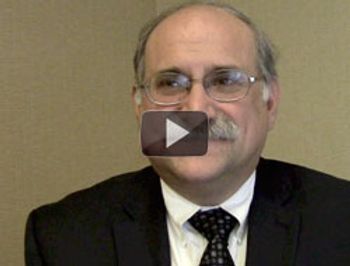
Leonard G. Gomella, MD, from the Thomas Jefferson University Hospital Kimmel Cancer Center, discusses the information currently available on sequencing the recently approved treatments for men with metastatic castration-resistant prostate cancer.

15 years after treatment, patients have roughly equal odds of experiencing declines in functions, with no significant difference associated with their choice of either radical prostatectomy or external-beam radiation therapy.

Daniel P. Petrylak, MD, from the Smilow Cancer Center at Yale-New Haven, discusses the relationship between sipuleucel-T and time to first use of an opioid analgesic in patients with metastatic castration-resistant prostate cancer.

Robert Dreicer, MD, MS, from the Taussig Cancer Institute at the Cleveland Clinic, describes potential combination therapies currently being considered as treatments for men with prostate cancer.

E. David Crawford, MD, from the University of Colorado, Anschutz Medical Campus, discusses active surveillance as a treatment approach for men with prostate cancer.

Susan F. Slovin, MD, PhD, from Memorial Sloan-Kettering Cancer Center, summarizes the development process of an effective immunotherapy for the treatment men with prostate cancer.

Hormonal therapies that target androgen are the focus of several ongoing clinical trials for the treatment of advanced prostate cancer, and as more data accrues, clinicians are gaining valuable insight as to how these drugs can best be used to manage the disease.

Following the recent flurry of FDA approvals for prostate cancer medications, oncologists are grappling with questions about which combinations or sequences of those therapies might improve outcomes for patients.
Leonard G. Gomella, MD, from the Thomas Jefferson University Hospital, describes the identification of appropriate surrogate endpoints for the evaluation of new therapies for patients with metastatic castration-resistant prostate cancer.

A novel retrospective study comparing robot-assisted radical prostatectomy and radical retropubic prostatectomy, in men with high-risk prostate cancer, found equivalent oncologic outcomes.
Matthew Cooperberg, MD, MPH, from the University of California, San Francisco, discusses the imminent stage migration that is likely to occur as new therapies become available expressly for metastatic prostate cancer.

The multidisciplinary clinic for patients with prostate and other GU cancers at Thomas Jefferson University Hospital has served as a model for other departments interested in providing multidisciplinary care.

Karen E. Hoffman, MD, MHSc, MPH, from the MD Anderson Cancer Center, describes the diagnosing urologist's influence on the initial treatment selected for elderly men with favorable prostate cancer.
Emmanuel Stylianos Antonarakis, MBBCh, from the Johns Hopkins Sidney Kimmel Comprehensive Cancer Center, discusses a phase II trial evaluating the optimal sequence for sipuleucel-T and ADT in patients with biochemically recurrent prostate cancer.

Treatment can safely be delayed in patients with low-grade prostate cancer who are carefully selected but then demonstrate disease progression after a period of active surveillance.

Nicholas J. Vogelzang, MD, from Comprehensive Cancer Centers of Nevada, discusses sequencing abiraterone acetate and enzalutamide in the treatment of men with metastatic castration-resistant prostate cancer.

Leonard G. Gomella, MD, discusses the benefits of the multidisciplinary center at Jefferson Kimmel Cancer Center.
William K. Oh, MD, from the Tisch Cancer Institute at Mount Sinai Medical Center, discusses findings from the READY trial that added dasatinib to docetaxel as a treatment for men with metastatic castration-resistant prostate cancer.

Emmanuel Antonarakis, MBBCh, from the Johns Hopkins Sidney Kimmel Comprehensive Cancer Center, discusses the TAXYNERGY trial that is exploring molecular markers of response in men with mCRPC following an early switch in taxane-based treatment.
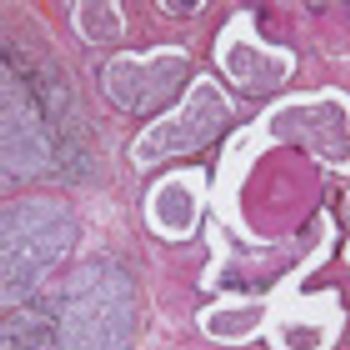
Administration of docetaxel every 2 weeks in patients with CRPC was associated with significantly longer time to treatment failure, improved OS, and produced fewer adverse events.

Drs William Oh and Yixuan Gong discuss their research involving a whole-blood, 6-gene prognostic signature that has the potential to help personalize prostate cancer treatment.
Matthew Cooperberg, MD, MPH, from the University of California, San Francisco, discusses the earlier administration of treatment with sipuleucel-T for men with prostate cancer.

Nicholas J. Vogelzang, MD, from the Comprehensive Cancer Centers of Nevada, discusses an updated analysis of the phase III ALSYMPCA trial that examined radium-223 dichloride in patients who have CRPC with bone metastases.
Advertisement
Advertisement
Trending on OncLive
1
FDA Approves Neladalkib for Locally Advanced or Metastatic ALK+ NSCLC
2
Pertuzumab Biosimilar Gains FDA Approval for HER2+ Breast Cancer
3
FDA Removes Limitations of Use for Liso-Cel in Primary Central Nervous System Lymphoma
4
Localized Prostate Cancer 2026 UPDATE: PSMA PET, ARPI Strategies, and New Trials Reshape Localized Management
5