






Prostate Cancer
Latest News
Advertisement
Latest Videos

































































Advertisement
More News

Bertram Yuh, MD, discusses the value of genetic testing, long-term disease management, and raising awareness during Prostate Cancer Awareness Month.
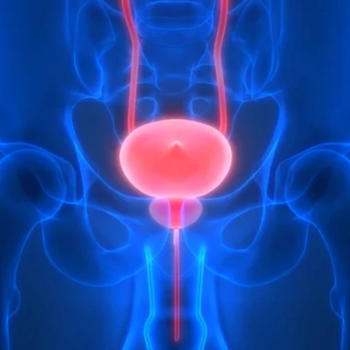
A supplemental new drug application seeking to expand the indication for darolutamide plus ADT in mHSPC has been submitted to the FDA.

Fred Saad, CQ, MD, FRCS, FCAHS, discusses efficacy findings from the ARANOTE trial in patients with metastatic hormone-sensitive prostate cancer.

Alicia Morgans, MD, MPH, discusses recent adjustments to Medicare Part D rules, emphasizing their positive impact on out-of-pocket costs for patients with prostate cancer.

Jacob E. Berchuck, MD, discusses the use of a novel epigenomic liquid biopsy platform to noninvasively detect PSMA expression in mCRPC.

Rintatolimod plus durvalumab led to stable disease at 6 months in 2 of 3 patients with late-stage pancreatic cancer treated at the first dose level.

Alicia Morgans, MD, MPH, discusses prior data and follow-up analysis of the ARAMIS trial in nonmetastatic castration-resistant prostate cancer.

Darolutamide plus ADT shows PFS benefit without docetaxel in metastatic hormone-sensitive prostate cancer.

Radium-223 plus enzalutamide yielded significant rPFS and OS benefits vs enzalutamide monotherapy in metastatic castration-resistant prostate cancer.

Anthony V. D'Amico, MD, PhD, discusses Gleason score interpretation in the management of localized prostate cancer.

This list features a snapshot of key August FDA oncology decisions, efforts to integrate health equity into guideline development, and more.
The FDA approved companion diagnostics for olaparib plus abiraterone in metastatic castration-resistant prostate cancer.

Ruben Olivares, MD, discusses the functional advantages of using focal therapy over localized radiation in prostate cancer.

Alicia Morgans, MD, MPH, discusses the use of ADT in combination with darolutamide or placebo in nonmetastatic castration-resistant prostate cancer.
Ruben Olivares, MD, discusses considerations for managing prostate cancer in the community setting, particularly regarding early detection and screening.

Carmen Guerra, MD, MSCE, FACP, discusses the implications of research into the rates of prostate cancer screening in a population of diverse men.
The FDA has granted fast track designation to 64Cu-SAR-bisPSMA for PET imaging of PSMA-positive prostate cancer lesions.

Dr Townsend on the Future Analysis of Prostate Cancer Driver Mutations Using Neoplasm Tissue Samples
Jeffrey P. Townsend, PhD, discusses analysis of prostate cancer driver mutations using early neoplasm tissue samples.

Robert Dreicer, MD, discusses his presentation from the 17th Annual Interdisciplinary Prostate Cancer Congress® and Other Genitourinary Malignancies.
Alicia Morgans, MD, MPH, discusses considerations for oncologists treating patients with nonmetastatic castration-resistant prostate cancer in the community setting.
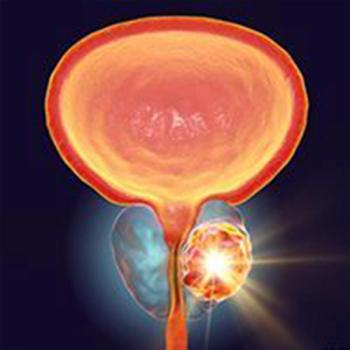
Olaparib Monotherapy Elicits Responses in HRR+ Prostate Cancer With High-Risk Biochemical Recurrence
Olaparib produced responses in high-risk, biochemically recurrent prostate cancer with HRR alterations, particularly BRCA2 alterations.

Praful K. Ravi, MB, BChir, MRCP, discusses the prognostic impact of residual cancer burden on long-term outcomes in high-risk localized prostate cancer.

Males harboring BRCA1/2 pathologic variants have a higher risk of developing select cancers but are less likely to undergo genetic testing.

Enzalutamide led to improved OS, PCS, TTS, and TTR vs abiraterone acetate in patients with metastatic castration-resistant prostate cancer.

Josep Maria Piulats Rodriguez, MD, PhD, discusses next steps for validating predictive biomarkers of efficacy to treatment with talazoparib plus enzalutamide in mCRPC.
Advertisement
Advertisement
Trending on OncLive
1
Savolitinib Plus Osimertinib NDA Submitted to FDA for MET-Driven, EGFR-Mutated NSCLC After EGFR TKI
2
FDA Grants Priority Review to Elinzanetant for Endocrine Therapy–Associated Vasomotor Symptoms in HR+ Breast Cancer
3
Calculating the Real Cost of False Positive Findings in Cancer Screening
4
China's NMPA Approves Pirtobrutinib Across CLL
5