






Prostate Cancer
Latest News
Advertisement
Latest Videos



































































Advertisement
More News

Treatment cessation of enzalutamide-containing regimens in responding patients had no impact on QOL in biochemically recurrent nmHSPC.

PSMA response was associated with improved metastasis-free survival in oligometastatic castration-sensitive prostate cancer.

James Knight, MD, discusses a case study of a patient with brain metastases from prostate cancer and the importance of multidisciplinary, comprehensive care.

The FDA has received a new drug application for the use of TLX007-CDx in the preparation of PSMA PET imaging of prostate cancer.

Timothy Yap, MBBS, PhD, FRCP, discusses encouraging data seen with the first-in-class PARP1 selective inhibitor saruparib in solid tumors and how the agent is being further investigated.

Rohan Garje, MD, discusses emerging biomarkers in metastatic castration-resistant prostate cancer and where the treatment field is headed.

Jeffrey P. Townsend, PhD, discusses advancements in the understanding of prostate cancer care through the utility of genomic sequencing.
Rohan Garje, MD, discusses the utility of lutetium Lu 177 vipivotide tetraxetan in metastatic castration-resistant prostate cancer.

Josep Maria Piulats Rodriguez, MD, PhD, discusses the rationale for identifying predictive biomarkers for talazoparib plus enzalutamide in mCRPC.

Angela Jia, MD, PhD, discusses the current standing of metastasis-directed radiotherapy in prostate cancer and identifies some lingering questions surrounding the modality.

Darolutamide uptake in metastatic hormone-sensitive prostate cancer has become routine both in doublet and triplet regimens in community urology practices.

18F-DCFPyL PSMA-PET imaging plus multi-parametric MRI improved the detection of clinically significant prostate cancer in low- and high-risk men on active surveillance.
Enzalutamide alone and with leuprolide led to greater rates of undetectable PSA levels vs leuprolide alone in castration-sensitive prostate cancer.
Rohan Garje, MD, discusses considerations when choosing between FDA-approved PARP inhibitor–based combinations for patients with mCRPC.
Apalutamide and ADT elicited a 100% biochemical recurrence-free survival rate at 24 months in high-risk localized prostate cancer following radical prostatectomy.
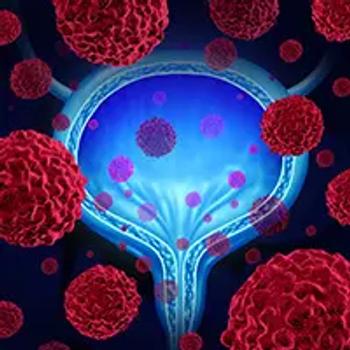
Outcome improvements with lutetium Lu 177 vipivotide tetraxetan vs ARPI change favored prior treatment with abiraterone vs enzalutamide in mCRPC.

18F-PSMA-1007 PET/CT generated superior locoregional staging results vs multiparametric MRI in patients with prostate cancer.

High-intensity focused ultrasound produced noninferior salvage treatment-free survival vs radical prostatectomy in localized prostate cancer.

Rohan Garje, MD, highlights advances made in precision medicine approaches for the management of metastatic prostate cancer.

Kara N. Maxwell, MD, PhD, discusses strategies to optimize the utility of genetic testing to better inform decision-making in prostate cancer treatment.

Kara N. Maxwell, MD, PhD, discusses the prevalence of germline mutations in racially diverse cohorts of patients with metastatic prostate cancer.

Mike Lattanzi, MD, discusses clinical trials that have evaluated the use of PARP inhibitor–based combination regimens in patients with mCRPC.

The European Commission has approved enzalutamide as monotherapy and in combination with ADT in BCR nonmetastatic hormone-sensitive prostate cancer.
Jeffrey P. Townsend, PhD, on a novel approach to comprehending the evolutionary trajectory of prostate cancer through genetic profiling.
Rohan Garje, MD, discusses the evolving use of genomic testing and targeted treatment approaches in prostate cancer.
Advertisement
Advertisement
Trending on OncLive
1
Savolitinib Plus Osimertinib NDA Submitted to FDA for MET-Driven, EGFR-Mutated NSCLC After EGFR TKI
2
FDA Grants Priority Review to Elinzanetant for Endocrine Therapy–Associated Vasomotor Symptoms in HR+ Breast Cancer
3
Calculating the Real Cost of False Positive Findings in Cancer Screening
4
China's NMPA Approves Pirtobrutinib Across CLL
5