Dr Shore discusses the use of ADT in patients with prostate cancer, as well as toxicities and quality-of-life complications associated with these agents.

Your AI-Trained Oncology Knowledge Connection!


Neal Shore, MD, FACS, is the medical director for the Carolina Urologic Research Center

Dr Shore discusses the use of ADT in patients with prostate cancer, as well as toxicities and quality-of-life complications associated with these agents.

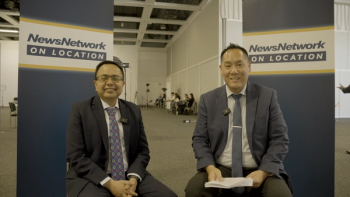
Neeraj Agarwal, MD, FASCO, and Neal Shore, MD, FACS, sit down with Chandler Park, MD, FACP, to discuss the latest abstracts in prostate cancer presented during the 2025 ESMO Congress.

David H. Aggen, MD, PhD, Petros Grivas, MD, PhD, and Neal Shore, MD, FACS, sit down with Chandler Park, MD, FACP, to discuss the latest abstracts in bladder cancer presented during the 2025 ESMO Congress.

Panelists discuss how successful metastatic castration-sensitive prostate cancer (mCSPC) management requires balancing cancer control with quality-of-life preservation, emphasizing the need for better tools to measure patient-reported outcomes, comprehensive survivorship care addressing cardiovascular and bone health, and personalized approaches that help patients understand their prognosis while maintaining their ability to thrive during treatment.

Panelists discuss how quality-of-life considerations are paramount in treatment selection for patients with metastatic castration-sensitive prostate cancer (mCSPC), with data showing that achieving ultralow prostate-specific antigen (PSA) levels correlates with better quality-of-life outcomes and that tolerability profiles, particularly regarding fatigue and drug-drug interactions, significantly impact daily patient experience.

Panelists discuss how managing patients with suboptimal prostate-specific antigen (PSA) response or rising PSA requires careful consideration of PSA kinetics, doubling time, duration of prior response, and imaging findings to determine whether to continue monitoring, add therapy, or transition to castration-resistant treatment approaches.

Panelists discuss how data from the International Registry for Men with Advanced Prostate Cancer (IRONMAN) demonstrates that achieving a prostate-specific antigen (PSA) threshold below 0.2 ng/mL at 6 to 12 months is associated with improved progression-free survival and overall survival regardless of treatment regimen.

Panelists discuss how prostate-specific antigen (PSA) nadir serves as a crucial prognostic marker in metastatic castration-sensitive prostate cancer (mCSPC), with faster drops to lower levels (particularly below 0.2) correlating with better outcomes, whereas imaging frequency should be customized based on clinical status and PSA kinetics.

Panelists discuss how androgen deprivation therapy (ADT) monotherapy is no longer acceptable for metastatic castration-sensitive prostate cancer (mCSPC), emphasizing that combination therapy with androgen receptor (AR) pathway inhibitors or chemotherapy plus universal germline testing should be the new standard of care.

Panelists discuss how the ARANOTE trial’s subgroup analysis of 65 Black patients (primarily from Brazil and South Africa) demonstrated consistent treatment benefits and highlights the importance of diversity in clinical trials to address health care disparities and potential biological differences across populations.

Panelists discuss how the ARANOTE trial’s progression-free survival benefits with darolutamide inform treatment selection between doublet and triplet approaches, emphasizing personalized decision-making based on tumor burden, patient performance status, and the “first shot, best shot” treatment philosophy.

Panelists discuss how the ARANOTE trial’s quality-of-life data and the ARCHES trial’s 5-year follow-up demonstrate sustained benefits of doublet therapy, with enzalutamide plus ADT showing a 3-year overall survival improvement in high-volume patients.

Panelists discuss how emerging trials like AMPLITUDE (PARP inhibitors for BRCA mutations), PSMA-ADDITION (radioligand therapy), and CAPITELLO (AKT inhibitors for PTEN deficiency) are moving the field toward increasingly complex, biomarker-driven treatment selection.

Panelists discuss how the ARASENSE and PEACE-1 phase 3 trials demonstrated the efficacy of triplet therapy combining androgen deprivation therapy (ADT), docetaxel, and novel antiandrogens, while addressing the ongoing underutilization of intensified treatment approaches.

Drs Morgans and Shore discuss the significance of the FDA approval of darolutamide plus ADT for metastatic castration-sensitive prostate cancer.

Panelists discuss how medical comorbidities, physiologic vs chronologic age, drug interactions, and performance status influence the choice between doublet and triplet therapy regimens.

Panelists discuss how clinical factors, including disease characteristics (Gleason score, volume, metastatic sites), patient factors (performance status, comorbidities, symptoms), and emerging genomic biomarkers, guide treatment intensification decisions in metastatic castration-sensitive prostate cancer.

Dr Shore discusses advances that have been achieved with AR-directed agents in prostate cancer and considerations for the optimal use of these agents.

Neal Shore, MD, FACS, discusses gaps in prostate cancer management and future research directions that may optimize care for high-risk localized disease.

Neal D. Shore, MD, FACS, discusses the Duravelo-1 and Duravelo-2 trials investigating zelenectide pevedotin in metastatic urothelial carcinoma.

Neal Shore, MD, FACS, discusses the importance of a multidisciplinary team in light of recent developments in urologic oncology.

Neal Shore, MD, FACS, discusses findings from clinical trials in patients with prostate cancer who experience biochemical recurrence.

Our expert panel provide insightful discussion on the power of multidisciplinary expertise in advanced prostate cancer.

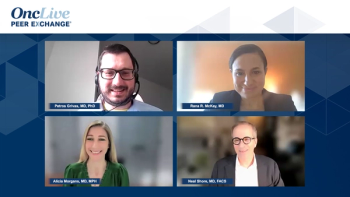
Drs. McKay and Shore discuss novel agents under investigation and their potential to target androgen receptor signaling and slow metastasis in patients with metastatic and castration-resistant prostate cancer.

This segment delves into targeting the androgen receptor pathway and conquering treatment resistance for potential breakthroughs in managing advanced prostate cancer.

Expert perspectives on androgen receptor signaling and its role in fueling prostate cancer metastasis along with a whiteboarding animation depicting this process.

Drs. Shore & McKay discuss treatment selection for metastatic & castration-resistant prostate cancer, the current landscape, and key factors guiding personalized treatment decisions.

GU medical oncologist Dr. Rana McKay and urologist Dr. Neal Shore explore how predictive biomarkers and genetic testing are informing risk assessment and guiding personalized treatment decisions in clinical practice

Neal Shore, MD, FACS, discusses the implications of the FDA approval of enzalutamide for patients with nonmetastatic castration-sensitive prostate cancer.

Neal Shore, MD, FACS, discusses the phase 3 EMBARK study of enzalutamide in patients with nonmetastatic castration-sensitive prostate cancer.

Published: February 26th 2024 | Updated:

Published: January 12th 2024 | Updated:

Published: June 30th 2025 | Updated:

Published: January 19th 2024 | Updated:

Published: July 9th 2025 | Updated:

Published: December 20th 2023 | Updated: