

The panelists outline when to retest patients with prostate cancer, since tumors evolve under treatment and a first genomic test is only a snapshot.
The panelists outline when to retest patients with prostate cancer, since tumors evolve under treatment and a first genomic test is only a snapshot.
The panelists recommend genomic profiling at the first visit for patients with metastatic prostate cancer, since targeted options now apply at diagnosis and archival tissue degrades over time, often leaving patients ineligible for trials late in their disease course.
The panelists recommend germline and somatic testing for every patient with metastatic prostate cancer and germline testing for more aggressive localized disease, where results primarily inform cascade testing of relatives rather than treatment.
The panelists explain why biomarker testing now selects first-line therapy in metastatic hormone-sensitive prostate cancer (mHSPC) rather than only guiding treatment after progression.

New EZH2 inhibitors, PROTAC degraders and combos aim to curb lineage plasticity, extending enzalutamide benefit in first-line mCRPC trials.
EZH2 inhibitors reshape how cancer genes switch on or off, slowing growth and boosting response alongside AR therapy, unlike chemo’s cell-killing approach.
EZH2 inhibitors reshape how cancer genes switch on or off, offering a non-chemotherapy approach that may boost and extend response to AR therapy.
Explore where EZH2 inhibitors pair with enzalutamide in mCRPC, offering an early, oral option with broad eligibility and fewer therapy restrictions.
Explore how an oral EZH2 inhibitor plus enzalutamide may fit early in mCRPC, offering broad use with fewer biomarker and safety limits.
Explore mebrometastat plus enzalutamide side effects—GI toxicity, anemia, neutropenia—plus practical dose reductions and lab monitoring to keep patients on therapy.
Early Mepro trial data show mevorimetastat plus enzalutamide may extend rPFS in post-abiraterone mCRPC, with stronger PSA and response rates.
Inside MEV‑Pro trials: who qualifies for enzalutamide plus mevro metastate, and how the strategy targets mCRPC earlier to delay resistance.
Explore MEV-Pro trials testing enzalutamide plus mevro metastate in mCRPC, from post-abiraterone to ARPI-naïve patients, aiming to delay resistance.
How EZH2 inhibitors plus enzalutamide may restore AR therapy response, curb neuroendocrine shift, and delay prostate cancer resistance.
New studies reveal EZH2 inhibition may not reverse prostate cancer lineage plasticity, instead fueling neuroendocrine diversity and AR rewiring.
New findings show EZH2 inhibition may not reverse lineage plasticity, but can rewire AR signaling and expand neuroendocrine tumor diversity.
Experts explain how EZH2 fuels AR-inhibitor resistance in metastatic prostate cancer and why epigenetic targeting may restore response in trials.
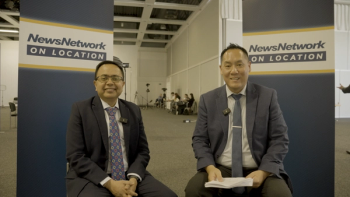
Neeraj Agarwal, MD, FASCO, and Neal Shore, MD, FACS, sit down with Chandler Park, MD, FACP, to discuss the latest abstracts in prostate cancer presented during the 2025 ESMO Congress.
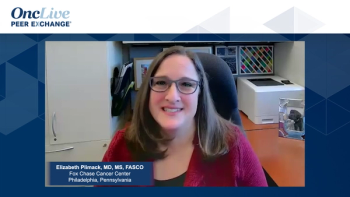
Elizabeth Plimack, MD, MS, FASCO, recaps the discussion with key takeaways on recent updates in bladder cancer.
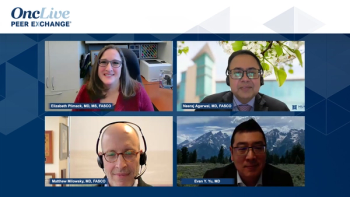
Experts on bladder cancer discuss exciting new agents and treatment strategies and where they can potentially fit into urothelial cancer treatment paradigms.
Focusing on metastatic urothelial carcinoma, the panel discusses the role of chemotherapy and outlines treatment sequencing approaches.
Evan Y. Yu, MD, provides insights on treatment approaches for patients with metastatic urothelial carcinoma in the second line and beyond.
The expert panel discusses how treatment strategies change based on cisplatin eligibility and the role of maintenance therapy in metastatic urothelial carcinoma.
GU medical oncologists offer their impressions of recent updates in the metastatic urothelial carcinoma space, focusing on CheckMate 901 and EV-302.
Neeraj Agarwal, MD, FASCO, provides a comprehensive overview of recent data in metastatic urothelial carcinoma, highlighting the CheckMate 901 and EV-302 studies.
Neeraj Agarwal, FASCO, MD, discusses quality of life considerations for patients with prostate cancer.
Experts on muscle-invasive bladder cancer respond to recent data in adjuvant therapy that were presented at ASCO GU 2024.
Following an overview of the evolving adjuvant therapy space, Matthew Milowsky, MD, FASCO, reviews recent updates from ASCO GU 2024 in muscle-invasive bladder cancer.
Focusing on neoadjuvant therapy, the expert panel discusses ongoing clinical research in muscle-invasive bladder cancer and the potential role of novel strategies in the treatment space.
A panel of experts on bladder cancer introduce themselves and give an overview of the neoadjuvant therapy landscape for patients with muscle-invasive bladder cancer.

December 21st 2020

August 24th 2021

November 4th 2026

September 24th 2021

