

Commentary|Videos|October 21, 2025
Pinpointing Pivotal Prostate Cancer Data With Drs Agarwal and Shore
Neeraj Agarwal, MD, FASCO, and Neal Shore, MD, FACS, sit down with Chandler Park, MD, FACP, to discuss the latest abstracts in prostate cancer presented during the 2025 ESMO Congress.
Advertisement
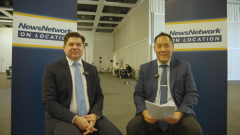
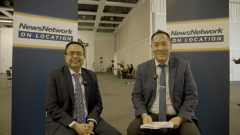
Neeraj Agarwal, MD, FASCO, of Huntsman Cancer Institute, and Neal Shore, MD, FACS, of Carolina Urologic Research Center, sit down with Chandler Park, MD, FACP, of Norton Cancer Institute, to discuss the latest abstracts in prostate cancer presented during the 2025 ESMO Congress.
Advertisement
Related to this article
A dual antigen–targeted T-cell engager doublet produced durable PSA responses in late-line metastatic castration-resistant prostate cancer.
David VanderWeele, MD, PhD, reviews where lutetium Lu 177 vipivotide tetraxetan fits across metastatic prostate cancer, how to select and manage patients, and the new radionuclides, targeting molecules, and antigens under investigation.
Longer follow-up of CAPItello-281 showed capivasertib plus abiraterone extended survival in PTEN-deficient hormone-sensitive prostate cancer.

Lutetium Lu 177 vipivotide tetraxetan showed a median overall survival of 13.1 months in the French PSMA-REACH mCRPC cohort.
Rocbrutinib plus chemoimmunotherapy led to complete responses in patients with untreated B-cell lymphomas.

Invikafusp alfa plus sacituzumab govitecan produced responses and disease control in metastatic TNBC and HR-positive/HER2-negative breast cancer.

A post hoc analysis of SPEARHEAD-1 found that MAGE-A4 H-score was independently tied to response and progression-free survival, whereas baseline tumor burden was tied to overall survival.
The IL-12–expressing self-replicating mRNA STX-001 showed a favorable therapeutic window at 100 µg, with regression in both injected and non-injected lesions.
Advertisement
Advertisement
Trending on OncLive
1
RP1 Plus Nivolumab Preserves Quality-Adjusted Survival in Advanced Melanoma After Anti–PD-1 Therapy
2
Afami-Cel Outcomes Are Tied to MAGE-A4 Expression, Tumor Burden in Synovial Sarcoma
3
STX-001 Produces Durable Systemic Responses in PD-1–Resistant Melanoma
4
VET3-TGI Generates Responses in Checkpoint Inhibitor–Refractory Cutaneous Cancers
5