

Commentary|Videos|October 20, 2025 (Updated: October 20, 2025)
Breaking Down the Data in Bladder Cancer With Drs Aggen, Grivas, and Shore
David H. Aggen, MD, PhD, Petros Grivas, MD, PhD, and Neal Shore, MD, FACS, sit down with Chandler Park, MD, FACP, to discuss the latest abstracts in bladder cancer presented during the 2025 ESMO Congress.
Advertisement
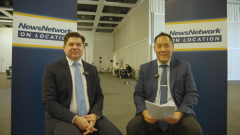
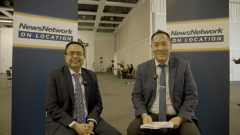
David H. Aggen, MD, PhD, of Memorial Sloan Kettering Cancer Center, Petros Grivas, MD, PhD, of Fred Hutch Cancer Center, and Neal Shore, MD, FACS, of Carolina Urologic Research Center, sit down with Chandler Park, MD, FACP, of Norton Cancer Institute, to discuss the latest abstracts in bladder cancer presented during the 2025 ESMO Congress.
Advertisement
Related to this article

Joshua J. Meeks, MD, PhD, explains how enfortumab vedotin plus pembrolizumab is reshaping organ preservation in MIBC.

Katie S. Murray, DO, discusses how efficacy, toxicity, patient preferences, and treatment logistics guide BCG-unresponsive NMIBC care.
Vignesh T. Packiam, MD, reviews why improved BCG outcomes support its first-line use, with gemcitabine/docetaxel as a BCG-sparing option.

Durvalumab plus BCG is now an approved first-line option for high-risk NMIBC, but better BCG delivery and biomarker-guided selection should shape its use.
Rocbrutinib plus chemoimmunotherapy led to complete responses in patients with untreated B-cell lymphomas.
A dual antigen–targeted T-cell engager doublet produced durable PSA responses in late-line metastatic castration-resistant prostate cancer.

Invikafusp alfa plus sacituzumab govitecan produced responses and disease control in metastatic TNBC and HR-positive/HER2-negative breast cancer.

The top 5 OncLive TV videos of the week cover insights in NSCLC, gynecologic cancers, CRC, multiple myeloma, and NMIBC.
Advertisement
Advertisement
Trending on OncLive
1
RP1 Plus Nivolumab Preserves Quality-Adjusted Survival in Advanced Melanoma After Anti–PD-1 Therapy
2
Afami-Cel Outcomes Are Tied to MAGE-A4 Expression, Tumor Burden in Synovial Sarcoma
3
STX-001 Produces Durable Systemic Responses in PD-1–Resistant Melanoma
4
VET3-TGI Generates Responses in Checkpoint Inhibitor–Refractory Cutaneous Cancers
5