
Opinion|Videos|July 8, 2026
Awareness, access, and integrating clinical trial discussions into routine care
EZH2 inhibitors reshape how cancer genes switch on or off, slowing growth and boosting response alongside AR therapy, unlike chemo’s cell-killing approach.
Advertisement
Episodes in this series
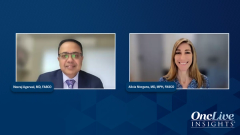
Dr. Morgans asks Dr. Agarwal what strategies are most effective for raising awareness about EZH2 and the MEVPRO trials among community and rural practitioners and their patients, and how to integrate clinical trial discussions into routine care. Dr. Agarwal identifies awareness and access as the biggest barriers and outlines several practical strategies.
First, he normalizes clinical trial conversations early. At the first visit, he frames trials as one of the most acceptable—and at times the best—standard-of-care options for many situations, rather than reserving trial discussion for the end of the treatment journey. He shows patients all relevant trials available in his clinic at the outset, so that trials become an expected part of their care.
Second, he prioritizes awareness among colleagues by integrating clinical trial designs into talks at regional, national, and international meetings, ensuring urology, medical oncology, and primary care colleagues see and understand the available trials. Third, he leverages telemedicine to expand access for community and rural patients: those who see him annually in person can connect every few months by telemedicine, allowing him to identify trial opportunities at the time of PSA progression while patients continue care with their local oncologist. Fourth, he simplifies referral pathways by providing direct contact lines to community providers and inviting them to present patients in tumor boards via telemedicine. Finally, he frames clinical trials as one of several standard options—introducing trials early, embedding them in routine care, expanding access through telemedicine, and simplifying processes for both patients and providers.
In the next episode, "EZH2 inhibitor landscape and final remarks", Dr. Morgans and Dr. Agarwal place mevrometostat in the broader EZH2-directed development landscape and offer closing reflections.
Advertisement
Related to this article

The top 5 OncLive TV videos of the week cover pancreatic cancer, gastric cancer, GIST, renal cell carcinoma, and chronic lymphocytic leukemia.

DESTINY-Breast05 Safety Analysis Clarifies ILD and Radiation Risks With T-DXd in HER2+ Breast Cancer
Charles E. Geyer, MD, discusses data from the DESTINY-Breast05 safety analysis evaluating ILD and radiation pneumonitis outcomes in HER2+ breast cancer.

The FDA approved daraxonrasib for pancreatic cancer, cleared zanidatamab-based regimens for HER2-positive gastric cancer, and more.

The selective ROCK2 inhibitor TDI01 generated organ-wide responses in previously treated moderate-to-severe chronic graft-versus-host disease, with the 400-mg dose performing best.

The FDA approved rusfertide for the treatment of patients with polycythemia vera.
Patient-reported QOL and symptom outcomes were similar between belzutifan plus lenvatinib and cabozantinib in previously treated RCC.

The phase 3 DAWN-303 trial is evaluating the oral KRAS G12D inhibitor INCB161734 in previously untreated, KRAS G12D–mutated metastatic PDAC.

Richard K. and Nancy K. Lubin have made a $35 million gift to Dana-Farber Cancer Institute’s Future of Cancer Care Fund.
Advertisement
Advertisement
Trending on OncLive
1
FDA Approves Rusfertide for Polycythemia Vera
2
DESTINY-Breast05 Safety Analysis Clarifies ILD and Radiation Risks With T-DXd in HER2+ Breast Cancer
3
FDA Approves Daraxonrasib for Metastatic Pancreatic Ductal Adenocarcinoma
4
DAWN-303 Trial Set to Advance INCB161734 in First-Line KRAS G12D–Mutated Metastatic Pancreatic Cancer
5