

Real-World OS Outcomes Are Similar for Frontline CDK4/6 Inhibitor Combos in HR+, HER2– Breast Cancer
Retrospective data showed there was no OS difference between 3 frontline CDK4/6 inhibitor combos in HR-positive breast cancer.
Retrospective data showed there was no OS difference between 3 frontline CDK4/6 inhibitor combos in HR-positive breast cancer.

Patients with luminal B and HER2E breast cancer subtypes may have a greater PFS benefit with ribociclib plus endocrine therapy vs combination chemotherapy.
Real-world data presented at the 2024 ASH Annual Meeting evaluated the efficacy of the most common treatment sequences in CLL/SLL.
Iopofosine I 131 demonstrated durable efficacy and tolerability in heavily pretreated relapsed/refractory Waldenström macroglobulinemia.

Azka Ali, MD, discusses findings from the S0221 trial of alternative adjuvant anthracycline and taxane dosing schedules in high-risk, early breast cancer.
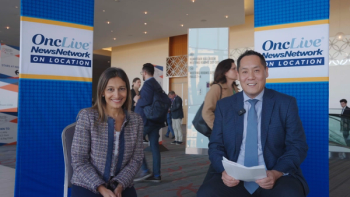
Jame Abraham, MD, of Cleveland Clinic, and Rena D. Callahan, MD, of UCLA, sit down with Chandler Park, MD, FACP, to discuss the latest abstracts in breast cancer presented during the 2024 San Antonio Breast Cancer Symposium.

Select safety measures have improved the prevention and management of risks associated with ponatinib in ALL and CML over 10 years.

Imlunestrant with or without abemaciclib improved PFS in select patients with ER-positive, HER2-negative advanced breast cancer after endocrine therapy.
Neoadjuvant patritumab deruxtecan with or without letrozole produced pathologic complete responses in high-risk, HR-positive/HER2-negative breast cancer.

SHR-A1811 monotherapy demonstrated high clinical activity and was well tolerated in patients with HER2-positive breast cancer.
Adjuvant olaparib maintained an efficacy benefit vs placebo in patients with BRCA1/2 mutation–positive, HER2-negative high-risk breast cancer.
Elacestrant plus abemaciclib demonstrated clinically important efficacy in ER-positive/HER2-negative advanced or metastatic breast cancer.
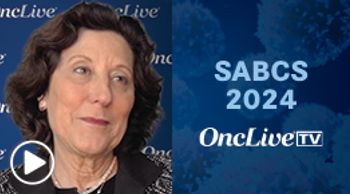
Hope S. Rugo, MD, FASCO, discusses updated safety findings from the ELEVATE trial of elacestrant-based combinations in ER+/HER2– metastatic breast cancer.
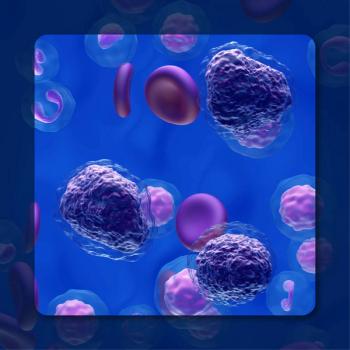
Cilta-cel without induction therapy in high-risk smoldering myeloma marked the first study of CAR T-cell therapy in a precursor cancer setting.

Risk-reducing surgery improved survival outcomes in younger patients with breast cancer and a germline BRCA mutation.
T-DXd improved PFS vs treatment of physician’s choice in hormone receptor-positive, HER2-low/-ultralow metastatic breast cancer.

Elacestrant was partnered with multiple targeted agents across varying dose levels and schedules for patients with estrogen receptor–positive advanced breast cancer.

Virginia Kaklamani, MD, DSc, discusses an analysis of ESR1 allelic frequencies in elacestrant-exposed ER+/HER2– metastatic ESR1-mutated breast cancer.

IO-202 plus azacitidine elicited an ORR of 66.7% in patients with HMA-naive chronic myelomonocytic leukemia.
Pembrolizumab plus chemotherapy conferred an efficacy advantage over chemotherapy alone in high-risk TNBC subgroups defined by potential biomarkers.
Anito-cel elicited an ORR of 97% with acceptable safety in patients with relapsed or refractory multiple myeloma.
Aditya Bardia, MD, MPH, FASCO, discusses the efficacy of T-DXd in HER2-low/ultralow metastatic breast cancer by disease progression on prior therapy.

NFKB1 rs230511 reduces inflammation and amplifies responses to ropeginterferon alfa-2b in polycythemia vera and essential thrombocythemia.

Tafasitamab plus lenalidomide and rituximab improved median PFS vs lenalidomide and rituximab in patients with relapsed/refractory follicular lymphoma.
Isa-RVd given as induction treatment without consolidation led to a 30% reduction in the risk of disease progression or death vs RVd in multiple myeloma.

Pirtobrutinib improved progression-free survival in previously treated chronic lymphocytic leukemia and small lymphocytic lymphoma.
Results of the EA4151/BMT-CTN 1601 trial showed similar progression-free and overall outcomes with the addition of autologous transplant to rituximab in mantle cell lymphoma.

John M. Burke, MD, discusses results from a US community-based healthcare practitioner survey on challenges in initiating venetoclax for patients with CLL.
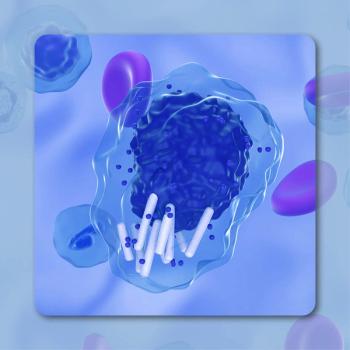
First-line pirtobrutinib plus venetoclax and obinutuzumab generated high uMRD6 remission rates among patients with chronic lymphocytic leukemia.

Eunice S. Wang, MD, on ziftomenib plus intensive induction in newly diagnosed, NPM1-mutated or KMT2A-rearranged acute myeloid leukemia.