

Benjamin H. Lowentritt, MD, FACS, discusses the exploration of active surveillance in patients with prostate cancer.
Benjamin H. Lowentritt, MD, FACS, discusses the exploration of active surveillance in patients with prostate cancer.

David Morris, MD, FACS, discusses the best practices for active surveillance in low- and intermediate-risk patients with prostate cancer, highlighting factors to look for in patients undergoing active surveillance that may point to the need for further treatment.

E. David Crawford, MD, discusses the evolving role of active surveillance in patients with prostate cancer.

Improved toxicity, advanced technology, and novel techniques have helped increase the use of radiotherapy for the treatment of different subgroups of patients with prostate cancer.
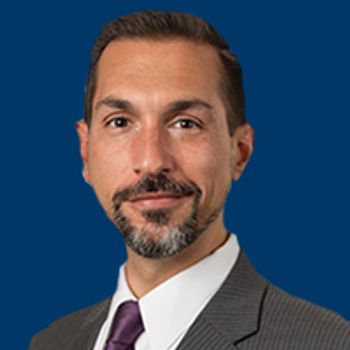
Active surveillance can provide eligible patients with low-risk prostate cancer the opportunity to defer or avoid treatment and instead opt for routine monitoring of their disease; however, challenges arise when determining which patients should be eligible for this approach and how to maintain patient and provider protocol compliance.

David Morris, MD, FACS, discusses the increasing the use of active surveillance in patients with low-risk prostate cancer and the goals of avoiding adverse effects associated with possible therapies.

Gautam Jayram, MD, discusses the current indications for immunotherapy agents in the bladder cancer treatment paradigm, as well as immune-related adverse effects to be aware of when treating patients who are receiving these therapies.

Gautam Jayram, MD, discusses current standards of care in the bladder cancer treatment arena, novel therapies under investigation in clinical trials that may expand the arsenal of available treatment strategies, and emphasizes the importance of implementing bladder cancer programs.
Daniel Spratt, MD, discusses the expanded role of radiation therapy for the treatment of patients with prostate cancer, delves into the optimal approach for using radiation in tandem with hormonal therapy for these patients, and highlights ongoing research focused on minimizing adverse effects associated with radiotherapy.

Combining sacituzumab govitecan-hziy and enfortumab vedotin-ejfv was safe, feasible, and produced high and early response rates in patients with treatment-resistant metastatic urothelial cancer.

Pooled findings from exploratory analyses of the phase 2 DESTINY-Lung01 and DESTINY-Lung02 trials showed that different doses of fam-trastuzumab deruxtecan-nxki elicited similar intracranial responses in patients with HER2-mutated non–small cell lung cancer who had treated or untreated brain metastases at baseline.

Sandip P. Patel, MD, discusses the 2023 Bridging the Gaps in Lung Cancer meeting, expanding on the continued importance of replicating clinical trial approaches in the real-world setting.

Datopotamab deruxtecan elicited encouraging responses in patients with heavily pretreated non–small cell lung cancer harboring actionable genomic alterations.

The intravesical chemotherapy delivery system TAR-200 provided sustained and durable responses in patients with Bacillus Calmette-Guérin–unresponsive, high-risk, non–muscle-invasive bladder cancer.
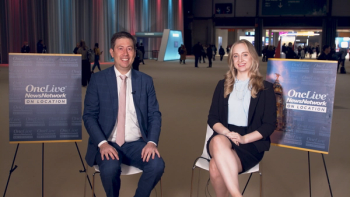
OncLive® will be LIVE with OncLive® News Network: On Location at the 2023 ESMO Congress. Each day, we will broadcast a series of interviews with top thought leaders, to learn their thoughts and reactions to data presented across oncology during the conference.

Patients with EGFR-mutated advanced non–small cell lung cancer who experienced disease progression after treatment with osimertinib experienced a progression-free survival benefit with amivantamab plus chemotherapy with or without lazertinib compared with chemotherapy alone.

Heather Lynn McArthur, MD, MPH, discusses the primary results from the phase 3 KEYNOTE-756 study of neoadjuvant pembrolizumab plus chemotherapy in early-stage, high-risk, estrogen receptor–positive, HER2-negative breast cancer.

The Trop-2 directed antibody drug conjugate datopotamab deruxtecan demonstrated a statistically significant improvement in progression-free survival vs docetaxel in patients with advanced or metastatic non–small cell lung cancer, however those with squamous histology did not experience a benefit.
Bortezomib, rituximab, cyclophosphamide, doxorubicin hydrochloride, prednisone, and cytarabine hydrochloride generated robust responses with a tolerable safety profile when delivered as first-line therapy in patients with marginal zone lymphoma.
The combination of sobuzoxane and etoposide plus rituximab prolonged survival and showcased a tolerable safety profile in patients with previously untreated diffuse large B-cell lymphoma aged 80 years and older.

The combination of amivantamab and lazertinib reduced the risk of disease progression or death by 30% compared with osimertinib alone as frontline therapy for patients with advanced non–small cell lung cancer harboring classical EGFR sensitizing mutations.

The addition of mRNA-4157 to pembrolizumab led to clinically significant improvements in relapse-free survival and distant metastasis–free survival vs pembrolizumab alone in patients with high-risk resected melanoma.

The combination of lenvatinib, pembrolizumab, and chemotherapy had a manageable safety profile and elicited preliminary antitumor activity in patients with metastatic esophageal squamous cell carcinoma.
Continued treatment with lenvatinib monotherapy after the completeion of combination therapy with pembrolizumab and lenvatinib resulted in sustained clinical benefit vs chemotherapy alone in patients with previously treated advanced endometrial cancer.

Treatment with lutetium Lu 177 vipivotide tetraxetran improved radiographic progression-free survival compared with abiraterone acetate or enzalutamide in patients with metastatic castration-resistant prostate cancer who were taxane naïve and experienced disease progression on a prior second-generation androgen receptor pathway inhibitor.
The novel CD20xCD3 bispecific antibody EX103 displayed a favorable safety profile and produced preliminary antitumor activity in heavily pretreated patients with relapsed/refractory B-cell non-Hodgkin lymphoma.

Datopotamab deruxtecan elicited a statistically significant and clinically meaningful improvement in progression-free survival vs chemotherapy for patients with hormone receptor-positive, HER2-low or -negative, metastatic breast cancer.

Lenvatinib in combination with pembrolizumab led to tumor shrinkage and duration of response benefits compared with sunitinib across subgroups of interest in patients with advanced clear cell renal cell carcinoma.

Byoung Chul Cho, MD, PhD, discusses key findings from the phase 3 MARIPOSA study of first-line amivantamab plus lazertinib vs osimertinib in EGFR-mutant locally advanced or metastatic non– small cell lung cancer.

Patients with primary advanced or recurrent endometrial cancer whose disease was deficient mismatch repair/microsatellite instability-high, TP53 mutated, or had no specific molecular profile, experienced a survival benefit when treated with dostarlimab-gxly plus chemotherapy vs placebo plus chemotherapy.