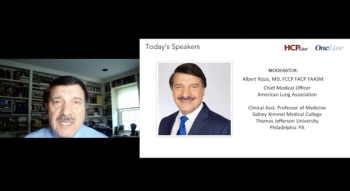
Albert Rizzo, MD, FCCP FACP FAASM, chief medical officer of the American Lung Association, as well as clinical assistant professor of medicine at Sidney Kimmel Medical College, Thomas Jefferson University, moderates the webinar Lung Cancer Screening & Treatment After COVID-19.
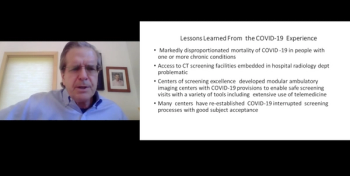
James L. Mulshine, MD, professor of internal medicine, as well as associate director of the Institute of Translation Medicine at Rush University, shared some of the challenges that have stemmed from the COVID-19 pandemic and how it has impacted lung cancer screening in the United States.
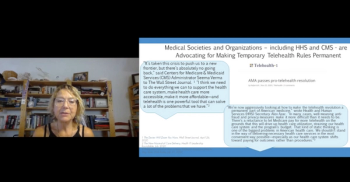
Andrea Borondy Kitts, Lung Cancer and Patient Advocate at Rescue Lung Society, provides the perspective of a patient with lung cancer on the gaps in lung cancer care that are driven by screening disparities. She also gives insight and the events of COVID-19 did to influence that issue.
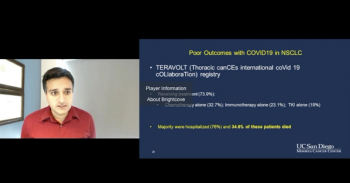
Sandip Patel, MD, an associate professor of medical oncology at University of California San Diego, explains the two-fold effects of how COVID-19 has impacted patients with non–small cell lung cancer, including their eligibility for the available vaccines designed to protect against the virus.
Jacob Sands, MD, a physician at Dana-Farber Cancer Institute, as well as instructor of medicine at Harvard Medical School, provides a comprehensive review of the small cell lung cancer treatment paradigm, and how COVID-19 has limited treatment opportunities and continuation in patients.
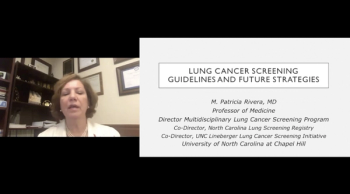
M. Patricia Rivera, MD, professor of medicine at the University of North Carolina at Chapel Hill, shares a review of the United States Preventive Services Task Force 2021's lung cancer screening recommendations, which feature impacted patient populations and effects they have on direct physician care.
The 6-person panel concludes the discussion on lung cancer screening following the COVID-19 pandemic with an interactive question and answer session revolving around shared decision making, nonsmoker patient screening options, and molecular testing via standard tissue.