
Achieving Optimal TKI Dosing in Chronic Myeloid Leukemia
Dosing adjustments of ponatinib based on responses increased tolerability in patients with chronic myeloid leukemia according to OPTIC.
Dosing adjustments of ponatinib based on responses increased tolerability in patients with chronic myeloid leukemia according to OPTIC.
Paul E. Oberstein, MD, breaks down research for the mRNA vaccine autogene cevumeran in pancreatic cancer.
Phase 1 data show that BGB-16673 is eliminated through intestinal and biliary excretion, limiting CYP3A-mediated interactions.
John N. Allan, MD, outlines the need for improved fixed-duration treatment approaches in high-risk CLL.
Nakhle Saba, MD, and colleagues explored treatment discontinuation patterns with BTK inhibitors in first-line chronic lymphocytic leukemia.
Daniel A. Ermann, MD, and colleagues evaluated treatment burden based on age in chronic lymphocytic leukemia.
Jacob Soumerai, MD, and colleagues shared updated data for sonrotoclax plus zanubrutinib in relapsed/refractory mantle cell lymphoma.
Talha Munir, MBChB, PhD, and colleagues conducted a matching-adjusted indirect comparison for zanubrutinib vs ibrutinib in treatment-naive CLL.
Irina Mocanu, MD, and colleagues outline data for the BTK degrader tacbrutideg in the BTK inhibitor–naive setting in CLL and other B-cell malignancies.
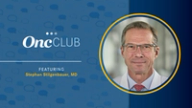
Stephan Stilgenbauer, MD, and colleagues shared data for the first-in-class BTK degrader tacabrutideg in relapsed/refractory CLL/SLL.
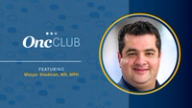
Mazyar Shadman, MD, MPH, and colleagues shared phase 1 data for sonrotoclax plus zanubrutinib in treatment-naive chronic lymphocytic leukemia.
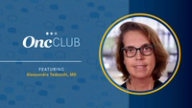
Alessandra Tedeschi, MD, and colleagues presented data from a subgroup analysis of older patients with CLL treated with zanubrutinib during the SEQUOIA trial.
Ryan Jacobs, MD, and colleagues presented real-world data comparing outcomes for zanubrutinib vs acalabrutinib in treatment-naive CLL.
Daniel A. Ermann, MD, and colleagues shared real-world data on first-line BTK inhibitors in older patients with chronic lymphocytic leukemia.
Sun Young Rha, MD, PhD, and colleagues discuss the survival benefits of a zanidatamab-based combination over trastuzumab plus chemotherapy in HER2-positive gastroesophageal adenocarcinoma, irrespective of PD-L1 status.
Michael G. Fradley, MD, and colleagues spotlight the impact of AFib and BTK inhibitor selection in patients with CLL or SLL.
Ryan D. Chow, Ronac Mamtani, MD, MSCE, and Ramy Sedhom, MD, spotlight a real-world analysis of upfront enfortumab vedotin dose reduction in bladder cancer.
Justin Taylor, MD, discusses a study of ChatGPT's responses to potential questions from patients with hematologic malignancies.
Muhammad Bilal Abid, MD, MS, FACP, MRCP, FRC, and colleagues discuss what the removal of REMS programs means for CAR T-cell therapy management.
Samir Parekh, MBBS, details a case study on targeted therapy for CAR-positive T-cell lymphoma after anti-BCMA CAR T-cell therapy.
David A. Braun, MD, PhD, discusses research on microenvironmental mechanisms of impaired antitumor immunity in chromophobe renal cell carcinoma.
Shailee S. Shah, MD, discusses the feasibility of using immune checkpoint inhibitors in patients with cancer and neurologic autoimmune disorders.
Shyam A. Patel, MD, PhD, and Jonathan M. Gerber, MD, discuss the use of IHC testing for earlier identification of TP53 mutations MDS and AML.
Emil Lou, MD, PhD, FACP, Branden Moriarity, PhD, and Beau Webber, PhD, on the applicability of CISH knockout to bolster TIL responses in GI tumors.
Henry M. Kuerer, MD, PhD, FACS, CMQ, discusses lessons learned from a nonrandomized clinical trial evaluating selective elimination of surgery for invasive breast cancer.
Mark Tyson II, MD, MPH, and Jacob Moyer, BS, discuss the real-world use of nadofaragene firadenovec in non–muscle-invasive bladder cancer.
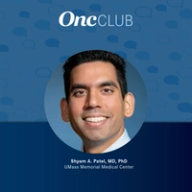
Saurabh Dahiya, MD, FACP, and Shyam A. Patel, MD, PhD, discuss their research into the risk of developing second primary cancers following CAR T-cell therapy and how this risk, though low, may be mitigated.
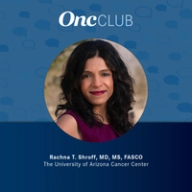
Rachna T. Shroff, MD, MS, FASCO, discusses lessons learned from the phase 3 SWOG S1815 trial evaluating triplet chemotherapy in newly diagnosed, advanced biliary tract cancer.