scout

OncClub

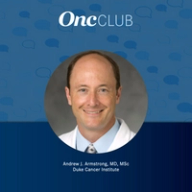
Andrew J. Armstrong, MD, MSc, discusses updated data from the phase 3 ARCHES trial (NCT02677896) examining enzalutamide (Xtandi) plus androgen deprivation therapy in patients with metastatic hormone-sensitive prostate cancer, and the clinical implications of the research for this population.

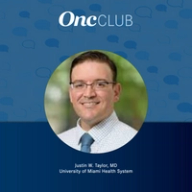
Justin Taylor, MD, discusses the significance of BTK inhibition in patients with chronic lymphocytic leukemia, describes genomic analyses examining resistance mechanisms to the noncovalent BTK inhibitor pirtobrutinib (Jaypirca), and underscores the clinical significance of the data yielded from the research.

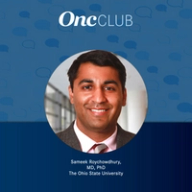
Sameek Roychowdhury, MD, PhD, contextualizes safety and efficacy data reported from a phase 2 study (NCT02150967) examining infigratinib (Truseltiq) in patients with FGFR2-positive cholangiocarcinoma, describes nuances to treatment with the agent, and sheds light on ongoing research efforts being made to further improve outcomes in this population.

Co-authors Jacob Scott, MD, DPhil, and Javier Torres-Roca, MD, discuss their study, which found that genomic-adjusted radiation dose had a significant association with time to first recurrence and overall survival in patients with certain solid tumors who had received radiation therapy, indicating that genomics should be used to guide dosing decisions.

C. Ola Landgren, MD, PhD, discusses data from the phase 2 MANHATTAN trial, which showed that carfilzomib (Kyprolis), lenalidomide (Revlimid), dexamethasone, and daratumumab (Darzalex) yielded high rates of minimal residual disease negativity in patients with newly diagnosed multiple myeloma.

C.Ola Landgren, MD, PhD, and Francesco Maura, MD, discuss their study exploring the utility of whole-genome sequencing in patients with monoclonal gammopathy of uncertain significance and smoldering myeloma to see whether they could identify genomic signatures capable of predicting progression to multiple myeloma.

Ghaith Abu-Zeinah, MD, shares data from a retrospective study which indicated that interferon-alpha significantly improved myelofibrosis-free survival and overall survival over hydroxyurea (Hydrea) and phlebotomy only in patients with polycythemia vera.

Co-authors Toni K. Choueiri, MD and Robert J. Motzer, MD, discuss how data from the phase 3 CheckMate-9ER trial (NCT03121177) confirmed the advantage of frontline cabozantinib (Cabometyx) plus nivolumab (Opdivo) vs sunitinib (Sutent) in terms of survival and responses in patients with advanced renal cell carcinoma.