
Lung cancer and neurology experts discuss the ties between cancer-associated LEMS and small cell lung cancer, diagnostic tips, and management strategies.
Lung cancer and neurology experts discuss the ties between cancer-associated LEMS and small cell lung cancer, diagnostic tips, and management strategies.
Breast cancer experts discuss adverse effect management when using breast cancer therapies targeting the PI3K, AKT, and mTOR pathways.
Drs Seery, Oberstein, and Pathak discuss data from the NAPOLI 3 trial of NALIRIFOX vs nab-paclitaxel and gemcitabine in treatment-naive pancreatic cancer.
Experts from across oncology specialties discuss the long-term effects of the COVID-19 pandemic on patient care.
Strickler, Leung, Dasari, and O'Neill discuss adverse effect monitoring and management with standard agents for patients with colorectal cancer.
Drs Jacob, Van Der Wall, and Wright-Browne discuss challenges and growth opportunities they have experienced throughout their careers.
Goyal, Bishop, Kelley, and Kuhlman discuss ways to prepare patients with cholangiocarcinoma for FGFR inhibitor–related adverse effects.
Drs Kovacic, Shaughnessy, Starnes, and Waltz highlight the differences in work culture from their early careers to now, gender-related challenges that persist in medicine today, and advice to incoming medical professionals.
Faculty across 4 institutions discuss their participation in a 4-team initiative launched by Stand Up To Cancer® that focuses on expanding access to cancer care and research.
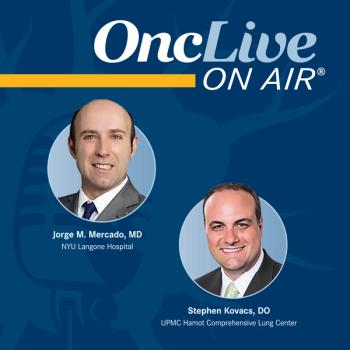
Drs Mercado and Kovacs discuss the importance of multidisciplinary approaches to lung cancer screening and management, barriers to lung cancer screening that affect how early certain patients are diagnosed with this disease, and where the future of lung cancer detection and treatment is headed.
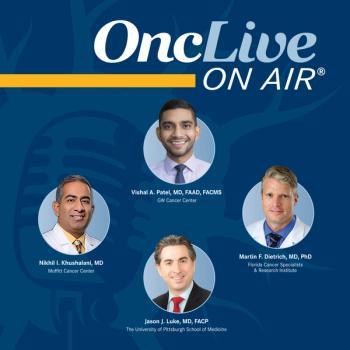
Drs Khushalani, Dietrich, Luke, and Patel discuss the nuances of defining resectability in cutaneous squamous cell carcinoma, the evolving treatment paradigm of resectable disease, and how to translate updated data with cemiplimab into clinical practice.
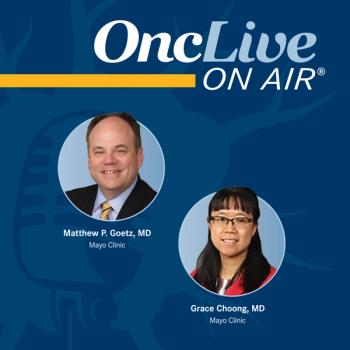
Drs Goetz and Choong discuss the potential for adjuvant endocrine therapy omission in patients with estrogen receptor–positive breast cancer who have a pathologic complete response to neoadjuvant chemotherapy.

Dr Kumar, Dr Patel, Falbo, and Ahlstrom highlight the importance of community-based discussions regarding adverse effects in multiple myeloma, the benefits of considering the whole treatment course, and subgroup analyses from the MAIA trial.
Dr. Labaki and Dr. Trinh discuss their research on the recovery of cancer screening tests, its link with potential racial disparities from the COVID-19 pandemic, and how the community can continue to emphasize the importance of cancer screening while working to close these disparities in cancer care.
Dr. Rariy, Ms. Brown, and Ms. Greenman discuss how the COVID-19 pandemic has led to a significant delay in cancer diagnoses, impacted the training of oncologists, and revolutionized telehealth.
Drs Park, Daniels, Sanghvi, and Kolb, discuss two high-risk non-melanoma skin cancer cases and highlighted patient and tumor risk factors to consider in the clinical setting.
Today, we had the pleasure of sitting down with a group of experts in genitourinary cancers from Dana-Farber Cancer Institute, Brigham and Women’s Hospital, and Moffitt Cancer Center to discuss a malignancy that is not often an everyday focus: penile cancer.