

In March, a one-day conference will provide specialists with practical information they need to provide their patients with the best in diagnostic and therapeutic care.
In March, a one-day conference will provide specialists with practical information they need to provide their patients with the best in diagnostic and therapeutic care.
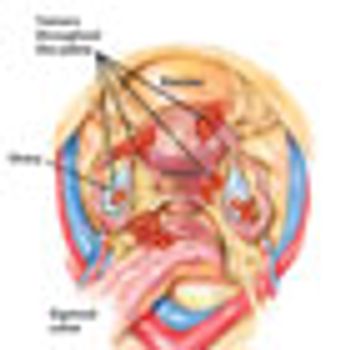
Bevacizumab improved progression-free survival in patients with ovarian cancer but was not shown to affect overall survival.

The 9th International Symposium on Ovarian Cancer and Other Gynecologic Malignancies conference will bring professionals in the field up to date on the latest research into ovarian, uterine, cervical, and endometrial cancers.

This commentary will highlight 2 phase III randomized trials and a retrospective review of a large national database that has been strongly criticized based on its overall conclusions.
Researchers are dissecting new studies regarding targeted therapies as well as combined therapeutic approaches for HPV in the progression of head and neck cancers.
Supportive care is a crucial component of personalized oncology care.
Pharmaceutical companies are investing billions of dollars and have more than 900 cancer medications in the pipelines.

Patients with metastatic breast cancer who were treated with eribulin mesylate were less likely to experience peripheral neuropathy.

Human errors can cause higher-than-expected medication error rates and delays in getting the proper chemotherapy doses to the patients who need them.
Researchers are reporting favorable early results with the addition of bevacizumab to conventional chemoradiation in patients with advanced nasopharyngeal cancer.

The combination of lenalidomide and docetaxel for treatment of CRPC failed to produce results in the large phase III MAINSAIL trial.
Hanahan and Weinberg initially outlined 6 hallmarks that they believed were essential to the transformation of normal cells into malignant cancer cells in most, if not all, human cancers.

Dr. Yuri Lazebnik's research focuses on how cells become cancerous, how cancer cells evolve, and how they can be killed selectively.
It is increasingly recognized that the realm of molecular diagnostic testing in oncology is undergoing as much change, if not more, as the world of cancer therapeutics.