
The combination of nivolumab (Opdivo) and ipilimumab (Yervoy) led to durable intracranial responses in patients with metastatic melanoma and asymptomatic brain metastases.
The combination of nivolumab (Opdivo) and ipilimumab (Yervoy) led to durable intracranial responses in patients with metastatic melanoma and asymptomatic brain metastases.
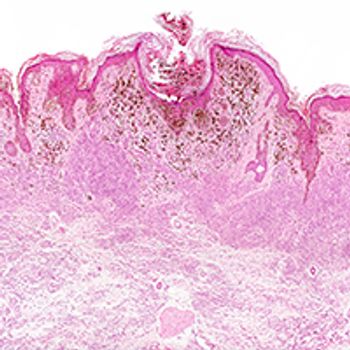
Despite local therapy, many patients with locoregional recurrence of melanoma during or after adjuvant anti–PD-1 therapy relapse again.
The CDK4/6 inhibitor palbociclib exhibited preliminary activity in patients with acral lentiginous melanoma associated with CDK-pathway aberrations, according to results of a small phase II trial that were reported at the 2019 ASCO Annual Meeting.

Updated results from the phase III COLUMBUS trial show continued prolonged progression-free and overall survival with the combination of encorafenib and binimetinib compared with BRAF inhibition alone in patients with advanced/metastatic BRAF V600-mutant melanoma.

Neoadjuvant treatment with the oncolytic immunotherapeutic agent talimogene laherparepvec (T-VEC; Imlygic) led to significant improvement in 1-year recurrence-free survival for patients with resectable advanced melanoma compared with surgery alone.
Five years out, one-third of patients with unresectable or metastatic BRAF V600-mutant melanoma remained alive following treatment with dual targeted therapy with dabrafenib (Tafinlar) plus trametinib (Mekinist), and 1 in 5 remained alive without progression.

The triplet of the PD-1 inhibitor spartalizumab, dabrafenib, and trametinib led to a complete response in more than 40% of patients with previously untreated advanced BRAF V600–mutant melanoma.
Among patients with locally advanced cutaneous squamous cell carcinoma (CSCC) who were enrolled in the pivotal EMPOWER-CSCC-1 phase II study, cemiplimab exhibited substantial antitumor activity and induced durable responses similar to those experienced in patients with metastatic CSCC who were enrolled in the same study.
Adjuvant ipilimumab elicited a 25% reduction in the risk of recurrence or death compared with placebo for patients with surgically resected high-risk, stage III melanoma.